Skip to main content


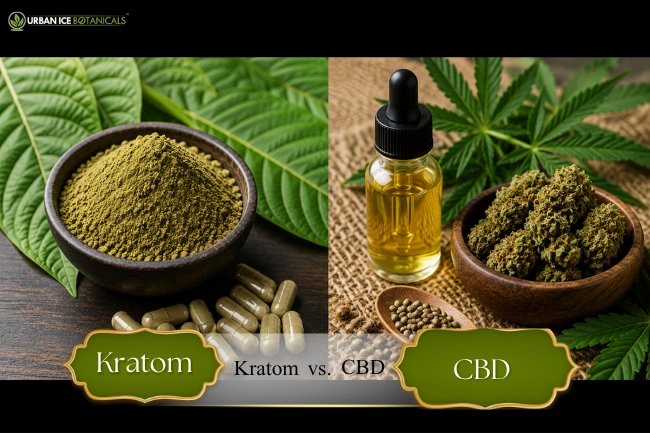
Kratom and CBD are plant-derived substances associated with pain relief, relaxation, mood, and wellness, but they differ significantly in their effects, mechanisms, and safety profiles. Made from the crushed or powdered leaves of Mitragyna speciosa, kratom can produce stimulant-like effects at lower amounts and sedative effects at higher amounts. In contrast, CBD comes from Cannabis sativa and is generally non-intoxicating. Kratom carries greater concerns involving dependence and withdrawal, while CBD has lower dependency potential but may still cause side effects and medication interactions.
Choosing between kratom and CBD depends on your goals, preferred effects, health factors, and local laws. Kratom is frequently used for pain, energy, and relaxation, whereas CBD is commonly used for pain, stress, anxiety, and sleep support. Their legality, product formats, drug-testing implications, cost, and accessibility can also differ. Before buying either, check local regulations and prioritize clearly labeled, independently tested products. Neither should be considered a proven medical treatment based solely on reported benefits.
What Is Kratom?
Kratom is a herbal substance derived from the leaves of Mitragyna speciosa, a tropical evergreen tree native to Southeast Asia. Its dried leaves contain over 40 active alkaloids, with mitragynine as the primary compound, accounting for up to 66% of the total alkaloid content (Eastlack et al., 2020). These naturally occurring compounds interact directly with receptors in the body, driving kratom’s diverse physiological effects.
Available in forms such as dried leaf powder, capsules, and concentrated extracts, kratom produces effects that vary significantly with dosage and individual biology. Smaller amounts function as a stimulant to boost energy, whereas larger doses act as a sedative and alleviate pain by binding to the brain’s opioid receptors. While kratom is frequently compared to CBD as a plant-derived wellness option for pain relief and mood support, their underlying chemical compounds, mechanisms, psychoactive properties, safety profiles, and dependency risks differ substantially.
How Does Kratom Work?
Kratom (Mitragyna speciosa) works through dose-dependent interactions between its active alkaloids and receptors in the brain and body. Its more than 40 active alkaloids, including mitragynine, can bind to opioid receptors while also interacting with pathways associated with stimulant effects. Lower doses (1-2 g) may produce stimulant-like effects, while higher doses 5 to 15 g may produce opioid-like or sedating effects. Although these mechanisms help explain reported kratom effects, more scientific research is needed to establish its safety, effectiveness, and medical applications.
What Is Kratom Used For?
Kratom is used for pain management, boosting energy and focus, easing opioid withdrawal symptoms, elevating mood and reducing stress, and promoting relaxation or sedation at higher doses. Some users report benefits for pain, energy, mood, and withdrawal symptoms, but evidence remains limited and does not establish kratom as an approved treatment. Effects can also vary by dose, product potency, and individual response, while dependence and withdrawal remain important risks.
5 common reported uses of kratom include:
- Pain management and chronic pain relief
Some people use kratom for pain management, including chronic pain, because its active compounds interact with opioid receptors associated with pain perception. In a U.S. survey of 8,049 current users, 68% reported using kratom to treat pain (Grundmann, 2017). Researchers noted perceived benefits but also dose-related adverse effects, especially nausea and constipation at higher or more frequent consumption levels.
- Boosting energy and focus at low doses
At lower doses (1-2g), some people use kratom for increased energy, alertness, and focus. Research describes kratom as having stimulant-like effects at lower doses, traditionally including reduced fatigue and increased activity. However, individual responses vary, and kratom has not been established or approved as a treatment for improving concentration or energy.
- Easing opioid withdrawal symptoms
Some people report using kratom to manage opioid withdrawal symptoms because its alkaloids interact with opioid receptors. Kratom itself can cause dependence and withdrawal symptoms, so using it for opioid withdrawal carries risks and requires guidance from a qualified medical professional.
- Elevating mood and reducing stress
(Grundmann, 2017) reported that 66% of respondents used kratom to self-manage emotional or mental health conditions. Some users also report mood changes and reduced stress after consumption. However, these survey findings do not demonstrate that kratom effectively treats anxiety, depression, or stress.
- Promoting relaxation and sedation at higher doses
Kratom’s effects appear dose-dependent, with changes in consumption potentially shifting its activity from stimulant-like effects toward more sedative effects. Published medical literature describes stimulant effects around 1-5 g and sedative effects around 5-15 g (Sanderson & Rowe, 2019), although individual responses and product potency vary considerably. Higher consumption may also increase adverse effects, dependence, and withdrawal risks, making these ranges descriptive rather than recommended doses.
What is CBD?
CBD, or cannabidiol, is a naturally occurring cannabinoid in the Cannabis sativa plant, with commercial CBD commonly derived from hemp. Unlike tetrahydrocannabinol (THC), CBD is generally non-intoxicating and does not produce the characteristic “high” associated with THC. CBD influences the body through the endocannabinoid system and other signaling pathways involved in functions such as pain perception, inflammation, mood, and sleep. It is available in multiple forms, including oils, gummies, capsules, tinctures, and topical creams.
People commonly use CBD for pain, anxiety, stress, sleep, and inflammation, although evidence supporting many of these uses remains limited or mixed. Reported side effects can include fatigue, nausea, and dizziness, and CBD may also interact with certain medications. CBD has a lower dependence potential than kratom, but this does not make every CBD product risk-free. These differences in mechanisms, psychoactive effects, evidence, and safety are important when comparing CBD with kratom.
How Does CBD Work?
CBD (cannabidiol) works primarily through interactions with the body’s endocannabinoid system (ECS), a broad network of chemical messengers and receptors that helps regulate pain perception, mood, sleep, inflammation, and other physiological functions. Rather than strongly binding to CB1 and CB2 cannabinoid receptors like THC, CBD has relatively low affinity for these receptors and appears to influence the ECS and other signaling pathways indirectly. These mechanisms may contribute to CBD’s potential effects, although responses can vary based on dose, product composition, health condition, and individual factors.
What Is CBD Used For?
CBD is used for anxiety and stress reduction, chronic pain and inflammation relief, improving sleep quality, managing specific seizure disorders, and reducing symptoms of depression. Research suggests potential benefits for anxiety, pain, and sleep, but evidence remains limited for several uses. Clinical trials provide the strongest support for seizure disorders, where prescription cannabidiol is FDA-approved. Evidence remains insufficient to establish CBD as an effective treatment for depression or most other conditions.
Below are the 5 common reported uses of CBD:
- Anxiety and stress reduction
CBD has gained attention as a potential option for managing anxiety and stress because of its effects on brain signaling systems involved in fear, mood, and stress responses. In a clinical case series of 72 adults, 79.2% experienced lower anxiety scores during the first month of CBD treatment (Shannon et al., 2019). A randomized study of 57 men also found that 300 mg CBD significantly reduced public-speaking anxiety, although other doses did not (Linares et al., 2019).
- Chronic pain and inflammation relief
People widely use CBD for chronic pain, although evidence of effectiveness remains limited. In a survey of 253 chronic-pain patients, 62% had tried CBD-containing products, with 59% reporting pain improvement and 67.6% reporting reduced pain medication use (Schilling et al., 2021). These self-reported results do not establish CBD as a proven pain treatment.
- Improving sleep quality
Improving sleep quality is another potential use of CBD, particularly for people experiencing sleep difficulties alongside anxiety or other concerns. A clinical case series found that 66.7% of participants (72 adults) had improved sleep scores during the first month, although these improvements fluctuated over time (Shannon et al., 2019). Researchers concluded that controlled clinical studies are needed to establish CBD’s effectiveness for sleep disorders.
- Managing seizure disorders
Managing specific seizure disorders is the best-supported medical use of CBD, based on randomized clinical trials and the FDA approval of prescription cannabidiol. In a randomized trial of 225 Lennox-Gastaut syndrome patients, drop seizures decreased 41.9% with 20 mg/kg/day CBD and 37.2% with 10 mg/kg/day, versus 17.2% with placebo (Devinsky et al., 2018). Prescription Epidiolex is FDA-approved for LGS, Dravet syndrome, and tuberous sclerosis complex.
- Reducing symptoms of depression
Reducing symptoms of depression is sometimes cited as a potential use of CBD, but current human evidence is not sufficient to establish it as an antidepressant or an approved treatment for depression. The FDA emphasizes that, apart from prescription Epidiolex for specific seizure disorders, no other CBD product has FDA approval to treat a disease or condition, including depression.
What’s the Difference Between Kratom and CBD?
Kratom produces stronger dose-dependent stimulant or sedative effects and carries greater dependency concerns, whereas CBD is generally non-intoxicating and has a lower dependency risk. Kratom comes from Mitragyna speciosa and contains active alkaloids such as mitragynine, while CBD comes from Cannabis sativa and interacts differently with the body. They also differ in legality, dosage measurement, duration, product forms, drug-testing implications, safety profiles, and evidence supporting pain-related use.
The key differences between kratom and CBD are summarized below:
| Factor | Kratom | CBD |
| Origin and source | Leaves of Southeast Asian Mitragyna speciosa tree | Cannabidiol from Cannabis sativa, commonly hemp-derived |
| Legal status | Federally unscheduled in the U.S.; state and local restrictions vary | Hemp-derived CBD is federally permitted within applicable limits; federal and state regulations apply |
| Primary effects | Stimulant-like at lower amounts; relaxation and sedation at higher amounts | Generally non-intoxicating; commonly used for relaxation, pain, inflammation, and sleep support |
| Psychoactive effects | Can influence mood, alertness, and sedation | Generally non-intoxicating; does not produce the characteristic THC “high” |
| Addiction and dependency risk | Greater concern for physical dependence and withdrawal | Lower dependency potential |
| Duration of effects | Noticeable effects generally reported around 2–5 hours | Varies by dose, formulation, route, and metabolism |
| Dosage measurement | Commonly measured in grams | Commonly measured in milligrams |
| Mood and energy | May shift from stimulation and alertness to sedation depending on consumption | Generally associated with a calmer, non-intoxicating profile |
| Safety profile | Dependence, withdrawal, and other adverse-effect concerns | Side effects and medication interactions remain possible |
| Available forms | Powder, capsules, extracts, beverages, gummies | Oils, tinctures, capsules, gummies, topicals |
| Drug testing | Specialized tests can detect mitragynine | THC-containing CBD products may affect cannabinoid test results |
| Cost | Powder: $8–$15 per ounceBulk powder: $90–$160 per kiloCapsules: $20–$35 per 100-count bottle | Around $0.03–$0.10 per mg of CBD content |
| Accessibility | Depends on state/local laws, vendor, and product type | Depends on product type, cannabinoid composition, regulations, and retailer |
| Pain-related use | Pain is frequently reported as a reason for use | Studied for pain and inflammation, but chronic-pain evidence remains limited |
Origin and Source
Kratom comes from the leaves of Mitragyna speciosa, a tropical evergreen tree in the coffee family (Rubiaceae) native to Southeast Asian countries such as Thailand, Indonesia, and Malaysia, whereas CBD comes from Cannabis sativa, commonly industrial hemp. Kratom leaves are harvested and dried to produce material containing more than 40 active alkaloids, primarily mitragynine. In contrast, CBD is a phytocannabinoid typically extracted from hemp flowers, leaves, and other plant material using processes such as CO2 or solvent extraction. These distinct botanical sources and chemical compositions contribute to their different biological effects.
Legal Status
Kratom is federally unscheduled in the United States but restricted in some states and local jurisdictions, whereas qualifying hemp-derived CBD containing no more than 0.3% delta-9 THC was federally legalized under the 2018 Farm Bill (Congressional Research Service [CRS], 2025). However, CBD remains subject to FDA requirements and state-level rules that may restrict specific product formats, including edibles or smokable products. Kratom laws likewise vary by state and locality. Because regulations for both substances can change and depend on product composition, consumers should verify current federal, state, and local requirements before purchasing or using either product.
Primary Effects
Depending on consumption, kratom can produce stimulant-like or sedative effects, while CBD is generally associated with non-intoxicating effects related to relaxation, pain, inflammation, and sleep support. Kratom’s active alkaloids can produce increased energy and alertness at lower consumption levels, while higher consumption may cause stronger relaxation and sedation. Some users also report taking kratom for pain management. CBD works differently by interacting with the endocannabinoid system and other signaling pathways. Responses to either substance can vary according to product composition, amount consumed, and individual factors.
Psychoactive Effects
In terms of psychoactive effects, kratom can influence mood, alertness, and sedation, whereas CBD is generally non-intoxicating and does not produce the characteristic “high” associated with THC. Kratom alkaloids such as mitragynine interact with opioid receptors and other brain pathways, helping explain its dose-dependent effects. In contrast, CBD interacts indirectly with the endocannabinoid system and can act as a negative allosteric modulator of CB1 receptors, influencing signaling without typical THC intoxication. This distinction allows CBD users to generally maintain cognitive clarity while experiencing potential relaxation or mood-related effects, resulting in substantially different psychoactive profiles.
Addiction and Dependency Risk
Kratom carries a higher risk of physical dependence and withdrawal than CBD, whereas CBD is generally associated with lower abuse and dependency potential. Frequent or prolonged kratom consumption can result in dependence, and stopping use may produce withdrawal symptoms in some individuals. CBD does not demonstrate the same dependency profile, but lower risk should not be interpreted as a complete absence of safety concerns. Product composition, frequency of use, medications, and existing health conditions can influence individual risk, making professional medical guidance important when either substance is used regularly.
Duration of Effects
Kratom’s noticeable effects generally last about 2-5 hours, while CBD’s effects may persist for several hours, depending strongly on formulation, route of administration, dose, and individual metabolism. Kratom’s primary alkaloid, mitragynine, reaches peak plasma concentrations relatively quickly but has a reported terminal half-life of about 23 hours (Trakulsrichai et al., 2015). CBD reaches peak concentrations within approximately 0-4 hours, with reported half-lives ranging from 1.4-10.9 hours after oromucosal administration to 2-5 days after chronic oral use (Millar et al., 2018).
Dosage and How It’s Measured
Kratom amounts are commonly measured in grams, whereas CBD quantities are typically expressed in milligrams. In a U.S. survey of 2,798 kratom users, 49% reported typically taking 1-3 g, while daily use was reported by 59% of participants (Garcia-Romeu et al., 2020). CBD studies use milligram-based amounts, but formulations and research protocols vary considerably. These measurements cannot be compared directly because kratom and CBD contain different active compounds with different pharmacological properties. Reported amounts describe consumption or research patterns rather than recommended doses, and individual responses can vary by product and person.
Impact on Mood and Energy
The two substances differ in their effects on mood and energy, with kratom producing more pronounced shifts between stimulation and sedation, while CBD generally has a non-intoxicating profile and is studied for effects involving anxiety, stress, and mood. In a survey, 67.2% reported using kratom for anxiety and 64.5% for depression (Garcia-Romeu et al., 2020). Its effects can also vary with consumption, including stimulant-like activity at lower amounts and sedation at higher amounts. These percentages represent self-reported reasons for use rather than evidence that kratom treats anxiety or depression, and CBD evidence also varies by condition and formulation.
Safety Profile and Health Risks
Dependence and withdrawal represent greater concerns with kratom, whereas CBD is generally well tolerated but can still cause side effects and medication interactions. Among 2,798 kratom users surveyed, roughly one-third reported Kratom adverse effects, although most were mild and lasted 24 hours or less; 0.6% sought treatment, and 2% met criteria for moderate or severe kratom-related substance use disorder (Garcia-Romeu et al., 2020). In contrast, CBD may cause dry mouth, drowsiness, and digestive upset and can inhibit hepatic cytochrome P450 enzymes, potentially affecting the metabolism of certain prescription medications. Its lower dependency potential therefore does not mean CBD is risk-free.
Available Forms and Methods of Consumption
Kratom is commonly consumed as powder, capsules, extracts, beverages, or gummies, whereas CBD is available in formats such as oils, tinctures, capsules, gummies, and topical preparations. The form matters because concentration, absorption, and exposure can differ between products. In the 2,798-person kratom survey, oral consumption was the primary route, with 49% reporting typical amounts of 1-3 g (Garcia-Romeu et al., 2020). CBD research similarly examines different preparations, making the labeled amount only one factor when comparing products. Formulation, concentration, ingredients, and method of consumption also require consideration.
Drug Testing Implications
Neither kratom nor CBD is typically identified by standard employment drug-testing panels, but both can create testing concerns under specific circumstances. Standard 5-panel or 10-panel screens generally do not test for kratom alkaloids, although specialized laboratory assays can detect compounds such as mitragynine when specifically ordered. Pure CBD isolate should not produce a THC-positive result, whereas full-spectrum CBD may contain trace amounts of THC within applicable legal limits. With repeated use, THC metabolites may accumulate and potentially contribute to a positive drug test. Independent laboratory reports and certificates of analysis can help verify alkaloid, cannabinoid, and THC content.
Cost and Accessibility
Kratom costs $8–$15 per ounce of powder, while bulk kilos range from $90–$160. Capsules cost around $20–$35 per 100-count bottle, while specialized edibles, including gummies and chocolate bars, may cost more due to additional production steps. Highly concentrated extracts and liquid shots range from $15 to $100+. By comparison, CBD costs around $0.03–$0.10 per milligram, or about $850–$2,835 per ounce of CBD content. Pricing varies because kratom costs reflect product weight, while CBD costs reflect cannabidiol content. Prices also vary by potency, formulation, testing, vendor, product type, and availability.
Kratom vs CBD for Pain: Which Works Better?
Kratom may produce stronger perceived pain-relieving effects for some users, whereas CBD is often considered for pain involving inflammation and carries a lower dependency concern. Kratom alkaloids such as mitragynine interact with opioid receptors involved in pain perception, and survey research shows pain is a common reason people report using kratom. CBD influences endocannabinoid and other signaling pathways associated with pain and inflammation, but evidence for many chronic pain applications remains mixed or limited. Neither substance can be considered universally better because effectiveness, risks, product composition, and individual responses vary.
Can You Use Kratom and CBD Together?
Yes, you can use kratom and CBD together, and some people combine them seeking greater relief from pain, stress, or anxiety. Research suggests that CBD may inhibit enzymes involved in metabolizing kratom alkaloids, potentially altering how the body processes kratom and increasing exposure to active compounds.
This interaction could produce stronger or less predictable effects and may increase concerns about sedation, side effects, or medication interactions. Evidence on the safety and effectiveness of combining kratom and CBD remains limited, so potential benefits should not be assumed. People taking medications or managing health conditions should consult a qualified medical professional before combining these substances.
What Do Kratom and CBD Have in Common?
Kratom and CBD are both plant-derived products used by some people for wellness purposes, including pain relief, relaxation, and mood support. Although they contain different active compounds and affect the body differently, they share several characteristics related to product formats, reported uses, quality, safety, and regulation. Research remains limited for several reported benefits, so consumers should not interpret these experiences as evidence that either substance treats a medical condition.
Key similarities between kratom and CBD include:
- Plant-derived products: Both originate from plants and contain naturally occurring bioactive compounds.
- Similar reported uses: People report using both for pain, relaxation, mood, and general wellness purposes.
- Multiple product forms: Both are available in formats such as capsules, gummies, extracts, and other processed products.
- Variable legal status: Regulations can differ by location, product type, and composition.
- Product quality concerns: Potency, ingredients, and contaminant levels can vary considerably between products.
- Safety considerations: Both can cause side effects and may create medication-interaction concerns.
Independent laboratory testing, certificates of analysis, accurate labels, and clear ingredient lists can help consumers evaluate product composition and quality before use.
Which Should You Choose – Kratom or CBD?
Choose kratom if you are seeking stronger reported effects related to pain, energy, or relaxation and understand its greater potential for dependence, withdrawal, and other adverse effects. Choose CBD if you prefer a generally non-intoxicating option commonly used for stress, anxiety, sleep, or general well-being. The better choice depends on your goals, since kratom and CBD contain different active compounds and have distinct effects, evidence, and risk profiles. Neither is a proven treatment based solely on reported use.
When Should You Choose Kratom?
Users report choosing kratom for pain relief, increased energy or alertness, relaxation, mood-related effects, and attempts to manage opioid withdrawal symptoms. If these concerns match your reasons for considering kratom, understanding its reported effects and risks can help inform your decision. Survey research identifies pain as a common reason for kratom use, but these reports do not prove medical effectiveness. The FDA has not approved kratom for therapeutic use and warns about risks including dependence, withdrawal, seizures, liver toxicity, and substance use disorder.
When Should You Choose CBD?
Users report choosing CBD for concerns including anxiety, sleep problems, stress, and general health and well-being. In a survey of 387 CBD users, the most commonly reported reasons were self-perceived anxiety (42.6%), sleep problems (42.5%), stress (37%), and general health and well-being (37%) (Moltke & Hindocha, 2021). If these concerns match your reasons for considering CBD, understanding its reported effects and risks can help you decide. These survey findings do not establish medical effectiveness. The FDA has approved one CBD prescription drug for specific seizure disorders but has not approved other CBD products to treat diseases or conditions.
Factors to Consider Before Deciding Kratom or CBD
Before choosing between kratom and CBD, consider your intended goal, local laws, dependency risk, drug-testing requirements, preferred product format, health conditions, medications, and budget. These factors can help you compare both options without assuming either provides guaranteed medical benefits.
Factors to consider before deciding between Kratom and CBD are:
- Your primary goal (pain relief, energy, relaxation, anxiety)
Consider whether your primary goal involves pain relief, energy, relaxation, or anxiety-related concerns. Kratom users report stronger stimulant or sedative effects, while CBD users commonly seek non-intoxicating support for relaxation, stress, sleep, and pain-related concerns.
- Legal status in your state
Check current state and local laws before purchasing or using kratom or CBD. Their legal status can vary by jurisdiction and product composition, so availability in stores or online does not necessarily confirm that a product is legally permitted.
- Risk of dependency or addiction
Compare the dependency risks of kratom and CBD before deciding which product to use, particularly if you plan to use either regularly. Repeated kratom use can lead to physical dependence and withdrawal, whereas CBD generally has lower dependency potential. Use frequency and individual health factors can influence overall risk.
- Whether you’ll be drug tested
Consider workplace or other drug-testing requirements before use. CBD products containing detectable THC may contribute to a positive cannabinoid result, while kratom generally requires specialized testing designed to identify alkaloids such as mitragynine.
- Desired method of consumption (gummies, capsules, oil, tincture)
Choose a product format based on convenience, taste, measurement, and preferred method of use. Kratom commonly comes as powders, capsules, extracts, and gummies, while CBD is available as oils, tinctures, capsules, gummies, and topical products.
- Any current medications or health conditions
Discuss kratom or CBD with a qualified medical professional if you take medications or have existing health conditions. Both substances can cause side effects or interactions, and individual health factors may change their safety profiles.
- Budget and product accessibility
Compare cost and accessibility based on product format, potency, laboratory testing, local legality, and vendor quality. Prices can vary considerably between powders, extracts, gummies, capsules, oils, and tinctures, so price alone does not indicate product quality.
Where to Buy Kratom and CBD Products?
Kratom and CBD products are available through online vendors and physical stores, although availability depends on local laws and product type. Online shopping offers a broader product selection and easier access to lab reports, while in-store purchasing lets consumers inspect labels before buying. When purchasing kratom online, choose a trusted kratom vendor that provides transparent product information and quality-testing documentation.
- What to Look for in a Quality Kratom or CBD Product
Look for independent laboratory testing, clear ingredient lists, accurate potency labels, and certificates of analysis (COAs). Quality reports should provide relevant information about active compounds and contaminants, while transparent labeling and vendor reputation can help consumers evaluate products before purchase.
- Buying Kratom and CBD Online vs. In-Store
Online stores may provide greater product variety, privacy, price comparison, and easier access to laboratory reports. In contrast, physical stores offer immediate availability and the ability to inspect labels. For either option, confirm local legal restrictions and review product-testing information before purchasing.
- Best Kratom and CBD Product Formats (Gummies, Capsules, Powders, Oils)
Choose a format based on taste, portability, measurement preference, and product type. Gummies and capsules offer convenient pre-portioned formats, while kratom powder provides flexible measurement. CBD oils and tinctures allow measured liquid use, with product characteristics affecting onset and experience.