Skip to main content


Yellow Kratom is a yellow or gold-toned kratom product made from the leaves of Mitragyna speciosa, with its color created through specialized post-harvest processing rather than naturally occurring yellow leaf veins. It is commonly described as offering a balanced experience between the energizing properties associated with white vein kratom and the relaxing characteristics linked to red vein kratom. Reported effects include mild energy, moderate focus, light mood enhancement, gentle calmness, and mental clarity, although these experiences are based on user reports and vendor descriptions rather than controlled clinical research.
Popular Yellow Kratom varieties include Yellow Borneo, Yellow Maeng Da, Yellow Bali, Yellow Thai, Yellow Indo, and Yellow Sumatra. It is available as powder, capsules, extracts, and gummies, with product quality depending on factors such as third-party laboratory testing, freshness, and transparent labeling. Commonly discussed serving ranges are 1–2 grams for beginners, 2–4 grams for moderate users, and 4–6 grams for experienced users, but these ranges are based on anecdotal guidance rather than medical recommendations. Because product quality and individual responses vary, consumers should choose reputable vendors, review Certificates of Analysis (COAs), and use Yellow Kratom responsibly.
Where Does Yellow Kratom Come From?
Yellow Kratom originates from the tropical evergreen tree Mitragyna speciosa, native to Southeast Asia, but its distinct yellow color is created through specialized post-harvest drying and fermentation techniques rather than naturally occurring yellow leaf veins. Farmers harvest kratom leaves in regions such as Indonesia, Malaysia, Thailand, and tropical areas where warm temperatures, high humidity, and rich soil support steady tree growth.
Regional names such as Yellow Borneo, Yellow Bali, Yellow Thai, Yellow Indo, Yellow Vietnam, and Yellow Sumatra usually reflect sourcing traditions, vendor labels, or processing styles. These names do not always verify the harvest location because sellers may use regional terms for blends or selected batches. The plant origin remains Mitragyna speciosa, while the drying process, fermentation process, curing method, and leaf blend create the yellow kratom product.
How Is Yellow Kratom Made?
Yellow Kratom is made through specialized post-harvest drying and fermentation techniques rather than coming from a distinct yellow-veined leaf. Unlike red, green, and white kratom, its yellow or golden color develops during processing through drying, curing, oxidation, fermentation, or proprietary blending, which may also influence its alkaloid profile. Although manufacturing methods vary, Yellow Kratom is commonly produced using three approaches, which include extended drying and natural oxidation, controlled curing or fermentation, and proprietary blending of processed kratom powders.
- Method A: Extended Sun Curing & Photo-Oxidation
- Process: Fresh green or white vein leaves are harvested and subjected to prolonged direct sunlight for 10 to 20 additional hours compared to standard strains.
- Biochemical Effect: Ultraviolet (UV) light breaks down chlorophyll, causing the leaf to lose its bright green hue and shift to a yellowish-tan color.
- Chemical Result: UV exposure alters mitragynine primarily through photo-degradation and mild oxidation. While sunlight can induce minor photo-oxidation into trace amounts of secondary metabolites (such as 7-hydroxymitragynine), sunlight alone mostly degrades overall alkaloid content rather than converting large portions into potent new compounds.
- Method B: Controlled Fermentation (Bag/Room Curing)
- Process: Harvested leaves (typically white or green vein) are sealed in burlap sacks or plastic fermentation bags while retaining natural moisture. They are kept in dark, climate-controlled rooms for 24 to 72 hours.
- Biochemical Effect: Microorganisms (naturally occurring yeast and bacteria) interact with moisture and warmth inside the container, initiating enzymatic fermentation before final drying.
- Chemical Result: Fermentation alters the plant’s cell walls and converts unstable primary alkaloids into oxidized metabolites, mellowing out the bitter flavor and altering the alkaloid ratio.
- Method C: Post-Harvest Blending (“Gold/Yellow Formulations”)
- Process: Rather than processing raw leaves differently, many commercial vendors create “Yellow Kratom” post-grind by combining existing strains—most commonly a 60/40 or 70/30 split of Red Vein and Green Vein (or White Vein).
- Biochemical Effect: Blending creates a hybrid profile that bridges the energizing qualities of white/green strains with the relaxing qualities of red strains.
What Is Yellow Kratom Used For?
Yellow Kratom is primarily used by consumers seeking a balance between the stimulating properties commonly associated with white and green kratom and the more relaxing characteristics often linked to red kratom. Although many users report using Yellow Kratom to support energy, focus, mood, relaxation, or everyday discomfort management, these are self-reported experiences rather than clinically established medical uses. Scientific evidence in humans remains limited, and Yellow Kratom has not been evaluated separately from other kratom products in well-controlled clinical trials.
Common reasons people use Yellow Kratom include:
- Supporting mild energy and alertness without the stronger stimulating effects often associated with some white vein products.
- Promoting light mood enhancement and an overall sense of well-being based on anecdotal user reports.
- Providing a smooth sense of calm while allowing many users to maintain daytime functionality.
- Helping manage everyday discomfort, although no medical benefit has been established.
- Seeking a balanced alkaloid profile created through post-harvest processing or proprietary blending rather than a naturally occurring yellow vein.
Disclaimer: These reported uses are based on user experiences and have not been confirmed by well-controlled clinical studies. They should not be considered proven medical benefits.
What Are the Effects of Yellow Kratom?
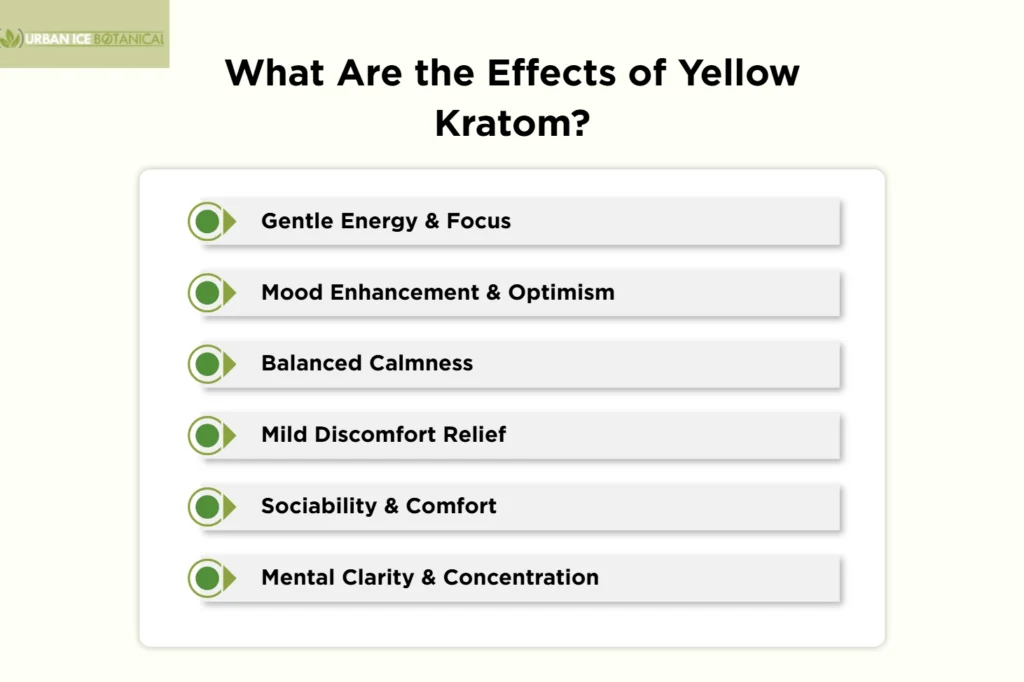
and mood-supportive effects that combine mild stimulation with gentle relaxation. Reported experiences may vary depending on the serving amount, product quality, individual tolerance, and alkaloid profile. These effects are based primarily on user reports and vendor descriptions rather than clinical evidence. Kratom may also cause adverse effects, side effects, and a risk of dependence in some individuals.
The effects of yellow kratom are:
- Gentle Energy & Focus
Yellow Kratom is frequently described by users as providing mild energy and improved focus without the stronger stimulation commonly associated with some white vein varieties. It is often described as supporting productivity, routine tasks, and daytime activities while maintaining a balanced experience. Individual responses vary according to serving amount, alkaloid profile, product quality, and personal tolerance.
- Mood Enhancement & Optimism
Commonly described as supporting a more positive outlook and light mood enhancement, Yellow Kratom is reported by some users to promote feelings of optimism, motivation, and emotional balance. These experiences are anecdotal and differ between individuals based on product composition, serving amount, and tolerance. Yellow Kratom should not be considered a treatment for depression, anxiety, or any other mental health condition.
- Balanced Calmness
Many users describe Yellow Kratom as providing a balanced sense of calm that falls between stimulation and deep relaxation. It is commonly associated with a mellow, comfortable experience that supports relaxation without causing excessive sedation for some individuals. Reported effects vary depending on the product, alkaloid profile, and serving amount.
- Mild Discomfort Relief
Some users report using Yellow Kratom for mild everyday discomfort support while maintaining normal daily activities. These experiences are anecdotal and should not be interpreted as evidence that Yellow Kratom treats or relieves pain. Pain-related claims require strong clinical evidence, which is currently limited.
- Sociability & Comfort
User reports commonly associate Yellow Kratom with greater comfort during everyday social interactions. It is often described as promoting relaxed conversation, emotional ease, and a balanced mood rather than intense stimulation or sedation. These observations are anecdotal and should not be interpreted as evidence of clinical benefits.
- Mental Clarity & Concentration
Some users report that Yellow Kratom supports mental clarity and concentration while helping them stay clear-headed during routine activities. It is commonly described as offering balanced cognitive support without the intense stimulation associated with some kratom varieties. These reported effects vary by individual and have not been confirmed through controlled clinical research.
The effects described above are based primarily on recurring descriptions published by established Yellow Kratom vendors rather than on controlled clinical studies. Product descriptions from multiple independent vendors were reviewed to identify characteristics consistently reported across different brands while excluding isolated marketing claims.
| Common Vendor Description | Frequency |
| Balanced profile between red and white/green strains | Very Common |
| Mild energy | Very Common |
| Moderate focus | Common |
| Light mood enhancement | Common |
| Smooth sense of calm | Common |
| Less stimulating than white strains | Common |
| Less sedating than red strains | Common |
Most Frequently Reported Effects Across Reviewed Vendors
The same review also examined how often specific effects were referenced across product pages. The percentages below represent the proportion of reviewed vendors that described each effect.
| Reported Effect | Vendors Mentioning |
| Mild energy | 88% |
| Balanced effects | 82% |
| Relaxation | 79% |
| Mood support | 74% |
| Focus | 63% |
| Everyday discomfort support | 58% |
Interpretation: The consistency of these descriptions suggests a common marketing narrative across Yellow Kratom products. However, recurring vendor claims should not be interpreted as proof of effectiveness. They reflect how products are commonly described in the marketplace rather than outcomes demonstrated through controlled human clinical research.
What Are the Different Yellow Kratom Strains?
Different yellow kratom strains include Yellow Borneo Kratom, Yellow Thai Kratom, Yellow Vietnamese Kratom, Yellow Indo Kratom, Yellow Bali Kratom, Yellow Sumatra Kratom, and Yellow Maeng Da Kratom. These strains differ in alkaloid composition due to variations in growing conditions, climate, leaf maturity, and processing methods, which can influence their potential effects on energy, mood balance, focus, physical comfort, and overall calmness. These subtle differences are why users choose multiple yellow kratom strains to find the one that best matches their personal preferences, daily routines, and desired outcomes.
Yellow Borneo Kratom
Yellow Borneo Kratom is one of the most widely available yellow kratom varieties and is named after Borneo, a major kratom-producing region. Vendor descriptions commonly associate it with balanced calmness, moderate energy, and light mood support, making it a popular choice among users seeking a middle-ground experience. However, Yellow Borneo does not represent a standardized product, and its alkaloid profile may vary depending on the producer, processing method, and batch quality.
Yellow Maeng Da Kratom
Yellow Maeng Da Kratom is commonly marketed as one of the more potent yellow kratom options. Vendor descriptions often associate it with moderate energy, sustained focus, balanced mood, and a longer-lasting experience than some other yellow varieties. The term “Maeng Da” generally indicates a selected or premium blend rather than a distinct botanical strain. Product quality, laboratory testing, and batch consistency remain more reliable indicators than the name alone.
Yellow Bali Kratom
Yellow Bali Kratom is frequently described as a mellow and approachable yellow variety suitable for users seeking a balanced experience. Vendor and user descriptions commonly associate it with light mood support, comfortable relaxation, and mild energy without excessive stimulation. Its reputation as a beginner-friendly option is based on anecdotal reports rather than standardized research, and the final product may differ according to processing methods and vendor quality standards.
Yellow Thai Kratom
Yellow Thai Kratom is commonly described as a balanced variety associated with mild energy, mental clarity, and light mood support. The “Thai” designation generally reflects regional naming or vendor branding rather than verified geographic origin unless sourcing information is provided. As with other yellow kratom products, reported effects vary according to post-harvest processing, alkaloid composition, product quality, and individual response.
Yellow Vietnamese Kratom
Yellow Vietnamese Kratom, also marketed as Yellow Vietnam Kratom, is commonly associated with balanced effects, smooth energy, and light mood enhancement in vendor descriptions. The regional name typically reflects sourcing or branding rather than guaranteeing a specific chemical profile. Compared with other yellow varieties, it is often presented as offering a moderate experience, although individual products may vary significantly between manufacturers and production batches.
Yellow Indo Kratom
Yellow Indo Kratom, sometimes called Yellow Vein Indo Kratom, is generally linked to Indonesian sourcing or regional naming conventions. Vendor descriptions often associate it with calm energy, balanced mood, and a comfortable overall experience. Because Indonesia produces a large share of the global kratom supply, Yellow Indo products can differ considerably depending on cultivation practices, post-harvest processing, laboratory testing, and vendor transparency.
Yellow Sumatra Kratom
Yellow Sumatra Kratom is commonly described as offering a slower, smoother, and more relaxed profile than some other yellow varieties. Vendor and user descriptions often associate it with balanced calmness and light mood support while maintaining moderate functionality. The “Sumatra” designation primarily serves as a regional identifier, and actual product characteristics depend on post-harvest processing, blending methods, and manufacturer quality standards.
Other Yellow Kratom Strains
In addition to the well-known varieties, several less common Yellow Kratom strains are available, including Yellow Java, Yellow Malay, Yellow Kali, Yellow Hulu Kapuas, Yellow Sunda, Yellow Jongkong, Yellow Horn, and Yellow Elephant. These strain names often reflect regional branding, post-harvest drying methods, or proprietary blends rather than universally recognized botanical classifications. As a result, differences between these products depend more on the vendor, processing techniques, batch quality, and Certificate of Analysis (COA) than on the strain name itself.
Several additional Yellow Kratom strains are available, including:
- Yellow Java Kratom: A less common yellow variety often described as offering balanced energy, light mood support, and gentle calmness, although characteristics vary between vendors.
- Yellow Malay Kratom: A Malay-style yellow variety commonly associated with smooth effects, balanced mood, and moderate energy in vendor descriptions.
- Yellow Kali Kratom: A relatively uncommon regional label. Buyers should review COAs, freshness, and vendor information because product characteristics may differ considerably across sellers.
- Yellow Hulu Kapuas Kratom: Named after the Hulu Kapuas region of Indonesia and generally marketed as a balanced yellow variety. Verified sourcing and vendor transparency remain important considerations.
- Yellow Sunda Kratom: A niche Yellow Kratom variety positioned within the broader yellow strain family. Product characteristics depend primarily on processing methods and vendor practices.
- Yellow Jongkong Kratom: A less common regional strain label that some vendors describe as offering smooth, balanced effects, although descriptions vary and are based on marketing information.
- Yellow Horn Kratom: Typically named after horn-shaped kratom leaves rather than a unique botanical species. It is considered relatively uncommon among Yellow Kratom varieties.
- Yellow Elephant Kratom: Usually associated with larger kratom leaves and marketed as a balanced variety. Batch quality, laboratory testing, and processing methods are more meaningful indicators than the strain name itself.
How Does Yellow Kratom Compare to Other Kratom Strains?
Yellow Kratom is generally described as less relaxing than Red Vein Kratom, less stimulating than White Vein Kratom, and smoother than Green Vein Kratom. Gold Kratom shares many similarities with Yellow Kratom because both are commonly produced through specialized post-harvest processing or proprietary blending. Overall, Yellow Kratom is positioned as a balanced option that combines mild energy, gentle relaxation, moderate focus, and light mood support. Since kratom strain names are not standardized, product characteristics may vary between vendors and batches.
The table below highlights how Yellow Kratom is commonly compared with other kratom varieties:
| Kratom Variety | Commonly Described Characteristics | How It Compares with Yellow Kratom |
| Yellow Kratom | Balanced experience combining mild energy, gentle relaxation, and moderate mood support. | Considered a middle-ground option created through post-harvest processing or proprietary blending rather than a natural vein color. |
| Red Vein Kratom | More commonly marketed as relaxing, calming, and suitable for evening use. | Yellow is generally described as less relaxing and more suitable for daytime use than red varieties. |
| Green Vein Kratom | Often described as providing a balance of moderate energy and relaxation. | Similar to Green Vein Kratom but often described as smoother or gentler. |
| White Vein Kratom | Commonly associated with higher energy, alertness, and focus. | Less stimulating and more balanced than White Vein Kratom. |
| Gold Kratom | Often marketed as a processed or blended product similar to Yellow Kratom. | Often overlaps with Gold Kratom, although some vendors describe Gold as more heavily cured or fermented. |
What Are the Different Forms of Yellow Kratom?
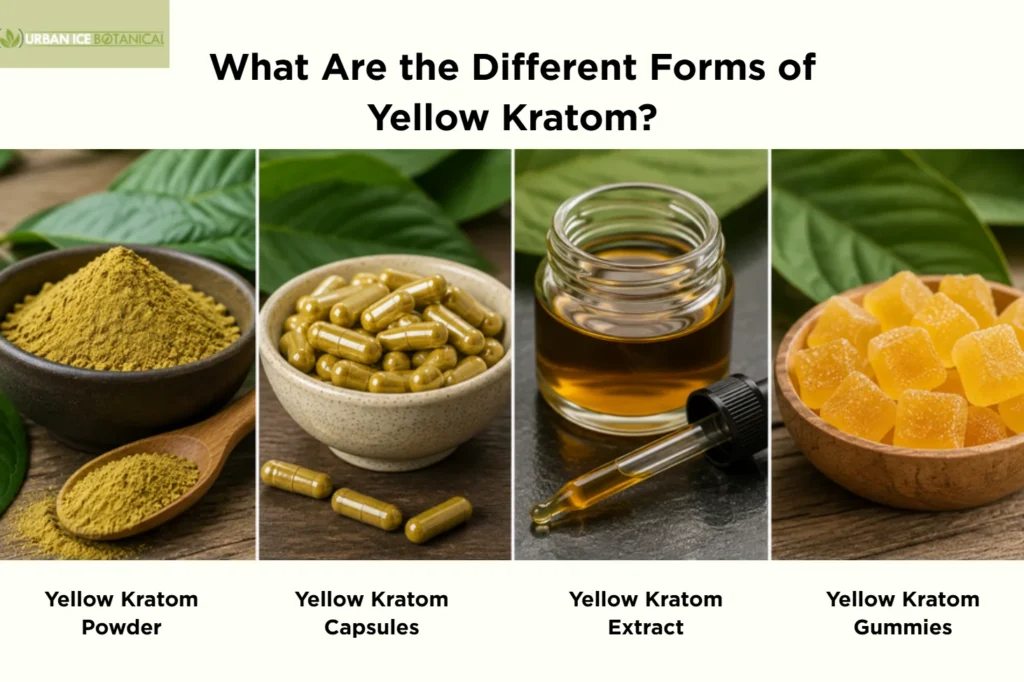
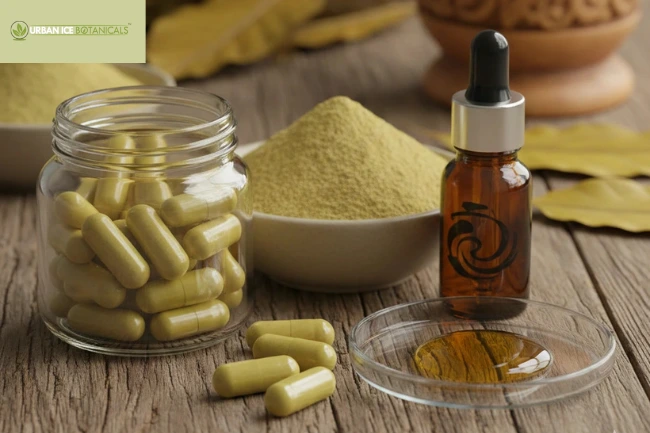
Yellow Kratom is available in several product forms, including powder, capsules, extracts, and gummies, each offering different levels of convenience, serving precision, and portability. The product form may also influence preparation methods, onset expectations, and overall strength. Regardless of the format, product quality depends on factors such as manufacturing standards, laboratory testing, freshness, and accurate labeling.
Yellow Kratom is available in the following product forms:
- Yellow Kratom Powder
Yellow Kratom powder is the most widely available and versatile form of kratom. It can be measured directly, mixed with beverages, or brewed into kratom tea, giving users flexibility in serving size and preparation. High-quality yellow kratom powder should have a consistent grind, be stored properly to preserve freshness, and be supported by third-party laboratory testing. As with all kratom powders, quality depends more on sourcing and processing than the product name alone.
- Yellow Kratom Capsules
Yellow Kratom capsules provide a convenient pre-measured option for users who prefer to avoid the natural taste of kratom powder. They offer greater serving consistency and are easy to carry, although the capsule shell may delay digestion compared with loose powder. Because capsule sizes vary by manufacturer, it is important to check the grams of yellow kratom contained in each capsule and review laboratory testing before purchase.
- Yellow Kratom Extract
Yellow Kratom extract is a concentrated product made by increasing the alkaloid content relative to standard kratom powder. Because extracts contain higher concentrations of active compounds, they require careful attention to serving size, product labeling, and alkaloid strength. Regular use of concentrated extracts may increase tolerance more quickly than traditional powder products. Beginners should exercise extra caution and select only clearly labeled, laboratory-tested products.
- Yellow Kratom Gummies
Yellow Kratom gummies are a flavored and convenient alternative to powders and capsules. They are designed for easy consumption and improved portability, but unclear labeling can make serving strength difficult to interpret. Before choosing yellow kratom gummies, consumers should review the listed alkaloid content, ingredient profile, serving information, and third-party laboratory reports to better understand product quality and consistency.
What Is the Recommended Yellow Kratom Dosage?
Yellow Kratom is commonly discussed in three informational serving ranges: 1–2 grams for beginners, 2–4 grams for moderate users, and 4–6 grams for experienced users. These ranges are based on user reports, community harm-reduction practices, and vendor guidance rather than clinically established dosages. They broadly align with observational kratom research, in which 49.0% of 2,798 users reported a typical serving of 1–3grams, while 33.4% reported 4–6 grams (Garcia-Romeu et al., 2020).
Below are the commonly discussed serving ranges for Yellow Kratom:
- Beginner Dosage (1–2 grams)
For individuals new to Yellow Kratom, 1 to 2 grams is commonly discussed as a low starting range for assessing personal tolerance and sensitivity. Beginners should avoid taking additional servings within a short period, using concentrated extracts, or combining kratom with alcohol, sedatives, or other substances that may increase the risk of adverse effects. Starting cautiously and selecting laboratory-tested products can help reduce unnecessary risks.
- Moderate Dosage (2–4 grams)
For users who have become familiar with Yellow Kratom, 2 to 4 grams is often discussed as a moderate serving range that may produce stronger or longer-lasting effects than lower amounts. However, increasing the serving size can also raise the likelihood of side effects such as nausea, dizziness, or drowsiness. Because product potency varies, increasing the amount should not be viewed as a way to achieve better results or more consistent effects.
- Experienced Dosage (4–6 grams)
For experienced users, 4 to 6 grams is regarded as a higher serving range and should be approached with caution. Larger servings may increase the likelihood of sedation, nausea, gastrointestinal discomfort, tolerance, and dependence with repeated use. Because Yellow Kratom products differ in alkaloid content, formulation, and manufacturing methods, the same serving amount can produce different responses across products and individuals. This range is provided for informational purposes only and should not be interpreted as a recommended dosage for all users.
Is Yellow Kratom Right for You?
Yellow Kratom may be a suitable option if you are seeking a balanced effect profile that sits between the stronger stimulation commonly associated with white vein strains and the deeper relaxation often linked to red vein strains. It is often chosen by adults looking for a moderate experience that combines mild energy, gentle calmness, and light mood support. However, these effects are based primarily on user reports and vendor descriptions rather than clinical evidence, and individual responses can vary depending on product quality, alkaloid profile, serving amount, and personal sensitivity.
Choosing Yellow Kratom also means understanding its potential risks and using it responsibly. It should not be used as a substitute for medical treatment or to diagnose, treat, cure, or prevent any disease. Purchase only products that are legal in your location, supported by third-party laboratory testing, and clearly labeled.
Potential Side Effects of Yellow Kratom
Yellow Kratom may cause nausea, dizziness, constipation, dry mouth, drowsiness or sedation, and changes in sleep patterns, much like other kratom strains. Repeated or heavy use may increase the risk of tolerance, dependence, and withdrawal symptoms after discontinuation. The U.S. Food and Drug Administration (FDA) has warned about serious adverse events associated with kratom, while the National Institute on Drug Abuse (NIDA) states that research into its safety and health effects is still ongoing.
Who Should Avoid Yellow Kratom?
Yellow Kratom is generally not recommended for people who are pregnant or breastfeeding, individuals below the legal adult age in their jurisdiction, or anyone taking prescription medications without medical advice. People with liver disease, heart conditions, mental health disorders, or a history of substance use disorder should also avoid kratom or consult a healthcare professional before use. Combining kratom with alcohol, sedatives, or other central nervous system depressants may increase the risk of adverse effects and should be avoided.
Where to Buy Yellow Kratom?
Yellow Kratom is best purchased from reputable online vendors and specialty kratom retailers that prioritize transparency, product quality, and consumer safety. Look for sellers that provide third-party laboratory test results, Certificates of Analysis (COAs), clear ingredient and alkaloid information, batch numbers, and detailed product descriptions. Reading verified customer reviews and checking the vendor’s quality standards can also help you make a more informed purchasing decision.
Before buying Yellow Kratom, confirm that kratom is legal in your state, country, or local jurisdiction, as regulations vary by location. Avoid products with missing labels, unrealistic health claims, or no independent lab testing. Choosing a trusted yellow kratom vendor helps improve product consistency, safety, and quality, although no seller can guarantee identical characteristics across every batch.
What to Look for When Buying Yellow Kratom?
When buying Yellow Kratom, prioritize third-party laboratory testing, vendor transparency, product freshness, positive customer reviews, strain variety, fair pricing, and a clear return policy. These factors help you evaluate product quality, safety, and vendor reliability before making a purchase. Choosing a reputable seller with verified testing and transparent business practices is more important than relying on marketing claims or strain names alone.
Consider the following factors when evaluating Yellow Kratom products:
- Lab Testing & Certificates of Analysis (COA)
Choose products supported by recent third-party laboratory testing and a Certificate of Analysis (COA) verifying alkaloid content and screening for heavy metals, microbial contamination, and adulterants.
- Reputable & Transparent Vendor
Select vendors that provide company details, batch numbers, sourcing information, contact details, accurate product labels, and laboratory reports. Avoid sellers making disease treatment, opioid withdrawal, or cure claims.
- Freshness & Quality of Kratom Powder
Look for consistent color, fine grind, proper packaging, batch dates, and appropriate storage. Freshness reflects careful handling and storage rather than guaranteed potency.
- Positive Customer Reviews
Read verified customer reviews for insights into shipping reliability, product consistency, freshness, packaging, taste, and customer service. Reviews should support quality assessment rather than medical claims.
- Strain Variety & Availability
Vendors offering several Yellow Kratom strains, such as Borneo, Maeng Da, Bali, Thai, Indo, and Sumatra, make it easier to compare products based on your preferences.
- Fair & Transparent Pricing
Compare the price per gram, shipping costs, bulk discounts, and product value. Fair pricing should reflect laboratory testing, sourcing, packaging, and vendor transparency rather than simply a higher price.
- Clear Return & Refund Policy
Review the seller’s return policy before ordering. A transparent policy should clearly explain refunds, damaged products, shipping issues, unopened item requirements, and customer satisfaction terms.