Skip to main content


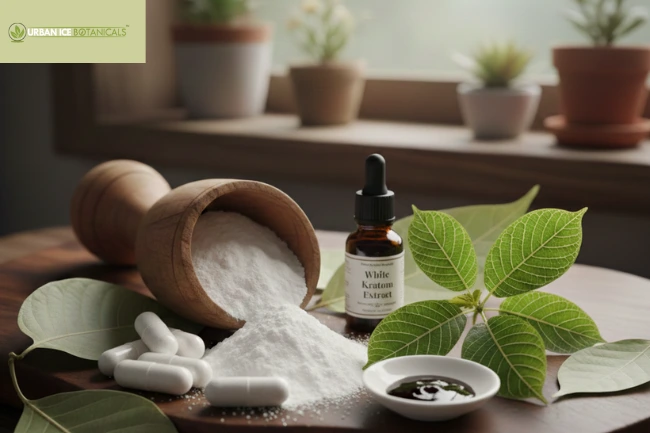
White vein kratom is a commercial category of Mitragyna speciosa identified by pale-colored leaf veins rather than a distinct botanical variety. Native to Southeast Asia, it is primarily produced in Indonesia and sold as powder, capsules, tea, extracts, and blends. Consumers commonly associate white vein kratom with mild energy, alertness, focus, mental clarity, mood enhancement, and well-being, although effects vary with alkaloid composition, formulation, serving amount, and individual tolerance. Research has not established white vein kratom as safe or effective for medical use.
Popular varieties include White Maeng Da, White Borneo, White Thai, White Bali, White Sumatra, White Horn, and White Indo. Commonly discussed serving ranges are 1-2 grams for beginners, 2-4 grams for moderate users, and 4-6 grams for experienced users, although these ranges come from user reports rather than FDA-approved guidance. Product quality depends on harvesting, processing, laboratory testing, and labeling. Consumers should review Certificates of Analysis (COAs) and choose reputable vendors when purchasing kratom products.
What Is White Vein Kratom?
White vein kratom is a herbal product derived from the younger leaves of the Mitragyna speciosa tree and is identified by product labels associated with pale or white-colored leaf veins. It belongs to a commercial category based on vein color, where white, green, and red classifications reflect market naming practices that may relate to leaf maturity, processing methods, blending techniques, or vendor conventions rather than distinct botanical varieties. The alkaloid composition of the leaf material can vary between batches, so these classifications represent commercial labels instead of standardized scientific categories.
Where Does White Vein Kratom Come From?
White Vein Kratom comes from the youngest leaves of the Mitragyna speciosa tree, a botanical relative of the coffee plant native to the tropical rainforests of Southeast Asia. Indonesia is the largest global producer and exporter of white vein kratom, while the tree is also native to Thailand, Malaysia, and Papua New Guinea. Commercial strain names such as White Thai, White Borneo, and White Sumatra generally reference regional sourcing or market naming associated with local growing conditions, though they do not always verify the product’s exact geographic origin.
How Is White Vein Kratom Produced?
White vein kratom is produced by harvesting Mitragyna speciosa leaves early in their growth cycle, drying them indoors away from direct sunlight, and grinding them into a fine powder. Depending on the manufacturer, the production process may also include leaf sorting, controlled drying, limited fermentation, blending, encapsulation, extraction, packaging, storage, and batch testing, all of which can influence the product’s color and alkaloid composition.
The production process of white vein kratom includes:
- Early Harvest
Workers harvest the leaves while they are young, when the center veins and stems appear pale or whitish. Young leaves may contain varying concentrations of mitragynine and other alkaloids, which contribute to kratom’s reported stimulant-like and focus-related effects. The harvested leaves are then sorted before further processing.
- Indoor Drying
Producers typically dry-sort kratom leaves indoors or in controlled environments away from direct sunlight to regulate temperature and moisture. Experimental postharvest research found that a 12-hour withering period followed by drying below 40°C better preserved mitragynine and other major alkaloids than higher drying temperatures, indicating that controlled drying conditions can influence the final alkaloid composition (Zhang et al., 2025).
- Milling
Once the leaves are completely dried, they are milled into a fine powder. The finished powder is then packaged directly or used to produce capsules, extracts, and other commercial white vein kratom products.
What Is White Vein Kratom Commonly Used For?
White vein kratom is commonly used for energy and alertness, focus and concentration, mood and motivation, physical activity, and social stimulation based on consumer-reported experiences. Traditionally, people in Southeast Asia chewed fresh leaves or brewed them into tea during physically demanding work, while U.S. consumers primarily use commercial white vein kratom products for these perceived purposes. These reported uses do not establish safety or effectiveness, and the NCCIH states that kratom has not been proven safe or effective for any medical use.
Below are the 5 common uses of white vein kratom:
- Energy and Alertness
Many consumers choose white vein kratom when they want to stay awake and maintain alertness during mentally or physically demanding tasks. In a survey of 8,049 U.S. kratom users, 79% reported increased energy as a perceived benefit (Henningfield et al., 2018). Traditional use in Southeast Asia also included chewing fresh leaves to reduce fatigue and support manual labor. However, responses vary according to the product, alkaloid composition, dosage, and individual sensitivity, and some users report adverse effects such as restlessness, anxiety, rapid heart rate, or insomnia instead.
- Focus and Concentration
Consumers also report using white vein kratom during activities requiring sustained attention, including office work, studying, and shift-based occupations. In a survey, 66% reported increased focus after using kratom (Henningfield et al., 2018). A separate survey examining commercial kratom strain preferences found that white strain users ranked to help concentrate on work or study as their highest motivation, consistent with common marketing descriptions. These findings reflect subjective consumer experiences rather than objective improvements in cognitive performance, and white vein kratom should not be regarded as a proven nootropic.
- Mood and Motivation
Some consumers choose white vein kratom because they perceive improved motivation or a more positive mood during daily activities. In the largest U.S. survey, 72% of respondents reported elevated mood, while 74% reported feeling less depressed and 74% reported feeling less anxious after kratom use (Grundmann, 2017). Another survey of 2,798 U.S. users found that 67% reported using kratom for anxiety and 65% for depression (Garcia-Romeu et al., 2020). These figures represent consumer-reported reasons for use and perceived effects rather than clinically verified treatment outcomes, and they should not be interpreted as evidence that white vein kratom treats mental health conditions.
- Physical Activity
Before physically demanding work or recreational activities, some consumers use white vein kratom because they perceive greater stamina or physical energy. Ethnographic studies from Southeast Asia describe traditional use among laborers who chewed kratom leaves to reduce fatigue and maintain productivity during long working hours. However, controlled clinical research has not demonstrated improvements in endurance, athletic performance, strength, or recovery. Individual responses differ substantially, and some users report dizziness, nausea, sweating, sedation, or cardiovascular effects that may interfere with physical activity.
- Social Stimulation
Conversation and social engagement are another commonly reported context for white vein kratom use. A survey comparing commercial kratom strains found that white strain users ranked “to be more sociable or to get more enjoyment out of social events” higher than users of other strain colors, aligning with common product descriptions. Although the U.S. Drug Enforcement Administration (DEA) has also listed increased talkativeness among reported lower-dose effects, these observations are based on user reports and should not be interpreted as predictable outcomes or evidence that white vein kratom is effective for social anxiety or other medical conditions.
What Effects Are Associated with White Vein Kratom?

Effects that are associated with white vein kratom commonly include a mild energy boost, enhanced mood, mental clarity, light relaxation, and a subjective sense of well-being. These reported effects vary according to product composition, alkaloid profile, serving amount, individual tolerance, and the use of other substances. White vein kratom is commonly marketed as stimulating, but its effects cannot be predicted reliably from vein color or commercial strain name alone.
5 most common user-reported effects of white vein kratom are:
- Mild Energy Boost
One of the most frequently reported effects of white vein kratom is a mild to moderate increase in alertness and physical energy. Some consumers describe feeling more awake or active shortly after use, although the intensity and duration differ between products and individuals. This reported response is not universal, and some people experience agitation, sweating, increased heart rate, restlessness, or insomnia instead of the desired increase in energy.
- Enhanced Mood
Rather than producing a consistent emotional response, white vein kratom is reported by some users to create a temporary sense of improved mood or motivation. These experiences remain subjective and can differ considerably depending on product chemistry and individual sensitivity. In some cases, the reported effects may become unpleasant, with users describing anxiety, irritability, confusion, or low mood, particularly during repeated use or withdrawal.
- Mental Clarity
Some consumers perceive greater mental clarity after using white vein kratom, describing a temporary feeling of being more clear-headed while performing everyday tasks. This perception should not be interpreted as evidence of measurable cognitive improvement, as standardized clinical evidence supporting enhanced mental performance remains lacking. Individual responses vary substantially, and the reported experience cannot be predicted solely from the product’s vein color or commercial strain name.
- Light Relaxation
Although white vein kratom is generally associated with stimulating properties, some individuals report feeling mildly relaxed depending on the product’s alkaloid composition, formulation, serving amount, individual tolerance, or co-use with other substances. These factors can influence how the product is experienced and help explain why responses differ between users. The variation illustrates that commercial strain names and vein colors do not consistently predict whether a product will feel stimulating or calming.
- Sense of Well-Being
For some users, the overall experience is described as a general sense of well-being that combines perceived changes in mood, energy, and sociability rather than a single isolated effect. This broad response is subjective, differs between individuals and products, and should not be interpreted as a health benefit or medically established outcome. Product composition, personal tolerance, and co-use with other substances can all influence the overall experience.
The effects described above are based primarily on recurring descriptions published by established White Vein Kratom vendors rather than on controlled clinical studies. Product descriptions from 16 independent U.S. vendors were reviewed to identify characteristics consistently reported across brands, excluding isolated marketing claims.
| Common Vendor Description | Frequency |
| Mild Energy Boost | Very Common |
| Enhanced Mood | Very Common |
| Mental Clarity | Very Common |
| Light Relaxation | Uncommon |
| Sense of Well-Being | Common |
Most Frequently Reported Effects or White Vein Kratom Across Reviewed Vendors
The same review also examined how often specific effects were referenced across product pages. The percentages below represent the proportion of reviewed vendors that described each effect.
| Reported Effect | Vendors Mentioning |
| Mild Energy Boost | 100% |
| Enhanced Mood | 90% |
| Mental Clarity | 100% |
| Light Relaxation | 20% |
| Sense of Well-Being | 40% |
Interpretation: The consistency of these descriptions reflects a common marketing narrative centered on energy, focus, and mood. These recurring claims represent how White Vein Kratom products are commonly promoted in the marketplace and should not be interpreted as evidence of effectiveness established through controlled human clinical research.
Which Factors Can Change White Vein Kratom Effects?
Product strength, alkaloid profile, serving amount, individual tolerance, food intake, and the use of other substances are the primary factors that can change the reported effects of white vein kratom. These variables may influence the onset, intensity, duration, and likelihood of adverse effects. Because product composition and individual responses vary considerably, the effects of white vein kratom cannot be predicted reliably based on strain name or vein color alone.
6 factors that can change white vein kratom effects are:
- Product Strength
Powder, capsules, extracts, and concentrated products may contain substantially different amounts of active compounds. Botanical leaf products should be clearly distinguished from enhanced 7-hydroxymitragynine (7-OH) products because their composition, alkaloid concentration, and overall potency can differ significantly between formulations.
- Alkaloid Profile
Mitragynine, naturally occurring 7-hydroxymitragynine (7-OH), and other minor alkaloids vary between batches of white vein kratom. According to the U.S. Food and Drug Administration (FDA), natural leaves contain only small amounts of 7-OH, while enhanced products may contain substantially different alkaloid profiles and present different safety considerations.
- Serving Amount
Serving amount can influence both the reported and adverse effects of white vein kratom. No FDA-approved dosage has been established, and product labels may not accurately reflect actual alkaloid content or strength, making effects difficult to predict consistently across different products.
- Individual Tolerance
Previous exposure, frequency of use, and the development of dependence can influence how an individual responds to white vein kratom. Repeated use may reduce sensitivity over time, although increasing consumption should not be considered an appropriate response to reduced effects.
- Food Intake
Food intake may influence how quickly white vein kratom is absorbed and how its effects are perceived, although current scientific evidence remains limited. Existing research does not support definitive recommendations regarding consumption with or without food.
- Other Substances
Combining white vein kratom with alcohol, opioids, sedatives, stimulants, antidepressants, or other medications may increase uncertainty and the potential for adverse effects. Many possible interactions have not been fully evaluated in controlled clinical or pharmacokinetic studies, so caution is warranted.
What Are the Risks and Side Effects of White Vein Kratom?

White vein kratom can cause side effects ranging from mild reactions to serious health risks, including dependence and withdrawal. Commonly reported side effects include insomnia, anxiety, rapid heart rate, nausea, constipation, dizziness, drowsiness, sweating, dry mouth, appetite changes, and vomiting. Reported risks include addiction, high blood pressure, liver damage, seizures, and an increased likelihood of adverse events when combined with alcohol or certain medications. The U.S. Food and Drug Administration (FDA) and the National Center for Complementary and Integrative Health (NCCIH) state that kratom has not been established as safe or effective for medical use.
Common User-Reported White Vein Kratom Side Effects
- Insomnia
- Anxiety
- Rapid heart rate
- Nausea
- Constipation
- Dizziness
- Drowsiness
- Sweating
- Dry mouth
- Appetite changes
- Vomiting
Potential Risks of White Vein Kratom are:
- Dependence and addiction
- Withdrawal symptoms
- High blood pressure
- Liver damage
- Seizures
Who Should Avoid White Vein Kratom?
White vein kratom should be avoided by people with anxiety, heart problems, and a history of substance abuse. These individuals may have a greater risk of adverse effects, including worsening psychiatric symptoms, cardiovascular complications, or dependence. Consulting a qualified healthcare professional before using kratom products is recommended.
Individuals who should avoid white kratom are:
- People with Anxiety: White vein kratom is commonly marketed for stimulating properties that may increase restlessness, nervousness, or anxiety in some individuals. People with existing anxiety disorders should seek medical guidance before use.
- People with Heart Problems: White vein kratom has been associated with increased heart rate and changes in blood pressure in some users. Individuals with cardiovascular conditions may face a higher risk of adverse effects and should consult a healthcare professional before using it.
- People with a History of Substance Abuse: Repeated kratom use has been associated with dependence and withdrawal in some individuals. People with a history of substance use disorders may have a greater risk of misuse or developing dependence on kratom products.
What Are the Main White Vein Kratom Strains?
The main white vein kratom strains include White Maeng Da, White Borneo, White Thai, White Bali, White Horn, White Sumatra, and other commercially named varieties derived from Mitragyna speciosa. These are vendor-assigned strain names rather than standardized botanical cultivars. While they are commonly marketed with distinct regional or commercial identities, product composition, alkaloid content, and quality depend on the individual batch and are best verified through independent laboratory testing.
- White Maeng Da Kratom
White Maeng Da Kratom uses “Maeng Da” as a commercial marketing term often associated with premium or carefully selected products rather than a formal botanical grade. It is widely sold in powder, capsules, and extracts. The label does not establish superior potency or chemistry, making laboratory analysis more informative than marketing claims.
- White Borneo Kratom
White Borneo Kratom is a Borneo-associated commercial label that may reflect regional sourcing or marketing rather than verified origin. It is commonly sold as powder, capsules, and extracts. Geographic authenticity is often difficult to confirm, and no standardized chemistry defines the label, making batch COAs more informative than the strain name.
- White Thai Kratom
White Thai Kratom distinguishes historical kratom use in Thailand from products currently marketed under the same commercial name. Modern products sold internationally should not be assumed to originate from Thailand. They are commonly available as powders, capsules, and extracts, while verified sourcing and batch COAs provide more reliable information than the label itself.
Other white vein kratom are:
- White Asia Kratom
White Asia Kratom is a broad commercial label referring to products marketed as originating from Asia rather than a specific country or cultivar. Vendors commonly position it as a stimulating white variety and sell it as powder, capsules, or extracts. The name does not verify geographic origin or chemistry, so batch-specific COAs are needed because alkaloid composition matters more than the label.
- White Bali Kratom
White Bali Kratom is a commercial name that may reference Bali in marketing but does not confirm cultivation on the island. Vendors often market it as a white-vein product in powder, capsules, or extracts. Scientific evidence does not establish unique characteristics for this label, making laboratory testing more reliable than the product name for evaluating composition.
- White Dragon Kratom
White Dragon Kratom is generally considered a proprietary or vendor-created product name rather than a recognized botanical classification. Vendors typically market it as a white-vein formulation available in powders, capsules, or extracts. Published evidence does not define a consistent alkaloid profile, so product quality depends on laboratory-tested batch composition rather than branding.
- White Elephant Kratom
White Elephant Kratom is a commercial label often linked to claims of larger or “elephant-shaped” leaves rather than a distinct cultivar. It is commonly sold as powder or capsules. Larger leaf size does not establish higher potency or a unique alkaloid profile, making laboratory verification more meaningful than the marketing name.
- White Horn Kratom
White Horn Kratom is marketed as being produced from horn-shaped leaves, although this naming convention does not establish a separate botanical variety. Vendors typically offer it in powder and capsule form. Leaf shape alone does not predict potency or chemistry, making batch-specific laboratory testing the more reliable indicator of composition.
- White Hulu Kratom
White Hulu Kratom is a commercial label sometimes associated with the Hulu Kapuas region of Indonesia. It is commonly marketed in powder, capsule, and extract forms. Geographic origin should not be assumed without supply-chain documentation, and available evidence does not identify a standardized chemical profile for this product name.
- White Kali Kratom
White Kali Kratom generally uses “Kali” as a reference to Kalimantan in Indonesian Borneo, although vendor usage varies. It is commonly available as powder or capsules. The label alone does not verify geographic origin, alkaloid composition, or expected effects, making batch COAs more useful than the product name.
- White Indo Kratom
White Indo Kratom refers broadly to Indonesia-associated commercial products rather than a standardized cultivar. Because Indonesia contains many growing regions with different cultivation and processing practices, the label alone provides limited information. It is commonly sold as powders, capsules, and extracts, while verified sourcing and laboratory testing remain more meaningful than the name.
- White Jongkong Kratom
White Jongkong Kratom is marketed as a region-linked product associated with Jongkong, Indonesia. Vendors commonly offer it as powder or capsules, but sourcing should be verified through supply-chain documentation or COAs. Published evidence does not define unique alkaloid characteristics, so chemistry should not be inferred from the regional label alone.
- White Malay Kratom
White Malay Kratom is a Malaysia-associated commercial label that may reflect historical regional sourcing rather than the actual origin of products sold internationally. It is commonly available in powder and capsule form. Scientific evidence does not identify a standardized alkaloid profile, so verified sourcing and COAs provide more reliable information than the label.
- White Papua Kratom
White Papua Kratom is marketed as a Papua-associated commercial product, although the label does not confirm verified geographic origin. Vendors commonly sell it as powder or capsules. Claims regarding rarity, potency, or unique chemistry require product-specific evidence because batch composition varies across commercial products.
- White Riau Kratom
White Riau Kratom is a Riau-linked commercial name used by some vendors to indicate regional sourcing. It is typically available as powders and capsules. Reported characteristics remain vendor descriptions rather than standardized scientific findings, making laboratory-tested alkaloid profiles more informative than the commercial label.
- White Sumatra Kratom
White Sumatra Kratom is a Sumatra-associated commercial label that may reflect sourcing or marketing practices rather than verified cultivation. It is commonly sold in powder, capsule, and extract forms. Comparative research has not established longer-lasting effects or distinctive chemistry, so batch testing is more reliable than the strain name.
- White Sunda Kratom
White Sunda Kratom uses Sunda as a regional or cultural marketing label rather than a standardized botanical classification. It is commonly offered as powder or capsules. Geographic origin should be supported by supply-chain documentation because the label alone does not verify cultivation area or alkaloid composition.
How Does White Vein Kratom Compare to Other Kratom Strains?
White vein kratom differs from red and green vein kratom primarily in its commercial market positioning, with white products commonly promoted for alertness and focus, red products for relaxation, and green products as a balance between the two. These distinctions are based on marketing classifications rather than standardized botanical differences. Product formulation, alkaloid composition, processing methods, and batch chemistry vary considerably, making laboratory testing more reliable than vein color when comparing kratom products.
| Comparison Factor | White Vein Kratom | Red Vein Kratom | Green Vein Kratom |
| Common Market Positioning | Commonly marketed for daytime use, alertness, and focus | Commonly marketed for relaxation and evening use | Commonly positioned as a balance between white and red products |
| Reported Effect Pattern | Frequently described as more stimulating | Frequently described as more calming or sedating | Often described as providing mixed stimulating and calming characteristics |
| Product Variability | Varies according to batch, alkaloid profile, formulation, and processing | Varies according to batch, alkaloid profile, formulation, and processing | Varies according to batch, alkaloid profile, formulation, and processing |
| Common Forms | Powder, capsules, extracts, tea | Powder, capsules, extracts, tea | Powder, capsules, extracts, tea |
White vs Red Kratom
White vein kratom is generally marketed as having more stimulating characteristics, while red vein kratom is commonly marketed for more relaxing or sedating effects. These descriptions reflect commercial positioning rather than scientifically established differences. Neither color category guarantees a fixed alkaloid profile, consistent response, or specific outcome, as product composition and individual factors vary between batches and manufacturers.
White vs Green Kratom
White vein products are commonly marketed for alertness and focus, while green vein products are generally positioned as offering characteristics between white and red varieties. Despite these marketing distinctions, considerable overlap exists because alkaloid composition, processing methods, and batch chemistry vary between products. Independent laboratory testing provides more reliable information than vein color alone when comparing white and green kratom.
What Forms Does White Vein Kratom Come In?
White vein kratom is commercially available in multiple product forms, including powder, capsules, tea, extracts, and blends, allowing manufacturers to offer different levels of processing, concentration, and convenience. These forms differ in alkaloid concentration, labeling, measurement accuracy, and manufacturing methods, which can influence product consistency and reported effects. Extracts and enhanced products may contain substantially higher alkaloid concentrations than plain leaf, while no form should be considered inherently safer than another.
White vein kratom is available in the following product forms:
- White Kratom Powder
White kratom powder consists of finely ground Mitragyna speciosa leaf material and is the most common commercial form. Product consistency may vary because measuring loose powder can be imprecise, while storage conditions and contamination risks differ between manufacturers. Product quality should be verified through independent laboratory testing and transparent labeling.
- White Kratom Capsules
White kratom capsules contain pre-measured amounts of powdered leaf or extract, making them convenient for transport and use. Capsule disintegration time, fill weight, and total serving amount may vary between manufacturers, making careful label review important. Capsules should not be considered safer than loose powder because product quality depends on manufacturing standards.
- White Kratom Tea
White kratom tea is a traditional and commercially available preparation made from dried leaf material or powder. The amount of alkaloids extracted into tea may vary depending on preparation methods, making the final composition difficult to predict. Preparing kratom as tea does not eliminate potential risks associated with the product.
- White Kratom Extracts
White kratom extracts are concentrated products that may contain substantially higher alkaloid concentrations than plain leaf powder. Their potency cannot be directly compared with botanical leaf products, increasing the possibility of measurement errors. Product labels should clearly identify total mitragynine and 7-hydroxymitragynine (7-OH) per serving and distinguish ordinary extracts from enhanced 7-OH products.
- White Kratom Blends
White kratom blends may combine different vein colors, commercial strains, batches, extracts, or other botanicals into a single product. Because multiple ingredients can influence overall composition, blends make it more difficult to attribute reported effects or assess potential interactions. Complete ingredient disclosure and batch-specific testing improve product transparency.
What is the Recommended White Kratom Dosage?
White kratom is commonly discussed in three informational serving ranges: 1-2 grams for beginners, 2-4 grams for moderate users, and 4-6 grams for experienced users. These ranges are based on user reports, community harm-reduction practices, and vendor guidance rather than clinically established dosages. They broadly align with observational kratom research, in which 49.0% of 2,798 users reported a typical serving of 1-3 grams, while 33.4% reported 4-6 grams (Garcia-Romeu et al., 2020). Product composition, extracts, enhanced 7-hydroxymitragynine (7-OH), individual tolerance, health conditions, and the use of other substances prevent a reliable universal dosage, and product labels should not replace professional medical guidance.
Below are the commonly discussed serving ranges for White Kratom:
- Beginner Dosage
For individuals new to white kratom, 1 to 2 grams is commonly discussed as a low introductory serving range for assessing personal tolerance and sensitivity. Beginners should avoid taking additional servings within a short period, using concentrated extracts, or combining white kratom with alcohol, sedatives, or other substances that may increase the risk of adverse effects. Choosing products with independent laboratory testing may help improve product transparency.
- Moderate Dosage
For users familiar with white kratom, 2 to 4 grams is often discussed as a moderate serving range that may produce stronger reported effects than lower amounts. Increasing the serving amount may also raise the likelihood of side effects such as anxiety, rapid heart rate, nausea, dizziness, or insomnia. Because product potency varies considerably between batches and formulations, larger servings should not be viewed as a way to achieve more consistent results.
- Experienced Dosage
For experienced users, 4 to 6 grams is generally regarded as a higher informational serving range and should be approached cautiously. Larger servings may increase the likelihood of adverse effects, including restlessness, gastrointestinal discomfort, tolerance, dependence, and withdrawal with repeated use. Differences in alkaloid composition, manufacturing methods, and product formulation mean the same serving amount can produce different responses between products and individuals. This information is provided for educational purposes only and should not be interpreted as a universally recommended dosage.
How Can White Vein Kratom Quality Vary?

White Vein Kratom quality varies primarily due to differences in harvest timing, processing methods, alkaloid concentrations, and vendor manufacturing standards. Although commercial marketing often highlights geographic strain names, actual product quality depends on botanical material, processing conditions, alkaloid composition, storage, contamination control, and batch consistency.
The primary factors that influence White Vein Kratom quality include:
- Harvest Timing and Leaf Maturity
White vein kratom is commonly produced from younger Mitragyna speciosa leaves with pale-colored veins. Harvest timing and tree maturity can influence the natural alkaloid profile, although these characteristics vary between growing regions and batches.
- Drying and Processing Methods
Drying temperature, moisture control, fermentation, and blending practices can affect alkaloid preservation and overall product consistency. Improper processing or storage conditions may degrade active compounds and reduce batch quality.
- Alkaloid Composition
Natural concentrations of mitragynine, 7-hydroxymitragynine (7-OH), and other minor alkaloids differ between batches due to environmental and manufacturing factors. Product strength should be verified through laboratory testing rather than assumed from strain names or marketing claims.
- Manufacturing Standards and Testing
Independent laboratory testing, contaminant screening, accurate labeling, lot traceability, and proper storage practices are important indicators of product quality. Appearance, vein color, commercial strain name, or price alone cannot reliably determine the quality or consistency of white vein kratom.
How Does Alkaloid Content Affect White Vein Kratom Quality?
Alkaloid content influences the strength and batch-to-batch variability of white vein kratom but does not, by itself, determine product quality or safety. Laboratory reports should identify the amounts of mitragynine and 7-hydroxymitragynine (7-OH) per gram and per serving, along with the analytical test method, laboratory identity, lot number, and test date. Higher alkaloid concentrations should not automatically be interpreted as indicators of better quality, purity, or product safety.
Is White Vein Kratom Legal in the United States?
The legal status of white vein kratom in the United States depends on the jurisdiction, as at the federal level, kratom is not currently listed as a controlled substance, but individual states, counties, and municipalities may prohibit or regulate its sale, possession, or distribution. Several states have adopted Kratom Consumer Protection Act (KCPA) laws that regulate labeling, testing, age restrictions, and product quality instead of banning kratom outright. Because laws continue to change, consumers should verify current state and local kratom laws before purchasing or possessing white vein kratom.
Is White Vein Kratom Legal at the Federal Level?
Yes, white vein kratom is currently legal at the federal level because Mitragyna speciosa is not scheduled under the U.S. Controlled Substances Act. However, federal legality does not mean the product has been approved or recognized as safe. The FDA continues to advise consumers against using kratom because it has not been approved as a drug, dietary supplement, or food additive and has not been established as safe or effective for any medical use. Federal agencies also monitor safety concerns related to contamination, dependence, and concentrated 7-hydroxymitragynine (7-OH) products.
Which States Restrict White Vein Kratom?
White vein kratom is prohibited statewide in Alabama, Arkansas, Connecticut, Indiana, Kansas, Louisiana, Tennessee, Vermont, and Wisconsin. In addition, some states permit kratom statewide but regulate it through Kratom Consumer Protection Act (KCPA) laws that establish age restrictions, labeling requirements, product testing, and limits on adulterated or synthetic products. Local governments in otherwise legal states may also impose their own restrictions, so consumers should verify both state and local laws before purchasing, possessing, or traveling with white vein kratom.
Is White Vein Kratom Approved by the FDA?
No, white vein kratom is not approved by the U.S. Food and Drug Administration (FDA) for any medical or therapeutic use. The FDA has not approved kratom for the diagnosis, treatment, prevention, or cure of any disease and states that its safety and effectiveness have not been established. The agency has also issued warnings regarding contamination, dependence, liver injury, and adverse events associated with kratom products, particularly concentrated formulations and products containing enhanced 7-hydroxymitragynine (7-OH).
Where to Buy White Vein Kratom?
White vein kratom is best purchased from reputable online vendors and specialty kratom retailers that emphasize transparency, product quality, and consumer safety. Look for sellers that provide independent third-party laboratory test results, Certificates of Analysis (COAs), clear ingredient and alkaloid information, batch numbers, manufacturing details, and complete product descriptions. Verified customer reviews, transparent sourcing practices, and quality assurance standards can also help you evaluate product reliability before purchasing.
Before purchasing white vein kratom, verify that kratom is legal in your state, country, or local jurisdiction because regulations differ by location. Avoid products with incomplete labeling, unsupported medical claims, or no independent laboratory testing. Choosing a trusted white vein kratom vendor with transparent quality control and batch-specific testing can improve confidence in product consistency, although no supplier can guarantee identical characteristics across every batch.
What to Look for When Buying White Vein Kratom?
When buying white vein kratom, prioritize independent laboratory testing, vendor transparency, product freshness, clear ingredient and alkaloid information, positive customer reviews, strain variety, fair pricing, and a transparent return policy. These factors help evaluate product quality, consistency, and vendor reliability before purchasing. Choosing a reputable seller with verified testing and complete product information is more important than relying on marketing claims or commercial strain names alone.
Consider the following factors when evaluating White Vein Kratom products:
- Lab Testing and Certificates of Analysis
Choose products supported by recent third-party laboratory testing and a Certificate of Analysis (COA) that verifies mitragynine and 7-hydroxymitragynine (7-OH) content while screening for heavy metals, microbial contamination, pesticides, and adulterants.
- Reputable and Transparent Vendor
Purchase from vendors that provide company information, batch numbers, sourcing details, manufacturing practices, contact information, accurate product labels, and independent laboratory reports. Avoid sellers making unsupported medical or disease-treatment claims.
- Freshness and Product Quality
Look for properly packaged products with batch or manufacturing dates, secure moisture-resistant packaging, and appropriate storage recommendations. Freshness reflects careful harvesting, processing, and storage rather than guaranteeing higher potency.
- Clear Ingredient and Alkaloid Information
Review product labels for complete ingredient lists, net weight, serving information, extract details where applicable, and alkaloid content. Transparent labeling makes it easier to compare products and evaluate batch consistency.
- Positive Customer Reviews
Read verified customer reviews to assess product consistency, packaging quality, shipping reliability, customer service, and overall purchasing experience. Reviews should be used to evaluate vendor reliability rather than support medical or therapeutic claims.
- Strain Variety and Availability
Vendors offering a broad selection of white vein kratom strains, including White Maeng Da, White Borneo, White Thai, White Bali, White Sumatra, and White Indo, provide more options for comparing sourcing, product forms, and laboratory-tested batches.
- Fair and Transparent Pricing
Compare products based on price per gram, shipping costs, bulk discounts, laboratory testing, packaging quality, and sourcing transparency. Higher prices do not necessarily indicate better quality, and unusually low prices may warrant additional scrutiny.
- Clear Return and Refund Policy
Review the seller’s return and refund policy before purchasing. A transparent policy should clearly explain refunds, damaged products, shipping issues, unopened product requirements, replacement procedures, and customer support policies.