Skip to main content


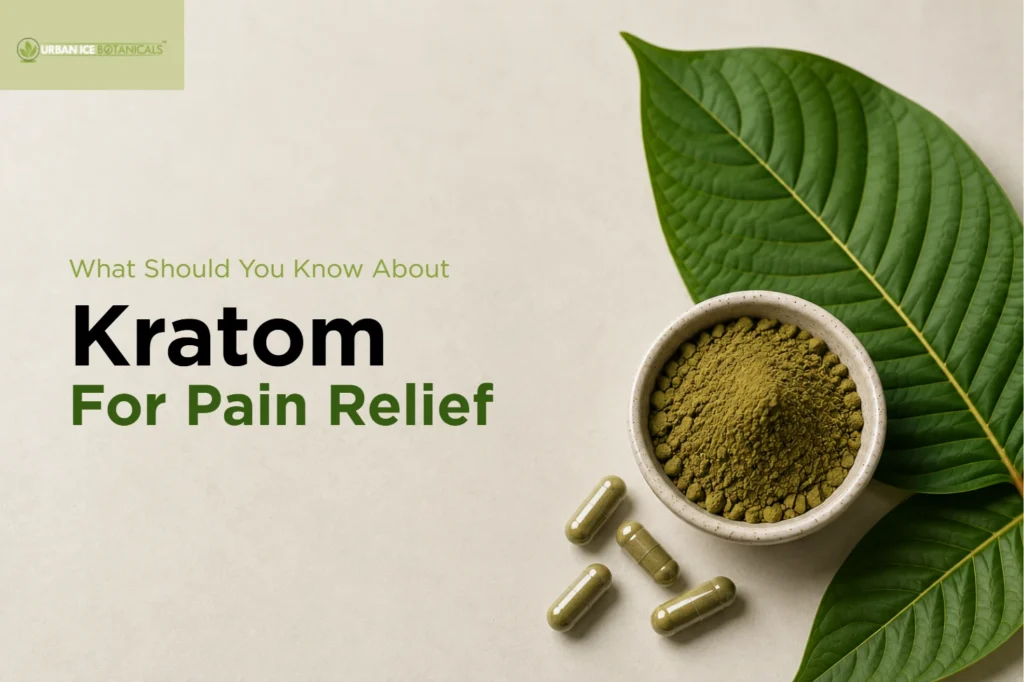
Kratom for pain relief is traditionally used via leaves, powders, capsules, teas, or extracts to deliver active alkaloids mitragynine and 7-hydroxymitragynine to central mu-opioid receptors, blocking pain signals with a rapid metabolic onset. Specific red vein strains, such as Red Bali, Red Borneo, Red Maeng Da, Red Indo, and Red Sumatra, provide robust, sedating chronic pain management, while Green Malay and Green Maeng Da offer daytime relief with mild stimulation. However, health authorities warn that pills and chewable extract tablets pose severe risks, including unregulated dosages, rapid tolerance buildup, physical dependence, addiction, liver toxicity, seizures, respiratory depression, and fatal overdose.
The effectiveness of kratom for pain relief depends on dosage levels, vein color/strain type, alkaloid strength, pain type, tolerance, timing of use, consumption method, and individual biology. Users must consult medical professionals, check local legality, choose standardized formulations, start with low doses, monitor for side effects, and verify vendor GMP compliance using third-party Certificates of Analysis (COAs), ensuring a precise batch-number match.
How Is Kratom Used for Pain Relief?
Kratom is used for pain relief by orally ingesting the plant’s raw leaves, powders, capsules, teas, or concentrated liquid extracts, which allows the digestive system to absorb its active chemical compounds. Once in the bloodstream, these primary alkaloids, mitragynine and 7-hydroxymitragynine, travel to the brain and bind directly to central mu-opioid receptors. This specific chemical interaction alters your central nervous system’s processing mechanisms, effectively blocking ascending pain signals, increasing your physical pain tolerance, and inducing a sedative, morphine-like analgesic effect.
Key operational details regarding how individuals utilize kratom for pain management include:
- Targeted Dosing Thresholds: Managing severe discomfort typically requires higher doses, ranging from 5 to 15 grams, to successfully trigger sedative and analgesic pathways rather than stimulant effects.
- Rapid Metabolic Onset: The physical perception of pain relief generally begins within 10 to 15 minutes following oral ingestion and can successfully sustain comfort for several hours.
- Diverse Consumption Methods: Consumers ingest the raw material through various forms, including pre-measured capsules, brewed herbal teas, powdered forms blended into beverages, or concentrated liquid extracts.
- Strategic Strain Selection: Users predominantly select “Red Vein” strains for chronic pain conditions because their unique chemical profiles deliver the most robust full-body calming and soothing properties.
- Severe Adverse Risks: Despite documented efficacy, utilizing the herb exposes you to dangerous side effects, including acute nausea, chronic constipation, liver damage, respiratory depression, and fatal overdose.
Which Kratom Strains Are Used for Pain Relief?
Kratom strains such as Red Vein varieties, Green Malay, and Green Maeng Da are used for pain relief because their dense concentrations of active alkaloids like mitragynine and 7-hydroxymitragynine bind directly to your brain’s mu-opioid receptors to blunt physical pain perception. Because these plant profiles interact with neural pathways to alter somatic discomfort, specific strains provide distinct balances between full-body sedation and daytime alertness. Tracking the chemical characteristics of each leaf type enables you to select an option tailored to your specific needs for chronic or acute pain management.
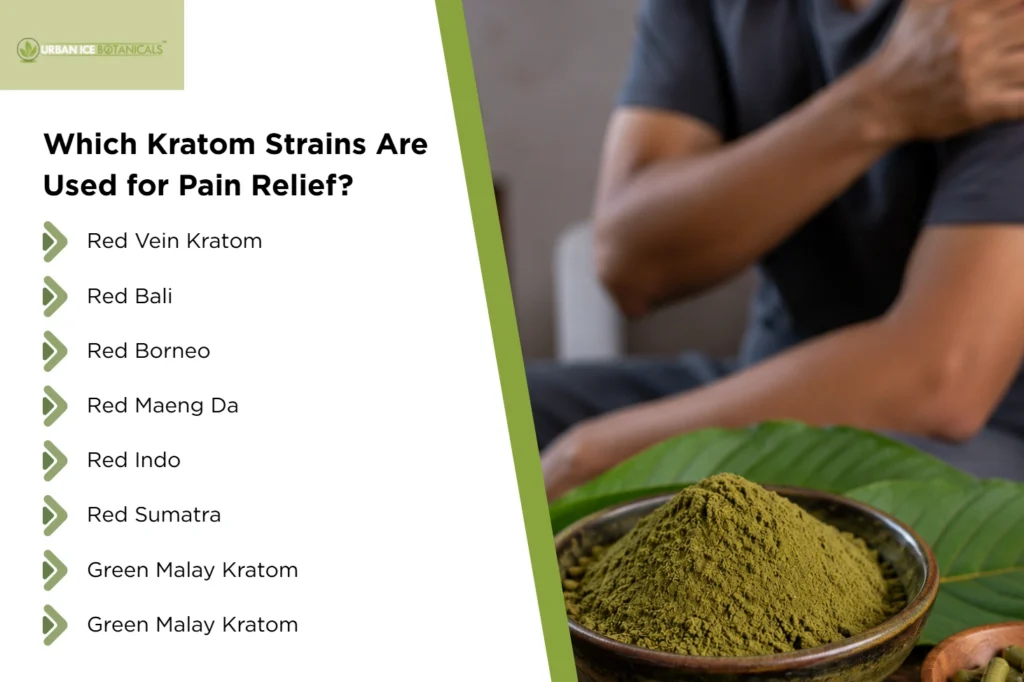
Red Vein Kratom
Red vein varieties offer the most robust analgesic and sedative properties because they contain the highest concentration of 7-hydroxymitragynine. Higher doses of red vein leaves trigger a statistically significant increase in pain tolerance, acting as a natural alternative for persistent chronic discomfort. Many individuals deploy these specific varieties to successfully manage chronic pain, anxiety, and sleep difficulties. Its profile remains much more sedating compared to alternative color profiles on the market.
Red Bali
Red Bali excels at soothing chronic back aches and deep joint pressure, delivering highly relaxing, opioid-like effects. These comforting physical sensations typically begin within 15 to 30 minutes of use and last for 4 to 6 hours, making Red Bali a suitable option for users seeking pain relief and prolonged physical comfort. Many users report that Red Bali is best suited for evening use due to its deeply calming and soothing properties.
Red Borneo
Red Borneo targets musculoskeletal and neuropathic pain with a milder sedative profile, making it a viable choice for regular discomfort. Compared to other red strains, it is often described as less sedating, helping you avoid excessive daytime drowsiness. However, regular or high doses still increase your risk of side effects such as nausea, addiction, and physical dependence.
Red Maeng Da
Red Maeng Da stands out as an exceptionally potent, fast-acting strain packed with high levels of 7-hydroxymitragynine. Red Maeng Da effect begins within 10 to 45 minutes, and the resulting pain relief can last between 4 and 6 hours. Individuals interested in using Red Maeng Da for severe chronic pain should start with a low dose to evaluate potential risks.
Red Indo
Red Indo leverages its high mitragynine content to provide robust relief from chronic back pain, arthritis, and muscle soreness. These calming effects make the strain highly suitable for evening use or full-body relaxation. The physical benefits of Red Indo begin within 15 to 30 minutes and can last up to 6 hours.
Red Sumatra
Red Sumatra promotes deep, full-body comfort and muscle relaxation in the evening, making it a popular choice for arthritis sufferers. The baseline potency varies significantly by batch, and higher doses are associated with stronger analgesic effects. However, escalating your intake raises the risk of side effects such as nausea, dizziness, and physical dependency.
Green Malay Kratom
Green Malay offers a unique daytime profile by providing mild-to-moderate pain relief simultaneously paired with sustained physical energy and mental clarity. Many surveyed users report this Southeast Asian strain as effective for managing their pain or medical conditions. A baseline serving of 1 to 2 grams handles minor aches, while experienced individuals utilize 4 to 6 grams for deep chronic pain control. The effects usually begin within 30 to 45 minutes and can last 4 to 6 hours, depending on your body weight. This distinct timeline offers a less sedating experience, making it perfect for daytime use without significant drowsiness.
Green Maeng Da
Green Maeng Da combines green- and white-vein leaves to create a balanced hybrid profile suited for daytime use. This strain mimics opioid-like pain relief while delivering mood enhancement and mild stimulation rather than heavy sedation. Many users report that it successfully increases their daily motivation while still offering adequate relief for chronic or acute pain. The pain relief provided is often compared to that of opioids, though its active properties are generally less sedating. However, you must still carefully review safety information before use because the risk of addiction and liver issues remains present.
What About Kratom Pills and Chewable Extract Tablets for Pain?
Kratom pills and chewable extract tablets target conditions like chronic pain and arthritis, but health authorities warn they deliver unregulated, often high doses of active alkaloids. These products contain mitragynine and 7-hydroxymitragynine, which bind to brain mu-opioid receptors to generate opioid-like effects. Standard pills contain pulverized leaves with highly unpredictable potency, while chewable extracts amplify alkaloid concentrations, elevating the risk of severe liver toxicity and substance use disorder.
- Chewable Extract Tablets: These chewable formulations contain highly concentrated Mitragyna speciosa extract and dissolve directly in the mouth. They provide fast systemic absorption and an artificially standardized alkaloid payload that eliminates raw batch-to-batch variability. However, this extreme concentration drastically spikes your risk of rapid tolerance buildup, severe liver toxicity, physical addiction, and immediate side effects like acute nausea.
What About Kratom Tolerance and Its Impact on Pain Relief?
Kratom tolerance directly diminishes the plant’s long-term pain relief effectiveness as your body adapts to regular use, forcing you to consume higher or more frequent doses to achieve the same analgesic impact. This desensitization occurs because the primary active alkaloids, mitragynine and 7-hydroxymitragynine, continuously bind to mu-opioid receptors in your brain, blocking pain signals. Over time, escalating your dosage to overcome this tolerance directly increases your risk of developing a physical dependence and experiencing severe side effects.
While this mechanism provides effective, documented pain management in the short term, systemic tolerance remains a major obstacle if you seek long-term relief for chronic pain. Because of these diminishing returns and the escalating risk of dependency, you must thoroughly evaluate these safety and risk factors before choosing to utilize kratom for ongoing pain management.
What Factors Affect How Kratom Works for Pain?
The factors that affect how kratom works for pain include dosage metrics, structural chemistry, ingestion methods, and unique user physiology, which collectively dictate the rate and intensity of active alkaloid absorption in the body. Because these interconnected variables alter how the active plant elements interact with your central nervous system, managing each parameter provides better control over your physical response.
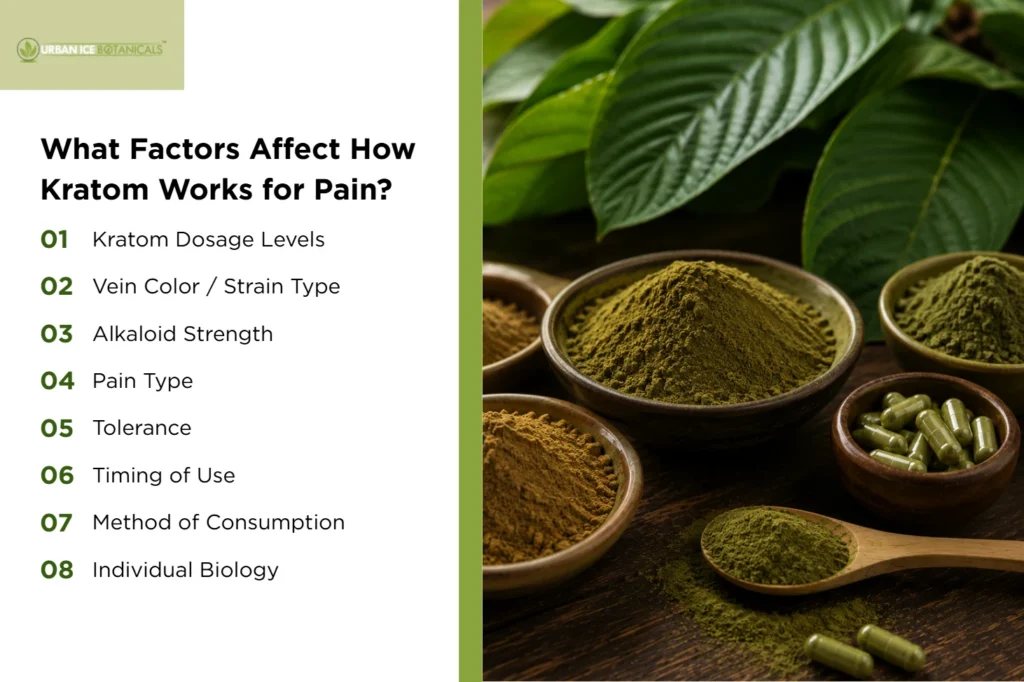
8 factors affecting how kratom works for pain include:
- Kratom Dosage Levels
Altering your physical intake dictates the primary chemical mechanism your body triggers. Low thresholds of 1 to 3 grams are mild stimulants that increase alertness and temporarily distract you from minor physical discomfort. Align the ranges consistently throughout the document. A commonly cited range for analgesic effects is 5–8 grams. The “5 to 15 grams” figure in particular extends into territory associated with high overdose risk and should include a stronger caution. - Vein Color / Strain Type
Leaf maturity and harvesting timelines establish the baseline chemical footprint of each strain variety. Choosing Red Vein options like Red Bali or Red Maeng Da offers deeply soothing, opioid-like properties specifically suited for managing severe, long-lasting chronic pain. Conversely, Green Vein strains provide moderate daytime relief alongside clean focus, while White Vein strains are typically selected for pure energy and mood elevation rather than somatic pain control. - Alkaloid Strength
The specific percentages of mitragynine and 7-hydroxymitragynine in your product determine its therapeutic ceiling. These active molecules exhibit moderate binding affinity for mu-opioid drug targets, meaning that dense profiles trigger intense, predictable analgesia. However, because commercial standardization remains highly limited, checking lab reports is necessary to gauge batch-to-batch variations in strength and avoid unintended side effects such as heavy sedation. - Pain Type
Your specific diagnosis changes the perceived effectiveness of the botanical compounds. Users commonly report achieving highly consistent results when using the substance to dull long-term chronic ailments, such as persistent lower back discomfort or deep joint soreness. In contrast, applying the herb to sharp neuropathic conditions or sudden, brief acute flare-ups yields much less predictable results due to the complex underlying mechanics of nerve pain. - Tolerance
Consistent, daily consumption causes your body’s neural receptors to desensitize to the active alkaloids over time. This reduced response diminishes the plant’s overall pain-relieving performance, which often prompts individuals to increase their portion sizes or frequency of consumption. To stop this cycle from triggering physical dependence or a heightened sensitivity to pain, consumers often rotate their strains or implement regular usage breaks. - Timing of Use
Managing your daily intake schedule and coordinating doses around your meals directly shifts the speed of symptom relief. Consuming your dose on an empty stomach triggers a rapid metabolic onset and an intense pain block, whereas taking it with solid food delays digestion and reduces peak intensity. Maintaining a rigid, consistent daily schedule stabilizes your overall blood levels, preventing fluctuations in your comfort. - Method of Consumption
The physical format you choose to swallow determines how quickly your digestive system breaks down the material. Mixing raw powder with juice or steeping it in hot tea delivers a fast onset and moderate duration, while swallowing compressed capsules delays relief because the outer shells take longer to dissolve. Opting for liquid extracts and tinctures provides immediate, highly concentrated strength but carries a far greater risk of triggering intense nausea. - Individual Biology
Your body’s baseline chemistry acts as the final filter for how the active compounds perform. Specific liver enzymes, particularly CYP3A4 and CYP2D6, dictate your metabolic speed; fast metabolizers quickly burn through the alkaloids, which shortens the pain-relief window. Furthermore, your age, current body weight, kidney health, and history of prior prescription opioid tolerance will all heavily skew your final sensitivity to the plant.
What Else Should You Know About Using Kratom for Pain?
You should know about the total absence of regulatory approval, the high risk of opioid-like dependency, severe organ toxicity, and dangerous product contamination before using kratom for pain management. Because the active chemical compounds interact directly with your brain’s opioid receptors, unmonitored consumption poses immediate threats to your central nervous system.
- FDA Non-Approval: Recognize that the FDA has not approved kratom for any medical use, including pain relief, and actively advises consumers to avoid it due to documented risks of liver toxicity, seizures, and addiction.
- Risk of Addiction and Dependence: Understand that the active compounds, mitragynine and 7-hydroxymitragynine, bind to opioid receptors, mimicking prescription opioids at higher doses and increasing your vulnerability to substance use disorder.
- Potential for Severe Side Effects: Gauge the threat of severe physical complications associated with regular use, which include progressive liver damage, chronic constipation, life-threatening seizures, and accidental overdose.
- Contamination Risks: Acknowledge that a complete lack of domestic regulation means commercial products frequently contain dangerous adulterants, toxic heavy metals, and harmful bacterial pathogens.
- Dangers of Combining Substances: Avoid mixing kratom with alcohol, prescription medications, or other drugs, as combining them drastically spikes the risk of severe side effects, especially when paired with central nervous system depressants.
What Are the Potential Side Effects of Kratom?
The potential side effects of kratom include gastrointestinal distress, cardiovascular strain, severe neurological complications, and chronic systemic damage, which stem from its unapproved, opioid-like action on the body. Consuming the substance exposes your system to erratic toxin levels and dangerous contamination.
- Common Side Effects: Low or moderate doses frequently trigger immediate physical discomforts such as nausea, vomiting, constipation, dizziness, dry mouth, and excessive sweating.
- Severe Side Effects: Scaling up to higher doses causes dangerous reactions like high blood pressure, rapid heart rate, life-threatening breathing problems, confusion, extreme drowsiness, seizures, or a coma-like state.
- Long-Term Effects: Chronic or regular consumption patterns link directly to anorexia, severe weight loss, uncontrollable tremors, potential liver damage, and harsh withdrawal symptoms, including mood swings, insomnia, restlessness, and aggressive behavior.
- Contamination Risks: Purchasing unregulated batches can lead to additional health problems due to widespread contamination with toxic heavy metals or harmful bacteria like Salmonella.
- Drug Interaction Dangers: Combining kratom with other substances—including benzodiazepines, barbiturates, alcohol, opioids, antidepressants, and anxiolytics—multiplies the risk of fatal overdoses or severe synergistic side effects.
Is the Use of Kratom for Pain Relief Safe?
The use of kratom for pain relief offers positive aspects for some users, who report that its active, opioid-like alkaloids provide effective chronic pain management and muscle relaxation. This analgesic impact helps certain individuals manage persistent discomfort when traditional treatments fail. However, scientific evidence supporting its clinical safety and effectiveness remains highly limited, and the absence of FDA oversight means that the active ingredients vary unpredictably from batch to batch.
Consequently, major health authorities do not consider kratom safe for pain management due to severe risks. Regular use can lead to opioid-like addiction, physical dependence, liver toxicity, seizures, and respiratory depression. Furthermore, widespread product contamination with heavy metals and harmful bacteria increases your risk of toxicity, making professional medical alternatives far safer.
How Should You Choose and Use Kratom for Pain Relief?
Choose kratom for pain relief by consulting a licensed healthcare provider, selecting reputable GMP-compliant vendors, and verifying third-party lab testing to minimize your exposure to contaminated or dangerously adulterated products. Because the FDA does not approve kratom for any medical use, vetting your source and product chemistry serves as your primary defense against harmful bacteria and heavy metals.
Once you select a product, apply these precise guidelines to use kratom for pain relief:
- Consult a Medical Professional: Speak with a licensed healthcare provider to assess your specific pain condition and explore evidence-based treatments that are properly monitored for safety and clinical effectiveness.
- Verify Vendor Quality Control: Buy exclusively from reputable vendors that strictly follow Good Manufacturing Practices (GMP) and provide accessible third-party lab results to reduce your risk of consuming contaminated products.
- Evaluate Strain Characteristics: Recognize that while Red Vein kratom is marketed for pain relief and sedation, and Green or White strains for energy, no clinical evidence proves any specific strain is safe or effective for pain management.
- Start with Low Doses: Begin with a minimal dose to actively screen your body for adverse reactions, keeping in mind that higher doses directly spike your risk of experiencing liver toxicity, seizures, and respiratory depression.
- Manage Dependency and Interaction Risks: Remain aware that kratom binds to opioid receptors in the brain, creating a high risk for addiction, physical dependence, severe withdrawal symptoms, and dangerous drug interactions.
- Check Local Legality: Verify all local and state laws before purchasing or possessing any kratom products, as the legal status of these substances constantly varies by location.
What Should You Look for in a Kratom Product?
Look for transparent origin labeling, third-party certificates of analysis, batch number matching, and GMP compliance when selecting a kratom product for pain relief to ensure maximum product quality and chemical safety. Evaluating these specific manufacturing and verification criteria actively protects you from contaminated batches and highly unpredictable potency spikes.
- Transparency of Origin and Composition: Choose products that explicitly detail their country of origin, strain, and full ingredient list to accurately assess composition, ensuring better personal safety and dosing consistency.
- Third-Party Certificates of Analysis (COAs): Verify up-to-date third-party COAs to ensure the batch is free of heavy metals, pesticides, and microbes, and confirm that, within the alkaloid fraction of pure kratom leaf, mitragynine represents up to 66% and 7-hydroxymitragynine up to 2% ,keeping in mindlkaloids represent a small fraction of total leaf dry weight.
- Batch Number Matching COA: Confirm that the batch number printed on the packaging exactly matches the lab’s COA to ensure the purity and safety results belong to that exact product.
- GMP Compliance: Buy exclusively from vendors that follow the American Kratom Association Good Manufacturing Practices to ensure strict quality controls that reduce contamination and potency issues.
- Strain Choice for Pain Relief: Favor Red Vein kratom strains because these specific varieties provide the robust analgesic effects needed to manage chronic or acute pain.
- Avoid Highly Concentrated Extracts: Steer clear of highly concentrated extracts, as they undermine dosing accuracy and rapidly increase the risk of severe side effects.
- Safe, Standardized Formulations: Opt for standardized formulations to ensure consistent alkaloid levels in every serving, preventing unexpected or erratic physical reactions.
How Can You Use Kratom Safely for Pain?
You can use kratom safely for pain by strictly starting with low doses, monitoring for adverse side effects, and screening for drug interactions, which minimizes your risks of dependency and dangerous chemical reactions. Because this Southeast Asian plant contains active alkaloids like mitragynine and 7-hydroxymitragynine that exhibit opioid-like properties, managing your intake variables gives you better control over your physical response.
- Start with low doses: Begin your pain management with the lowest possible amount to actively reduce the risk of side effects or dependency. Because the physical effects vary widely between individuals, gradual adjustment is required to find a stable threshold.
- Monitor for side effects: Watch closely for symptoms such as nausea, dizziness, constipation, or clear signs of dependency. Regular use increases the risk of withdrawal symptoms, meaning you must stop use and consult a healthcare provider if adverse effects appear.
- Check for drug interactions: Kratom may interact with prescription medications, over-the-counter drugs, or other supplements. Always consult a healthcare professional before combining kratom with other substances to avoid harmful interactions.
- Understand legal and regulatory status: According to the FDA, kratom is not lawfully marketed in the US as a drug, dietary supplement, or food additive. Its safety and effectiveness for pain relief have not been established by regulatory authorities.
- Be aware of the lack of FDA approval: Kratom is not approved by the FDA for any medical use, including pain management. There are ongoing concerns about its safety, potential for abuse, and effectiveness.