Skip to main content


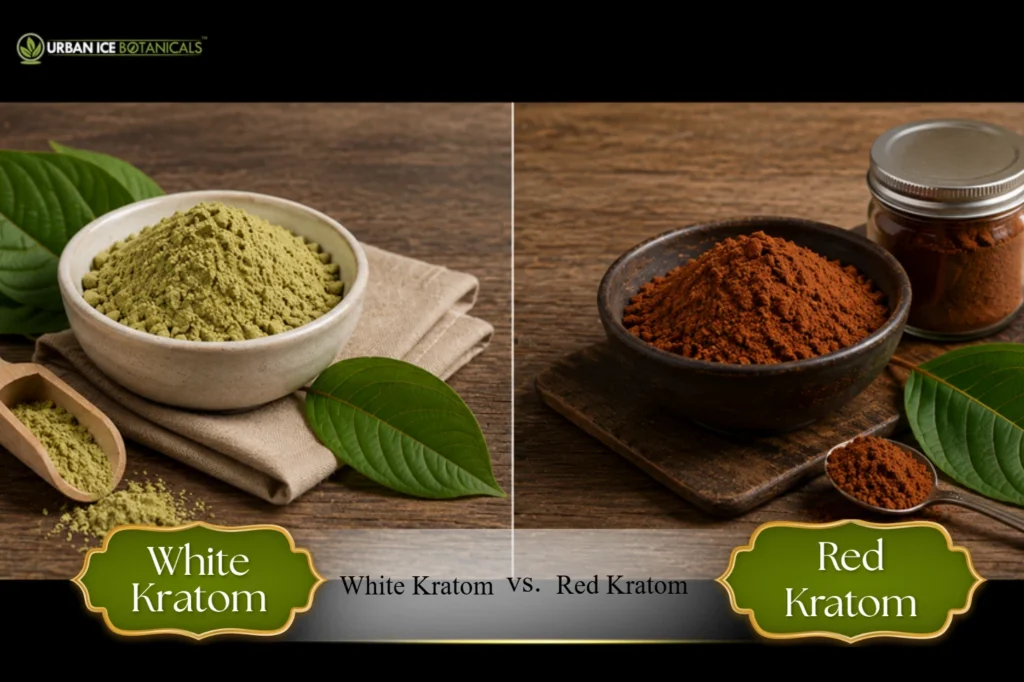
White kratom is commonly associated with energy, alertness, and mental clarity, whereas red kratom is generally linked to relaxation, physical comfort, and calming support. Due to these contrasting properties, white strains are often preferred for daytime productivity and focus-driven routines, whereas red strains are more commonly selected for evening relaxation and stress relief.
The distinction between white and red kratom primarily develops through variations in leaf maturity, harvesting stages, and drying techniques. White kratom is typically produced from younger leaves dried under controlled indoor conditions to preserve stimulating alkaloids, whereas red kratom is processed from mature leaves that undergo extended drying or fermentation to create a heavier and more relaxation-focused profile. These processing differences directly influence potency, duration, flavor, and stimulation levels. Across their uses and effects, white kratom is generally chosen to support motivation, concentration, and active schedules, whereas red kratom is commonly used for unwinding, emotional balance, and slower-paced routines.
What is White Kratom?
White kratom is a kratom variety derived from the leaves of the Mitragyna speciosa tree, commonly recognized for supporting energy, focus, and mental alertness. It contains alkaloids such as mitragynine along with smaller supporting alkaloids that contribute to its stimulating profile. This variety is often referred to as white vein kratom because of the pale-colored veins visible in the earlier stages of the leaf’s growth cycle. White vein kratom is frequently chosen by individuals seeking a more active and mentally engaging experience. Many users associate it with productivity-focused routines, particularly during mornings or demanding work schedules.
What Are the Uses of White Kratom?
White kratom is primarily used to support energy, concentration, and motivation throughout the day. Some users report that white kratom may help with motivation and stamina, making it a popular option. It is also commonly selected for productivity-oriented schedules where sustained alertness is preferred over relaxation. In many cases, users incorporate white kratom into morning routines because its profile is generally associated with wakefulness and mental engagement rather than calming effects.
What Are the Effects of White Kratom?
White kratom is commonly associated with increased alertness, mental clarity, focus, and moderate stimulation. Its alkaloid composition interacts with receptors that may influence energy perception and cognitive engagement. Many users report feeling more attentive and mentally active after consuming white vein kratom. Some individuals also associate white kratom with improved motivation and sustained task performance without the heavier relaxation commonly linked to red strains. Individual experiences can vary depending on dosage, tolerance, and metabolism.
What is Red Kratom?
Red kratom is a kratom type produced from mature red-veined leaves of the Mitragyna speciosa tree and is commonly recognized for its calming and relaxation-focused profile. It contains alkaloids such as mitragynine and relatively higher levels of 7-hydroxymitragynine, along with supporting compounds including speciogynine and paynantheine. This mature-leaf variety is widely referred to as red vein kratom because of the deep red coloration visible in the leaf veins during later growth stages. Red kratom is frequently selected by individuals seeking physical comfort, reduced tension, or evening relaxation.
What Are the Uses of Red Kratom?
Red kratom is primarily used for relaxation, emotional balance, and physical comfort. Many of the most common red kratom uses involve helping individuals unwind after long or physically demanding days while supporting a calmer mindset. It is also commonly selected for evening routines because its effects are generally associated with reduced stimulation. Consumers incorporate red kratom into nighttime schedules where restfulness and slower pacing are preferred over mental stimulation or productivity-focused effects.
What Are the Effects of Red Kratom?
Red kratom is commonly associated with calming effects, stress relief, physical relaxation, and sleep support. Its alkaloid profile interacts differently from white strains, often producing a more settled and slower-building experience. Many users report reduced tension and a heavier sense of calmness after consuming red kratom. Some individuals also associate red strains with support for discomfort management and relaxation-oriented routines, although responses may differ between users.
Looking for a Red Kratom Product?
Our Red Vein Bali Kratom Capsule offers a convenient way to experience one of the most popular red kratom strains.
What Are the Key Differences Between White and Red Kratom?
White kratom is associated with energy, alertness, and mental clarity, whereas red kratom is commonly linked to relaxation, calmness, and reduced stimulation. White vein strains are generally chosen for daytime productivity and focus, while red strains are preferred for evening use and stress relief. These differences are influenced by harvesting stages, alkaloid ratios, drying techniques, and leaf maturity, which collectively shape the overall experience of each kratom type.
| Attribute | White Kratom | Red Kratom |
| Harvesting and Processing | Younger leaves; indoor or shaded drying | Mature leaves; extended drying or fermentation |
| Alkaloid Profile and Potency | Mitragynine-focused stimulating profile | Higher sedative-leaning alkaloids |
| Energy and Stimulation Levels | High energy and alertness | Low stimulation and calming effects |
| Focus and Mental Clarity | Strong concentration support | Mild mental relaxation |
| Relaxation Properties | Limited calming effects | Deep relaxation support |
| Duration of Effects | Faster onset, shorter duration | Slower onset, longer-lasting |
| Taste and Flavor | Sharp, herbal, bitter | Earthy, smooth, fuller-bodied |
Harvesting and Processing
White kratom is generally harvested earlier in the plant’s growth cycle while the veins remain lighter in color, whereas red kratom is collected at full maturity after the veins deepen into a red shade. Following harvesting, white kratom leaves are commonly dried indoors or under controlled shade conditions to preserve their stimulating alkaloid structure. In contrast, red kratom often undergoes longer drying periods, oxidation, or fermentation methods that alter the alkaloid balance and contribute to its darker appearance. These processing differences significantly influence the effects associated with each strain type.
Alkaloid Profile and Potency
White kratom is typically dominated by mitragynine-rich alkaloids associated with stimulation and alertness, while red kratom contains relatively stronger sedative-leaning alkaloids, including increased levels of 7-hydroxymitragynine. Due to these alkaloid variations, white kratom is generally considered more suitable for energy and focus, whereas red kratom is often viewed as more effective for relaxation and physical comfort. Potency can vary depending on strain origin, drying conditions, and individual sensitivity.
Energy and Stimulation Levels
White kratom is typically associated with higher energy and stimulation levels compared to red kratom. Many individuals use white kratom strains when seeking increased alertness or mental clarity, often choosing them for support during a long day or when focus is needed. In contrast, red kratom strains are generally linked to more relaxing effects and are often selected by those looking to unwind or reduce tension. Understanding these differences in energy and stimulation can help readers decide which type of kratom aligns best with their personal goals and daily routines.
Focus and Mental Clarity
White kratom is frequently selected for cognitive engagement and concentration support, whereas red kratom is more commonly associated with mental calmness and emotional settling. Many users incorporate white strains into study sessions, demanding workloads, or productivity-driven environments, whereas red strains are often reserved for slower routines where reduced tension and mental quietness are preferred. Rather than stimulating intense focus, red kratom generally promotes a calmer headspace, whereas white kratom is more closely tied to attentiveness, responsiveness, and sustained mental activity.
Dosage Considerations
White kratom is commonly approached with lower or moderate servings because its stimulating properties may feel stronger at increased amounts, whereas red kratom is often adjusted gradually depending on the level of relaxation or physical comfort desired. For many individuals, smaller white kratom servings are associated with clearer focus and lighter stimulation, whereas larger red kratom servings are more commonly linked to deeper calming effects and heavier body relaxation. Since tolerance and metabolism differ between users, dosage responses can vary significantly across both strain types.
Relaxation Properties
Red kratom is primarily recognized for its deeper calming and relaxation-oriented effects, whereas white kratom is more commonly associated with activity, alertness, and functional energy. Many users turn to red strains after physically demanding days because the profile is often linked to reduced tension and a slower overall pace, whereas white strains are generally selected during periods that require productivity and mental engagement. In terms of relaxation intensity, red kratom tends to provide a fuller-bodied calming experience, whereas white kratom offers only mild relaxation without significantly reducing alertness or energy levels.
Duration of Effects
White kratom is often associated with a faster onset and moderately shorter duration of effects, whereas red kratom is generally known for slower-building but longer-lasting experiences. White strains are commonly used for temporary daytime stimulation or focus support, whereas red strains are typically preferred for extended relaxation routines and nighttime use. The timing of effects can differ depending on serving size, strain origin, and personal metabolism. In many cases, white kratom feels more immediate and active, whereas red kratom develops gradually and remains noticeable for a longer period.
Taste and Flavour
White kratom is often described as sharper, lighter, and more herbal in flavor, whereas red kratom is commonly known for a smoother, earthier, and fuller-bodied taste profile. Because white strains undergo lighter drying methods, they tend to retain a fresher bitterness and cleaner plant-like flavor, whereas red strains develop a deeper and richer taste through extended drying or fermentation techniques. From a preference standpoint, users who enjoy brighter and more herbal notes may lean toward white kratom, whereas individuals who prefer smoother and heavier flavor profiles often choose red kratom.
What Else Should You Know About White and Red Kratom?
White kratom and red kratom are both derived from the Mitragyna speciosa tree, but their differences extend beyond effects and vein color. Each type of kratom strain is influenced by its alkaloid profile, which shapes how users experience energy, focus, or relaxation. White kratom is often chosen for its potential to support mental clarity and alertness, while red strains are typically selected for their relaxing effects. The way kratom leaves are harvested and processed plays a role in the final product, with white kratom usually coming from younger leaves and red kratom from mature leaves.
What Are the Safety Considerations for White and Red Kratom?
The safety considerations for white and red kratom involve understanding their distinct alkaloid profiles and managing how their contrasting stimulating and relaxing effects impact the body. Because individual chemistry varies, achieving a safe experience requires careful attention to serving sizes and frequency of use to mitigate potential risks and adverse reactions.
Safety factors to consider include:
- Individual Sensitivity: Responses differ greatly based on personal health status, metabolic rate, and preexisting medical conditions.
- Dosage Control: Higher amounts significantly alter potency, making it essential to start with low servings to gauge tolerance.
- Frequency of Use: Regular or excessive intake can affect how both stimulating white strains and sedating red strains interact with body receptors over time.
- Adverse Reactions: Users must actively monitor for unwanted side effects, adjusting or pausing use if the strain’s natural properties cause discomfort.
Can You Mix White and Red Kratom Strains?
Yes, you can mix white and red kratom strains to create a customized blend that balances the stimulating, mitragynine-rich profile of white kratom with the deeply relaxing, 7-hydroxymitragynine-heavy properties of red kratom. By adjusting the ratios of each strain, you can tailor the experience to achieve simultaneous alertness and physical comfort, though it is wise to start with low amounts to gauge how the combined potencies affect your system.
Which Should You Choose: White or Red Kratom?
Choose white kratom if your goal is daytime productivity and sharp focus, or select red kratom if you need evening relaxation and physical comfort, as their contrasting alkaloid profiles are engineered for completely opposite physiological results.
To determine which strain best aligns with your immediate needs, consider these core distinctions:
- White Kratom: Ideal for morning or daytime use when you require an energetic lift, sharpened concentration, and sustained mental clarity to handle demanding tasks.
- Red Kratom: Best reserved for evening or post-work routines when your primary objective is to unwind, soothe bodily tension, and promote deep relaxation.
Consider how the alkaloid profile, duration of effects, and taste of each type fit your intended use and daily routine. If you are unsure which strain matches your preferences, reviewing the specific attributes of each can help guide your next decision about which kratom strain to try.