Skip to main content


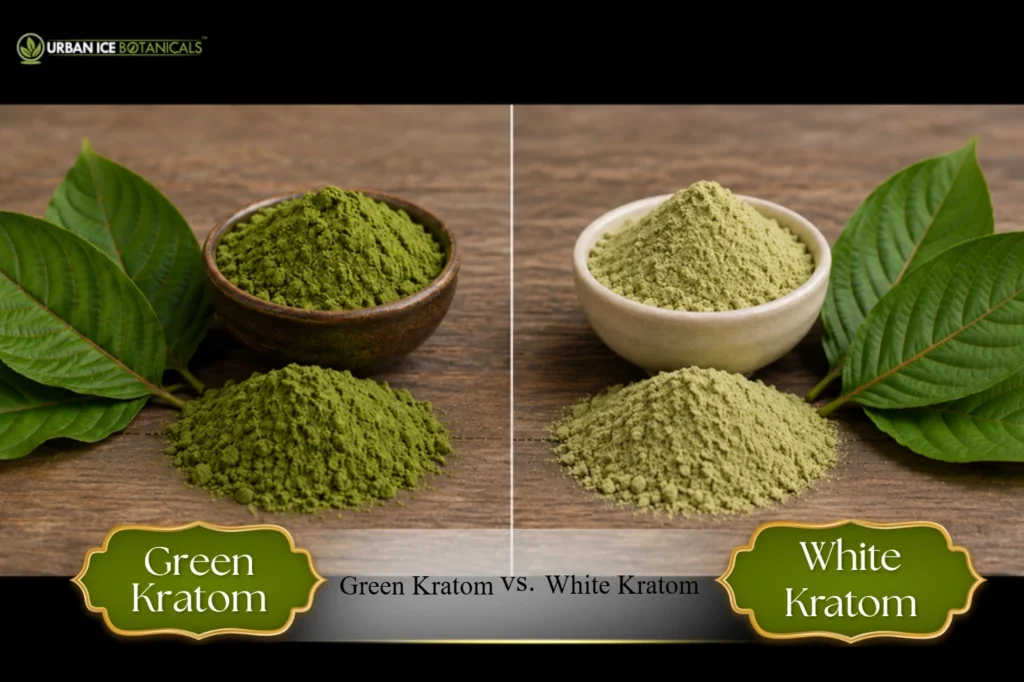
Green kratom is harvested from semi-mature leaves and is commonly associated with balanced energy, sustained focus, mild relaxation, and steady daytime support. White kratom, in contrast, comes from younger leaves and is recognized for fast-acting stimulation, sharper mental clarity, and stronger energizing effects often compared to caffeine-like alertness.
The differences between green and white kratom also extend to potency, onset time, duration, taste, and relaxation properties. Green strains generally provide smoother and longer-lasting effects without excessive stimulation, whereas white strains deliver rapid energy and short-term focus for demanding tasks. Understanding these distinctions, along with dosage considerations, safety factors, and mixing practices, can help users choose the strain that better aligns with their productivity goals, tolerance level, and preferred daytime experience.
What is Green Kratom?
Green kratom is a type of kratom derived from the leaves of the Mitragyna speciosa tree, traditionally grown in Southeast Asia. It is commonly associated with a balanced profile that may support mild energy, mental clarity, and mood elevation without the more intense stimulating or sedating characteristics linked to some other kratom varieties. This variety is often described as a middle-ground option between red and white vein kratom strains. It is produced from mature kratom leaves and undergoes specific drying methods that influence its alkaloid composition. Its alkaloid profile primarily contains mitragynine along with other naturally occurring alkaloids such as speciogynine, paynantheine, and speciociliatine.
What Are the Uses of Green Kratom?
Green kratom is primarily used to support steady daytime energy, mental clarity, and mild relaxation. Many users choose it to help overcome midday slumps, improve concentration, and ease everyday stress, particularly during demanding work or social situations. In addition, green kratom powder is often preferred for maintaining a positive outlook and active productivity, as its semi-mature alkaloid profile is associated with promoting a balanced, clear-headed state rather than overstimulating or heavily sedating effects.
What Are the Effects of Green Kratom?
Green kratom is associated with balanced energy, improved focus, mood support, and mild discomfort relief. Harvested from semi-mature leaves, green vein kratom contains an alkaloid profile that produces steady stimulation without the intense effects commonly linked to white strains or the heavy relaxation associated with red strains. Users often choose green kratom to support mental clarity, sustained motivation, and a more positive mood while remaining alert and active throughout the day. It is also commonly used for mild physical comfort without causing significant drowsiness, making it a balanced option for daytime use.
What is White Kratom?
White kratom is an early-stage strain derived from the leaves of the Mitragyna speciosa tree, known for its high concentration of mitragynine and characteristic white or light-colored veins at harvest. Many users take white kratom to improve focus, energy, and mental alertness. Common varieties include White Maeng Da and White Borneo. The alkaloids in white kratom interact with brain receptors, which may influence mood and concentration. People often use it in small doses during daytime activities. Effects and safety can vary depending on dosage and individual tolerance.
What Are the Uses of White Kratom?
White kratom is commonly used for its stimulating effects, including increased energy, improved focus, and stronger motivation. Its high mitragynine content may support mental alertness and help reduce fatigue. Many users compare its effects to those of strong coffee because it can provide quick energy and improved concentration. People often use white kratom during the morning or early afternoon to support work, study, or physical activity.
What Are the Effects of White Kratom?
The effects associated with white kratom include increased energy, sharper focus, mood support, and mild discomfort relief. White vein kratom is commonly linked to fast-acting stimulation that may support alertness, motivation, and concentration, making it a popular choice for work, study, or daytime productivity. Users also describe a more uplifted and socially engaged mood after use. Compared to green kratom, white kratom generally produces stronger stimulating effects with less relaxation, while still offering mild physical comfort without significant drowsiness.
What Are the Key Differences Between Green and White Kratom?
White kratom is harvested from younger leaves of the Mitragyna speciosa tree, while green kratom comes from more mature leaves. White vein kratom is dried indoors with minimal light, preserving alkaloids that support stimulating effects, whereas green vein kratom is dried using a mix of indoor and outdoor methods, resulting in a more balanced alkaloid profile.
| Aspect | Green Kratom | White Kratom |
| Harvesting and Processing | Harvested from semi-mature leaves and dried through mixed indoor methods for a balanced alkaloid profile. | Harvested from younger leaves and dried in darker conditions to preserve stimulating alkaloids. |
| Alkaloid Profile and Potency | Contains a balanced alkaloid composition that supports steady and moderate effects. | Contains a higher mitragynine ratio that produces faster and more intense stimulation. |
| Energy and Stimulation Levels | Provides smooth, sustained energy with mild relaxation. | Delivers sharp, fast-acting stimulation and alertness. |
| Focus and Mental Clarity | Supports long-lasting focus and a balanced mental state. | Promotes intense concentration and short-term cognitive stimulation. |
| Dosage Considerations | Often preferred in moderate amounts for balanced daytime support. | Commonly used in smaller servings due to stronger stimulating effects. |
| Relaxation Properties | Offers mild relaxation while allowing users to stay active and clear-headed. | Focuses more on stimulation and less on relaxation support. |
| Duration of Effects | Builds gradually and lasts for a longer, smoother experience. | Starts quickly with a stronger peak and shorter taper. |
| Taste and Flavour | Has a milder, earthy, and grassy taste. | Has a sharper, more bitter herbal flavor. |
Harvesting and Processing
Green kratom is harvested at a mid-maturity stage when the leaves have reached a balanced growth point, whereas white kratom is collected much earlier from the youngest leaves of the tree before the veins develop their full color. After the leaves are gathered, green kratom undergoes a controlled indoor air-drying process that shields the foliage from direct sunlight to preserve its natural coloration and chemical integrity, whereas white kratom is subjected to rapid drying inside dark facilities to deliberately lock in a highly stimulating chemical makeup.
Alkaloid Profile and Potency
In terms of chemical structure, green kratom maintains an evenly distributed network of active compounds with moderate quantities of both mitragynine and secondary alkaloids, whereas white kratom exhibits a highly concentrated ratio of mitragynine due to its origin from younger plant tissue. This difference in composition means green kratom delivers a smoother, mid-range potency that integrates easily into daily tasks without overwhelming the senses, whereas white kratom yields a sharper, more pronounced potency that targets mental alertness with rapid, intense velocity.
Energy and Stimulation Levels
Regarding physical animation, green kratom delivers a gentle, functional lift that builds gradually to support steady stamina throughout a long afternoon or social gathering, whereas white kratom sparks an intense, high-velocity surge designed to conquer acute morning fatigue. Green strains keep the mind clear and the body active without risking overstimulation, whereas white strains push the system into a rapid upswing engineered for brief windows of demanding, high-output physical labor.
Focus and Mental Clarity
In terms of focus and mental clarity, green kratom is often regarded as a supporter of a milder, longer-lasting “flow state,” whereas white kratom is considered an intense, short-term stimulant. Green kratom is commonly selected to maintain steady, all-day productivity and a balanced mood without the risk of overstimulation. In comparison, white kratom supports sharp concentration and immediate mental clarity when individuals face demanding cognitive workloads, such as complex projects or exams, though its intense effects peak quickly and taper off more noticeably.
Dosage Considerations
When considering dosage considerations, green kratom is typically used in moderate, balanced amounts to achieve its steady effects, whereas white kratom serves user preferences for stimulation within a standard range of 2 to 8 grams per serving. Both types act as stimulants in small amounts, and beginners are encouraged to start with a low serving of 1 to 2 grams to safely evaluate individual sensitivity and response. Due to differences in alkaloid content between batches, higher doses of either strain increase the risk of side effects, making a gradual adjustment best for finding a suitable baseline.
Relaxation Properties
Regarding relaxation properties, green kratom is commonly viewed as a middle-ground strain that provides a gentle mental calm and mild stress relief, whereas white kratom focuses entirely on alertness and energy, lacking these calming attributes. Green kratom supports a lighter form of relaxation that reduces everyday tension and supports a balanced mood while allowing users to remain active, clear-headed, and productive. In comparison, white kratom is mainly stimulating and is not recommended for those seeking relaxation or a settled state, as its profile is entirely geared toward mood enhancement and physical output.
Duration of Effects
When considering the duration of effects, green kratom is typically linked to a more sustained profile, often extending over 4 to 6 hours, whereas white kratom generally produces effects that are faster in onset and more time-limited. Green strains usually build more gradually, taking up to 45 minutes to become noticeable, and offer a smoother experience that tapers gently, while white strains tend to act faster, beginning within 15 to 30 minutes, reaching a pronounced peak quickly, and declining more rapidly. Due to these differences, green kratom suits daytime routines that need prolonged support, while white kratom is preferred for immediate, short-term energy.
Taste and Flavour
From a taste and flavor perspective, green kratom is often described as milder and earthier, with a fresh, grassy taste that resembles traditional herbal tea. On the other hand, white kratom tends to present a sharper, more robust herbal profile with a heavier, more distinct bitterness. The careful indoor drying used for green strains preserves a cleaner, brighter flavor that many find more palatable to consume raw, whereas the rapid drying of younger white leaves creates a flavor often compared to strong unroasted tea leaves or matcha.
What Else Should You Know About Green and White Kratom?
Green and white kratom differ in several important ways, including leaf maturity at harvest, alkaloid profiles, and drying methods. Because both varieties are highly energizing, users should avoid consuming them late in the day to prevent interference with healthy sleep patterns White Kratom features a high concentration of mitragynine that delivers a quick surge of sharp, stimulating energy and focus. Its effects peak rapidly and decline just as quickly, making it ideal for morning use or short-term demanding tasks. Whereas green Kratom offers a more balanced alkaloid spectrum that results in smoother, longer-lasting effects. It serves as a gentle middle ground, providing a steady increase in energy paired with mild relaxation for those sensitive to intense stimulation.
What Are the Safety Considerations for Green and White Kratom?
The safety considerations for green and white kratom include managing stimulant overload, avoiding the wobbles, preventing physical dependency, and noting official regulatory warnings. These risks exist because both varieties contain comparable active compounds that affect the body similarly, so responsible use and strict adherence to dosing guidelines are necessary to minimize adverse health outcomes.
The 4 primary safety considerations are:
- Stimulant Overload: Taking higher doses may lead to stimulant overload, which can cause symptoms such as jitters, rapid heart rate, anxiety, and high blood pressure. White vein kratom, in particular, is often used for energy and focus, making it more likely to cause over-stimulation or restlessness in sensitive individuals.
- The Wobbles: Consuming too much kratom, regardless of strain, can result in a side effect known as “the wobbles.” This condition is marked by dizziness, nausea, vomiting, and shaky vision, and is more likely to occur with accidental high doses.
- Dependency and Withdrawal: Long-term, daily use of green or white kratom may lead to physical dependence. If use is stopped abruptly, withdrawal symptoms such as muscle aches, insomnia, and irritability can occur.
- FDA Warning: The U.S. Food and Drug Administration has not approved kratom for any medical use and carries significant risks, including the potential for substance use disorder, liver toxicity, and seizures. The FDA advises consumers to avoid kratom products due to these safety concerns.
Given these serious factors, anyone considering these strains should consult a healthcare professional to properly assess their personal sensitivity and health risks before use.
Can You Mix Green and White Kratom Strains?
Yes, you can mix green and white kratom strains to create a customized experience that combines the fast-acting alertness of white vein with the smooth, sustainable qualities of green vein. This practice offers possible advantages, providing utility by delivering a full-spectrum effect that supports both energy and focus while reducing the risk of building a tolerance to a single strain. Because both varieties are stimulants, it is important to start with small amounts and monitor your personal response. Adjusting the ratio and total dose can help you find the right balance for your desired health outcomes while minimizing the risk of side effects.
Which Should You Choose: Green or White Kratom?
Choose white kratom if you need a strong, immediate increase for demanding tasks, or select green kratom for a balanced experience. Your final choice depends on your personal goals and the outcomes you want to achieve, given the distinct leaf maturity and alkaloid profiles of each.
- White Kratom: Utilizes the youngest leaves to deliver high concentrations of stimulating alkaloids. It serves as a fast-acting alternative to caffeine, offering immediate mental clarity and potential advantages when tackling intense physical or cognitive workloads.
- Green Kratom: Relies on semi-mature leaves that offer a more stable, gradual release. This results in positive effects on mood and motivation without the crash or jitters, making it a supportive option for long workdays, social settings, or sustained productivity.
Ultimately, select white strains for an immediate, high-energy surge, or choose green strains if you are a beginner seeking balanced, all-day stamina. Always start with a small amount to safely evaluate the health outcomes associated with your unique body chemistry.