Skip to main content


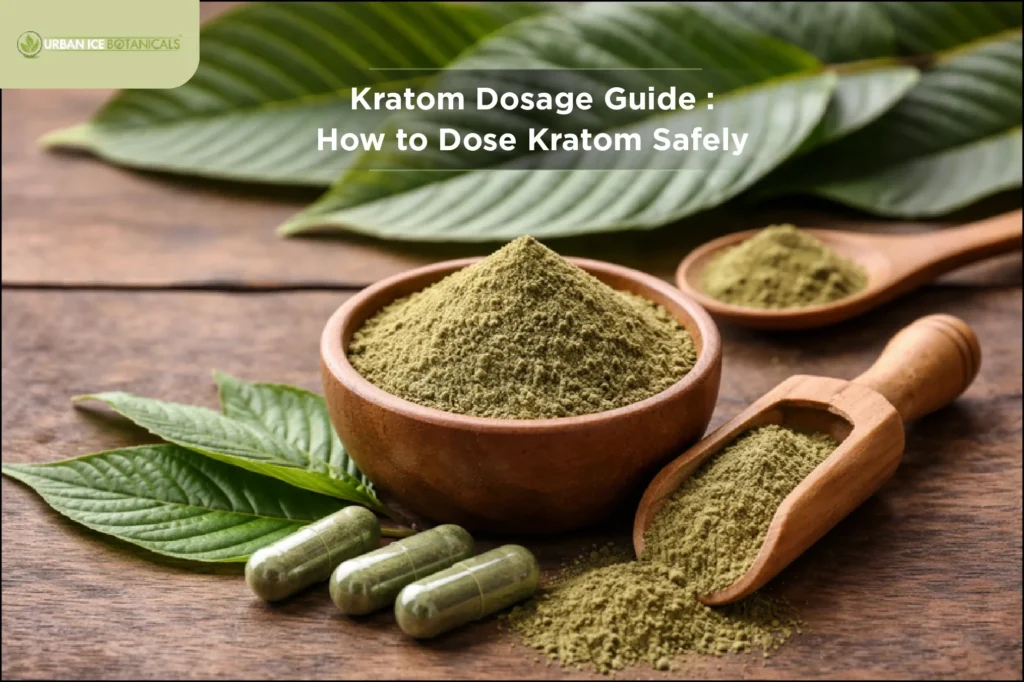
To dose kratom safely, begin with a low amount, monitor the body’s response, and increase gradually within a defined range to minimize the risk of adverse effects. Kratom dosage varies based on experience level, where beginners start with 1–2 grams, intermediate users may use 2–5 grams for balanced effects, while experienced users require 3–8 grams depending on their tolerance and intended outcome.
Along with experience level, kratom dosage is influenced by factors such as body weight, strain type, and product form. These variables determine how each dose performs in terms of onset, intensity, and duration. Because of this variation, gradual adjustment is essential to achieve consistent effects while maintaining safe and predictable use.
For safe kratom dosage, selecting the right strain type, such as red vein for relaxation or white vein for energy, and adjusting dosage based on use cases like pain relief, sleep support, or mood balance are essential steps in achieving controlled outcomes. Accurate measurement across forms like capsules, powder, extract, and tea ensures consistency and prevents overuse, while gradual adjustment and awareness of side effects help maintain safe dosing.
Kratom Dosage Chart by Experience Level
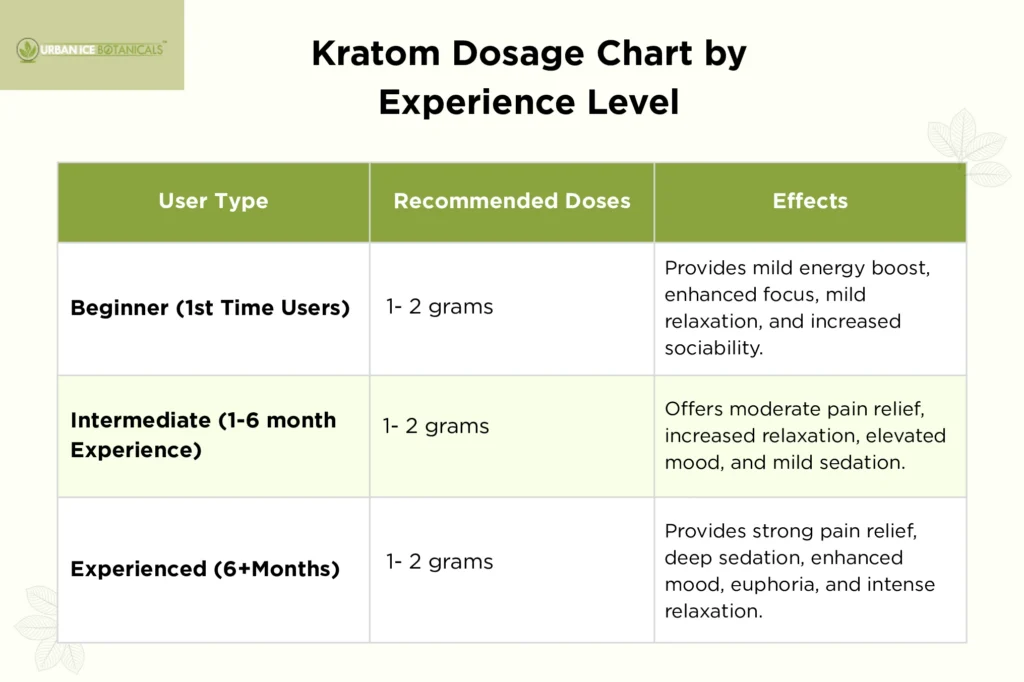
Based on experience level, kratom dosage is influenced by user type, where beginners use lower doses (1-2 g) for mild effects, intermediate users require (2-5g) moderate intake for balanced relief, and experienced users take higher doses (3-8g) for stronger and more sedative outcomes.
| User Type | Recommended Doses | Effects |
| Beginner (1st Time Users) | 1- 2 grams | Provides mild energy boost, enhanced focus, mild relaxation, and increased sociability. |
| Intermediate (1-6 month Experience) | 2-5 grams | Offers moderate pain relief, increased relaxation, elevated mood, and mild sedation. |
| Experienced (6+Months) | 3- 8 grams | Provides strong pain relief, deep sedation, enhanced mood, euphoria, and intense relaxation. |
What Are the Factors That Affect Kratom Dosage?
The factors that affect Kratom dosage include body weight, tolerance level, metabolism, strain potency, and product form. Each of these variables directly influences how kratom alkaloids are absorbed, processed, and experienced in the body, which is why dosage must be carefully adjusted rather than standardized.
- Body Weight
A person with lower body weight often experiences stronger effects from kratom at smaller amounts, while a person with higher body weight may require slightly higher amounts to achieve similar results. A practical approach is to adjust intake proportionally, starting with a low dose based on weight ranges such as 1–2 grams for individuals under 150 lbs, 2–3 grams for those between 150–200 lbs, and 2.5–3.5 grams for individuals over 200 lbs, then increasing in small increments while maintaining a consistent safety margin.
- Tolerance Level
Taking a low kratom dose with little or no tolerance can produce strong effects, while higher tolerance often requires increased doses to achieve similar results. Regular kratom intake can build tolerance within one to two weeks, especially at higher doses, which shifts the effective dosage range upward. To manage this response, users should rotate kratom strains such as Red Bali and Green Maeng Da and introduce tolerance breaks of 2–3 days per week to help reset sensitivity and maintain a consistent safety margin.
- Metabolism
Individuals with a faster metabolism often experience a quicker onset of Kratom effects but shorter-lasting effects, while those with a slower metabolism may notice a delayed onset with a prolonged duration. Metabolic rate affects kratom dosage by determining how quickly the body processes and eliminates its active alkaloids, which directly influences the onset time and duration of effects. This variation means users should adjust both the timing and frequency of intake, allowing sufficient intervals between doses to avoid stacking effects and to avoid exceeding a safe threshold.
- Strain Potency
If you are taking a high-potency kratom strain, the kratom dose should be lower, as even small amounts can produce stronger effects, whereas milder strains may require slightly higher doses to achieve similar results. For example, a dose that feels balanced with Green Malay may feel stronger with Red Maeng Da due to higher alkaloid content. Extracts and enhanced kratom products are significantly more concentrated than plain-leaf powder, so they may require much smaller amounts and should never be measured using standard powder-based dosing guidelines.
- Product Form
Whether you take kratom in powder, capsule, extract, or tea form also impacts the dosage amount, as each form differs in absorption rate and bioavailability. For example, kratom powder produces a faster onset due to direct digestion, capsules delay absorption because of casing breakdown, and extracts deliver highly concentrated alkaloids in smaller servings. This variation means the same gram amount can produce different intensity levels depending on the form used.
Kratom Dosage By Strain Type
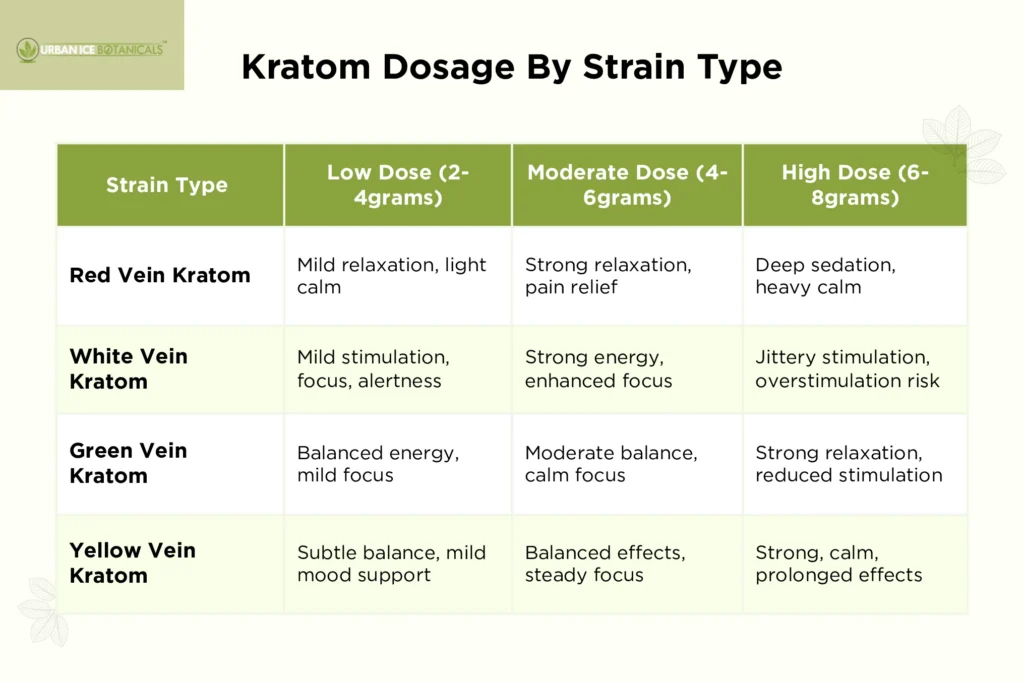
Kratom dosage by strain type is categorized into red, white, green, and yellow veins, each offering distinct effects and requiring different dosage ranges based on their alkaloid profile. This categorization allows users to adjust dosage more accurately based on the desired intensity and functional outcome.
| Strain Type | Low Dose (2-4grams) | Moderate Dose (4-6grams) | High Dose (6-8grams) |
| Red Vein Kratom | Mild relaxation, light calm | Strong relaxation, pain relief | Deep sedation, heavy calm |
| White Vein Kratom | Mild stimulation, focus, alertness | Strong energy, enhanced focus | Jittery stimulation, overstimulation risk |
| Green Vein Kratom | Balanced energy, mild focus | Moderate balance, calm focus | Strong relaxation, reduced stimulation |
| Yellow Vein Kratom | Subtle balance, mild mood support | Balanced effects, steady focus | Strong, calm, prolonged effects |
Red Vein Kratom
Red vein kratom is classified as the most sedative and analgesic among kratom strains, which makes it suitable for users seeking relaxation and pain relief. Lower doses around 2–4g typically promote mild calmness and stress relief, while moderate doses of 4–6g are commonly used for more noticeable pain relief and deeper relaxation. Higher doses of 6–8g can induce strong sedation, so gradual dosing is important, as red strains like Red Bali and Red Borneo have a more potent alkaloid profile, and lower intake often delivers effective results.
White Vein Kratom
White vein kratom is classified as the most stimulating and mood-enhancing strain, which makes it suitable for daytime use and productivity-focused routines. Lower doses around 2–4g typically produce clean energy, alertness, and improved focus, while moderate doses of 4–6g may increase stimulation but can also introduce restlessness in sensitive users. Higher doses of 6–8g are more likely to cause jitteriness or anxiety, so controlled intake is important, especially with strains like White Maeng Da and White Thai.
Green Vein Kratom
Green vein kratom is classified as a balanced strain that provides mild stimulation along with moderate pain relief, which makes it suitable for both new and regular users. Lower doses around 2–4g typically support light energy, focus, and mental clarity, with strains like Green Maeng Da often used for productivity and alertness. Moderate doses of 4–6g offer a smooth blend of calmness and relief, where Green Malay is commonly preferred for longer-lasting balance and mood support. Higher doses of 6–8g shift toward relaxation, with strains like Green Borneo providing deeper calm and physical comfort.
Yellow Vein Kratom
Yellow vein kratom results from a specialized drying or fermentation process rather than from a natural leaf color, creating a mellow, long-lasting effect profile. At lower doses around 1–2g, it supports subtle mood balance and light effects, with Yellow Vietnam often used for gentle mood uplift and mental clarity. Moderate doses of 2–4g provide steady focus and relaxation, where Yellow Maeng Da is preferred for balanced energy and stable concentration. Higher doses of 4–6g promote deeper calm and extended comfort, with Yellow Borneo commonly used for longer-lasting relaxation without heavy sedation.
Kratom Dosage by Use Case
Kratom dosage based on use case is categorized under energy, pain, relaxation, sleep, mood, anxiety, and opioid withdrawal support, where each category requires a different intake range to produce the intended effect. This dose-dependent variation allows users to adjust their intake based on specific goals while maintaining a controlled, consistent response.
Kratom for Energy
When kratom is taken in lower amounts, typically around 1.5–3 grams, it is more likely to produce energizing effects such as increased focus and alertness. At this level, white and green vein kratom strains such as White Maeng Da and Green Malay are commonly used to support alertness, focus, and productivity. Taking kratom around 30 minutes before breakfast may promote a faster onset, with effects typically lasting 4–6 hours, while maintaining a lower intake helps sustain clean energy without overstimulation or crash.
Kratom for Pain
For mild to moderate pain, kratom dosage starts at 3–4 grams, with maintenance doses of 4–6 grams taken every 6–8 hours, while total daily intake should remain within 15 grams in divided servings. In chronic pain management, users often follow a structured intake pattern with 4–5 grams in the morning, 3–4 grams in the afternoon, and 5–6 grams in the evening to maintain consistent relief. Commonly used strains for pain relief include Red Bali, Red Borneo, and Green Maeng Da, known for their analgesic properties.
Kratom for Relaxation
Individuals seeking relaxation often use kratom in the 3–5g range, where both physical and mental calmness are more consistently experienced. Red and green vein strains, such as Red Bali and Red Borneo, are commonly used to support relaxation and stress relief. For evening use, taking a 3–5g dose around 2–3 hours before bedtime helps promote a settled state without excessive sedation. A calm environment improves the experience, while combining kratom with alcohol or other depressants should be avoided to maintain safety.
Kratom for Sleep
For sleep support, kratom dosage falls within the 4–6g range, taken around 60 to 90 minutes before bedtime to promote restfulness. Red-vein strains are best suited to their sedative properties, while white-vein strains should be avoided in the evening, as they may increase alertness. Following a sleep aid protocol, taking 4–6g about 1–2 hours before bed can support relaxation, though higher doses may increase the risk of next-morning grogginess, so careful adjustment is recommended.
Kratom for Mood and Anxiety
Kratom dosage for mood and anxiety is commonly maintained within the 2–4g range, where balanced calming and mood-stabilizing effects are more reliably observed. Green and yellow vein strains such as Green Malay and Yellow Vietnam are often selected for their steady emotional support, mild relaxation, and mental clarity. Consistent low dosing helps regulate stress without sedation, whereas higher doses may disrupt balance, increase restlessness, and diminish the desired anxiolytic effect over time.
Kratom for Opioid Withdrawal Support
In terms of opioid withdrawal support, kratom dosage is often described within the 3–6g range, where some individuals aim to reduce symptoms such as cravings, restlessness, and physical discomfort. Red vein strains like Red Bali and Red Borneo are often associated with this use because of their calming and stabilizing effects. Intake is often spaced every 6–8 hours based on symptom intensity, but this application is not FDA-approved, and kratom carries its own dependence risk, so users should remain cautious and guided by a qualified healthcare provider.
How to Measure Kratom by Form?
Kratom is measured based on its form, including capsules, powder, extract, and tea, each requiring a different approach to ensure accurate dosing and consistency. This variation affects both serving size and potency, which makes precise measurement important for maintaining a controlled and predictable experience.
Kratom Capsules
Kratom capsules provide a pre-measured and convenient dosing format, and this kratom capsule form can help users maintain accurate and consistent intake without manual measurement. A standard size 00 kratom capsule unit contains approximately 0.5g, allowing users to calculate intake easily, such as 4 capsules for a 2g dose. For structured dosing, users can start with 1 capsule (0.5g) for the first 3 days, increase to 2 capsules (1g) if needed, and gradually increase to 3 capsules, adding only 1 capsule at a time. Kratom capsules have a slower onset compared to powder due to the time required for the capsule casing to dissolve, and offer a simple way to manage dosage without dealing with raw powder taste.
Kratom Powder
Kratom powder is finely ground dried kratom leaves, which serve as the most common and versatile form for dosing and consumption. A level teaspoon of kratom powder generally contains around 2–2.5g, though this can vary based on grind size and density, which makes a digital scale the most reliable tool for precise measurement. Kratom powder can be taken through toss-and-wash or mixing into liquids such as juice or water, and provides flexible dosing control but requires consistent measurement to avoid unintended variation in effects and potency.
Kratom Extract
A highly concentrated form of kratom is known as kratom extracts, where active alkaloids are refined and intensified to deliver stronger effects in much smaller serving sizes compared to plain-leaf powder. These products are often labeled with potency multipliers such as 2x, 5x, or 10x, indicating a higher concentration than plain-leaf powder. Kratom extract should be taken in smaller amounts than regular doses, as it can increase tolerance quickly and may lead to dependence if not used with controlled and minimal intake.
Kratom Tea
Kratom tea is prepared by brewing kratom powder in hot water, often with an acidic agent such as lemon juice to help preserve alkaloid content and improve extraction. The mixture is usually simmered and then strained to remove plant material, which can slightly reduce overall potency compared to direct consumption. This method produces a smoother and more diluted intake, making kratom tea a gentler option with slower onset and more gradual effects, while also being easier on digestion for users sensitive to raw powder.
What Are the Side Effects of Kratom?
The side effects of kratom include nausea, dizziness, dry mouth, and fatigue, which vary based on dosage and individual response, with milder effects at controlled intake. However, as use increases in amount or frequency, the likelihood of adverse effects rises, and excessive intake may lead to dependence, withdrawal symptoms, and potential liver concerns. Maintaining a controlled dosage, avoiding daily use, and consulting a healthcare provider, especially when combining with other medications, may help reduce potential risks and support safer use.
Frequently Asked Questions
How much kratom should a beginner take?
Beginners should start with 1–2 grams of Kratom to assess tolerance and response before increasing gradually. This low range helps evaluate sensitivity while minimizing side effects such as nausea or dizziness.
How long does it take for kratom to kick in?
Kratom takes 15–30 minutes to take effect, depending on form and whether it is taken on an empty stomach, while effects typically peak within 1–2 hours and can last between 4–6 hours, depending on dosage and individual response. Powder tends to act faster than capsules, while food intake can delay the onset.
Can you take kratom every day?
No, you cannot take Kratom every day, as it can increase tolerance, dependency risk, and reduce effectiveness over time. Taking regular breaks between kratom intake can help maintain sensitivity and support safer long-term use.
How many kratom capsules should I take?
For structured dosing of Kratom, users can start with 1 capsule (0.5g) on days 1–3, increase to 2 capsules (1g) on days 4–7 if effects are mild, continue with 2 capsules if effective, or increase to 3 capsules if needed, while ensuring adjustments are made gradually by no more than one capsule at a time.
Should I take kratom on an empty Stomach?
Yes, taking kratom on an empty stomach may result in faster onset and stronger effects compared to taking it after food, but it may not be suitable for individuals who experience nausea, stomach sensitivity, or discomfort, as taking kratom without food can increase the likelihood of these side effects, in which case a light meal beforehand may help improve tolerance.