

Kratom is legal at the federal level in the United States but banned in seven states, including Ohio, Indiana, Louisiana, Alabama, Vermont, Wisconsin, and Arkansas. These states have prohibited the sale due to concerns about potential abuse and health risks. In states like Florida, Texas, and California, Kratom remains legal, though regulations typically include age restrictions and consumer protection laws, such as the Kratom Consumer Protection Act (KCPA), ensuring product safety.
While the FDA has raised concerns about Kratom’s safety, many U.S. states have enacted laws to regulate its sale and protect consumers, particularly by preventing access to minors and ensuring products are free from harmful contaminants. Despite its federal legality, the varying state laws reflect ongoing debates about Kratom’s safety and potential risks.
Globally, Kratom’s legal status also varies widely. It is banned in countries such as Japan, Malaysia, and the UK, while Thailand and Brazil have legalized it, often under specific regulatory controls. Consumers must stay informed about local laws to ensure they are complying with regulations when purchasing Kratom.
Understanding Kratom Legal Status in the US
Kratom is legal at the federal level in the United States, but its legality differs greatly by state. While 26 states have no specific regulations, Kratom remains unregulated in these areas. On the other hand, seven states, including Ohio, Indiana, Louisiana, Alabama, Vermont, Wisconsin, and Arkansas, have banned Kratom entirely, making it illegal to buy, sell, or possess. These bans stem from concerns about its potential for addiction and health risks, which have led to varying degrees of state-level prohibition.
In some states, Kratom is regulated under consumer protection laws, such as the Kratom Consumer Protection Act (KCPA), which ensures that Kratom products are free from harmful contaminants. States like Arizona, Nevada, Georgia, and Utah have adopted such laws, along with age restrictions to prevent underage use. Eighteen states have enacted age-related regulations, typically requiring that Kratom be sold only to individuals over 18 or 21. The legal landscape for Kratom continues to shift, with states frequently introducing new legislation that impacts its availability and use.
FDA Position on Kratom
The Food and Drug Administration (FDA) has raised significant concerns about Kratom’s safety, especially regarding potential risks to human health like liver toxicity, seizures, and addiction. These risks stem from the inconsistent alkaloid content found in Kratom products, which can vary significantly between batches, leading to unpredictable effects. As a result, the FDA has refused to approve Kratom as a dietary supplement, and it remains outside the regulatory framework for safe consumption.
Despite claims from Kratom supporters about its benefits for pain management and opioid withdrawal, the FDA insists that more clinical studies and scientific research are needed to ensure Kratom’s safety and efficacy. This ongoing federal stance against Kratom’s use for therapeutic purposes significantly influences state-level laws, with many states adopting regulatory measures or outright banning the substance due to health and safety concerns raised by the FDA’s warnings.
DEA Attempts to Schedule Kratom
The Drug Enforcement Administration (DEA) attempted to classify Kratom as a Schedule I controlled substance in August 2016, citing concerns over its potential for abuse and addiction. Under the Controlled Substances Act, Schedule I substances are considered to have no medical use and a high potential for abuse. The DEA’s proposal was based on the belief that Kratom’s psychoactive properties, primarily due to compounds like mitragynine and 7-hydroxymitragynine, could lead to addiction and health issues such as overdose.
The proposal faced strong opposition from Kratom users, health professionals, and advocacy groups like the American Kratom Association (AKA). A petition with over 140,000 signatures urged the DEA to reverse its 2016 emergency scheduling, allowing the FDA and National Institute on Drug Abuse (NIDA) more time to research Kratom’s safety and efficacy. Although the scheduling was withdrawn, Kratom remains on the DEA’s radar as a “Drug and Chemical of Concern.” The debate over its legal status continues, with future efforts to classify it as a controlled substance possible if new risk evidence arises.
Is Kratom Legal In Michigan?
Yes, Kratom is legal in Michigan, meaning its sale and use are allowed. The Department of Licensing and Regulatory Affairs (LARA) has not implemented any specific regulations for Kratom, but it monitors substances for health and safety concerns.
In recent years, several bills have been introduced to regulate Kratom, including House Bill 6351 (2019) for a Kratom Consumer Protection Act, which did not pass. House Bill 4061 (2021) aims to prevent sales to minors, and House Bill 4969 (2025) seeks to establish safety standards and restrict sales to those 18 or older. Both bills are still pending in the Michigan legislature and have not yet become law.
Is Kratom Legal in Florida?
Yes, Kratom is legal in Florida, meaning it can be consumed, sold, distributed, and possessed statewide, except in certain local areas where ordinances may impose restrictions, such as Sarasota County, which has a local ban on Kratom. However, several legislative efforts have been introduced to regulate its use. HB 179 of 2024 and HB 179 of 2026 aim to establish the Kratom Consumer Protection Act (KCPA), setting purity standards and age restrictions for sale, while CS/HB 1489 of 2025 and CS/SB 1734 of 2025 focus on regulating Kratom’s labeling, safety, and sales to adults. While Kratom remains legal, these bills, if passed, would introduce significant regulatory changes to its sale and use in Florida.
Is Kratom Legal in Miami?
Yes, Kratom is legal in Miami, following Florida’s statewide laws. It can be consumed, sold, and possessed, but there is an age restriction, as Kratom cannot be sold to individuals under 21 years of age. Violating this restriction is a second-degree misdemeanor, punishable as provided in s. 775.082 or s. 775.083 of Florida Statutes. There are no additional local bans or restrictions in Miami, but it is important to stay updated on any future regulatory changes.
Is Kratom Legal in Tampa?
Yes, Kratom is legal in Tampa, following Florida’s statewide laws. It can be sold, consumed, and possessed, with an age restriction that sales are only allowed to those 21 years or older. Violating this age limit is a second-degree misdemeanor, punishable under s. 775.082 or s. 775.083 of Florida Statutes.
Is Kratom Legal in Texas?
Yes, Kratom is legal in Texas, as the state legalized it in 2021 through House Bill 1097, which ensures its legality for sale, consumption, and possession. However, while Kratom remains legal, there have been several attempts to introduce regulations. SB 1868 (2025) aimed to set purity standards and restrict sales to those over 18, while HB 227 (2021) sought to regulate Kratom labeling and product safety. 88(R) HB 861 (2023) also proposed safety guidelines and age verification requirements for Kratom sales. None of these bills has passed yet, but they reflect ongoing efforts to regulate Kratom in Texas.
Is Kratom Legal in California?
Yes, Kratom is legal in California, with no statewide ban or regulation, but its use is not widely regulated. However, there have been efforts to introduce legislation to govern its sale and safety. AB 2365 (2020) proposed establishing the Kratom Consumer Protection Act (KCPA), setting safety standards, and restricting sales to minors, but it did not pass. Similarly, CA AB 1088 (2025-2026) seeks to prohibit the sale or distribution of Kratom products to individuals under 21, focusing on restricting access to minors, but it has not yet become law.
Is Kratom Legal in San Diego?
Kratom is illegal in San Diego due to a local ordinance that banned its sale, possession, and distribution in 2016. The San Diego City Council prohibited Kratom as part of a broader ban on novel synthetic and psychoactive drugs. As a result, businesses cannot sell Kratom, and individuals are not permitted to possess or use it within city limits.
Is Kratom Legal in Los Angeles?
Kratom is illegal in Los Angeles County, as the county has banned the sale of Kratom and 7-OH (a key alkaloid in Kratom) effective November 2025. This ban applies to businesses within the county, meaning Kratom cannot be sold or distributed in Los Angeles County after this date. While Kratom remains legal for sale in the rest of California, this county-specific ban restricts its availability in Los Angeles.
Is Kratom Legal in Tennessee?
Yes, Kratom is legal in Tennessee, but it is regulated under TENN. CODE ANN. § 39-17-452 (West 2025), which began regulating Kratom products on July 1, 2018. The law requires Kratom to be sold in its natural form and properly labeled. It is illegal to sell Kratom to individuals under 21 years of age, and it is also illegal for those under 21 to possess or purchase Kratom. Violations are considered Class A misdemeanors. Additionally, pending legislation (S.J.R. 346/H.J.R. 147) in the 114th General Assembly could introduce further changes to Kratom’s legal status.
Is Kratom Legal in Washington?
Yes, Kratom is legal in Washington, as it has no statewide ban and is not currently listed as a controlled substance in either the Revised Code of Washington (RCW) or the Washington Administrative Code (WAC). It can be sold, consumed, and possessed without legal restrictions, and the state has no state-mandated age restrictions for Kratom use.
Is Kratom Legal in Seattle?
Yes, Kratom is legal in Seattle, as there are no age limits or local bans on its sale, consumption, or possession. Seattle follows Washington state laws, where Kratom is not classified as a controlled substance, and there are no specific regulations or restrictions in place.
Is Kratom Legal in Washington D.C.?
Kratom is illegal in Washington, D.C., as it is classified as a Schedule I controlled substance. Under D.C. Mun. Regs. tit. 22-B § 1201 (2024), 7-hydroxymitragynine, a key component of Kratom, was added to the list of controlled substances on March 25, 2016. This means that both Kratom and its related substances are treated the same as other controlled substances, with limitations on possession, sale, distribution, and manufacture. Violations of the District’s laws regarding Schedule I substances are subject to penalties, although there are no specific product-label requirements.
Is Kratom Legal in Ohio?
Kratom is currently illegal in Ohio for most Kratom-related products. Starting December 12, 2025, OAC 4729:9-1-01.1 makes it illegal to sell, possess, or distribute all Kratom-related products. An emergency rule banning Kratom-related products is in effect for 180 days, after which a permanent rule will be proposed. However, the Governor’s Executive Order exempts natural Kratom in its vegetation form, meaning raw, unprocessed Kratom is not subject to the ban.
Is Kratom Legal in Colorado?
Yes, Kratom is legal in Colorado, but new regulations are being introduced through the Colorado Kratom Consumer Protection Act (S.B. 72, 75th Gen. Assemb., 2025 Reg. Sess.). This law will set labeling requirements, limit levels of mitragynine and 7-hydroxymitragynine, and prohibit sales to those under 21. The “Daniel Bregger Act” (Senate Bill 25-072), signed in May 2025, establishes comprehensive Kratom regulations. Violations, such as selling Kratom to minors, will result in a $200 fine, with further penalties determined by the executive director of the Department of Revenue.
Is Kratom Legal in Denver?
Yes, Kratom is legal in Denver, but regulated by state laws. During the 2025 legislative session, Colorado lawmakers passed Senate Bill 072 that prohibits selling Kratom to individuals under 21 and limits products to two percent 7-hydroxymitragynine (7OH), an alkaloid with opioid-like effects. These regulations apply in Denver, meaning Kratom can still be sold and consumed, but with these specific restrictions.
Is Kratom Legal in Georgia?
Yes, Kratom is legal in Georgia, regulated under GA. CODE ANN. §§ 16-13-120 to 16-13-122 (West 2025). The law, effective April 26, 2019, was amended on January 1, 2025, raising the minimum age for purchasing Kratom from 18 to 21. The amendments also introduced new definitions, set product concentration limits, and added requirements for Kratom sales. Violations of the law are classified as misdemeanors, with fines of $250 for a first offense, $500 for a second offense, and up to $1,000 for third or subsequent offenses.
Is Kratom Legal in Indiana?
Kratom is illegal in Indiana, as it is classified as a Schedule I controlled substance due to the presence of mitragynine and 7-hydroxymitragynine, two active compounds found in Kratom. Under IND. CODE ANN. Under § 35-48-2-4 (West 2025), these compounds are considered synthetic drugs and are subject to strict legal restrictions. As part of the state’s classification of synthetic drugs under IND. CODE ANN. § 35-31.5-2-321 (West 2025), Kratom is treated the same as other controlled substances, making it illegal to sell, possess, or distribute in Indiana.
Is Kratom Legal in Louisiana?
Kratom is illegal in Louisiana under Act 41 of the 2025 Regular Session, which makes it unlawful to produce, manufacture, distribute, dispense, or possess Kratom. Offenders can face up to five years in prison and fines up to $50,000, depending on the amount involved. Additionally, businesses licensed by the Louisiana Office of Alcohol and Tobacco Control (ATC) are prohibited from selling or storing Kratom products on their premises.
Is Kratom Legal in New Orleans?
Kratom is illegal in New Orleans, following Louisiana’s statewide regulations. The city adheres to state laws, making the sale, possession, and distribution of Kratom prohibited. Violating these laws can result in serious legal penalties.
Is Kratom Legal in Alabama?
Kratom is illegal in Alabama, classified as a Schedule I controlled substance under the CODE § 20-2-23 (West 2025). On May 10, 2016, mitragynine and 7-hydroxymitragynine, key compounds in Kratom, were added to the state’s list of controlled substances. As a result, possession, sale, distribution, and manufacture of Kratom are strictly prohibited in Alabama, with severe legal penalties for violations, including fines and imprisonment.
Is Kratom Legal in Arizona?
Yes, Kratom is legal in Arizona, but it is regulated under the Kratom Consumer Protection Act (KCPA). The law, effective August 27, 2019, and amended on September 24, 2022, ensures Kratom products are free from contamination and adulteration with dangerous substances, including controlled substances. It also limits 7-hydroxymitragynine content to 2% of the alkaloid composition and bans synthetic Kratom compounds. Additionally, the sale of Kratom is prohibited to individuals under 18 years of age, ensuring both safety and quality standards are met.
Is Kratom Legal in Arkansas?
Kratom is illegal in Arkansas due to its classification as a Schedule I controlled substance. Under ARK. ADMIN. CODE § 007.07.2, mitragynine and 7-hydroxymitragynine, the primary active compounds in Kratom, were added to the state’s list of controlled substances on November 8, 2015. This means that possession, sale, distribution, and manufacture of Kratom are strictly prohibited in Arkansas. Violations of these laws are subject to the same penalties as those for other Schedule I controlled substances, including significant fines and imprisonment.
Is Kratom Legal in North Carolina?
Yes, Kratom is legal in North Carolina for adults to buy, possess, and use. However, H.B. 468, introduced in the 2025 General Assembly, seeks to regulate Kratom by prohibiting its sale to individuals under 21 and requiring manufacturers to have Kratom products tested before distribution. The bill also mandates that all Kratom products be registered with the Alcohol Law Enforcement Division and includes advertising restrictions for manufacturers, distributors, and retailers.
Is Kratom Legal in Illinois?
Yes, Kratom is legal in Illinois, except in the city of Jerseyville, where it is banned. Under 720 ILL. COMP. STAT. ANN. 642/5 (West 2025), individuals under 18 cannot purchase or possess Kratom. The law also prohibits minors from using false identification to obtain Kratom or engaging in fraudulent activities related to its purchase. Selling, distributing, or buying for minors, Kratom is considered a Class B misdemeanor, carrying a fine of at least $500 for violators. These restrictions ensure that Kratom is not accessible to minors, while it remains available to adults throughout the state.
Is Kratom Legal in Chicago?
Yes, Kratom is legal in Chicago for individuals 18 and older, as per the Illinois Kratom Control Act enacted in 2014. The law regulates the sale and possession of Kratom, with restrictions on sales to minors. Therefore, adults can legally purchase and use Kratom in Chicago, but it remains illegal for those under 18.
Is Kratom Legal in Missouri?
Yes, Kratom is currently legal in Missouri, but new regulations are being proposed. H.B. 1595 and H.B. 1037, introduced in the 103rd General Assembly (2025), aim to establish the Kratom Consumer Protection Act. These bills would prohibit the sale of adulterated or contaminated Kratom products and restrict sales to individuals under 18 (H.B. 1595) or 21 (H.B. 1037), adding further safety and age-related regulations.
Is Kratom Legal in Oklahoma?
Yes, Kratom is legal in Oklahoma, but it is subject to regulations under S.B. 891 and OKLA. STAT. ANN. tit. 63 § 1-1432. Starting November 1, 2024, new definitions and labeling requirements for Kratom products were introduced, and vendors are prohibited from selling or distributing Kratom to individuals under 18 years of age. Violating product disclosure or age restrictions can result in fines up to $500 for a first offense and $1,000 for a second, with a three-year sales ban after a third offense.
Is Kratom Legal in South Carolina?
Yes, Kratom is legal in South Carolina, but its sale and distribution are subject to regulations under the South Carolina Kratom Consumer Protection Act, which is set to take effect in July 2025. The S.B. 221/H.B. 4030, introduced in the 126th General Assembly (2025), would regulate the sale of Kratom by prohibiting the sale of adulterated or contaminated products and restricting sales to individuals under 21 years of age. The bill also establishes labeling requirements for Kratom products, enhancing consumer safety and transparency.
Is Kratom Legal in Vermont?
Kratom is illegal in Vermont due to the inclusion of mitragynine and 7-hydroxymitragynine in the state’s Regulated Drug Rule since January 1, 2016, making them potentially harmful for human consumption without a prescription. However, S.B. 121/H.B. 416, introduced in the 2025 General Assembly, proposes establishing a registry for Kratom products and imposing labeling requirements for products sold, prepared, or distributed in the state. The bill also outlines enforcement standards to address violations of these regulations.
Is Kratom Legal in Wisconsin?
Kratom is illegal in Wisconsin due to its classification as a Schedule I controlled substance. On April 25, 2014, mitragynine and 7-hydroxymitragynine, the key alkaloids found in Kratom, were added to Wisconsin’s list of controlled substances. As a Schedule I drug, Kratom is considered to have a high potential for abuse and no accepted medical use, making it illegal to possess, sell, or distribute in the state. Violating these laws can lead to significant penalties, including fines and imprisonment.
Is Kratom Legal in Hawaii?
Yes, Kratom is currently legal in Hawaii, as there are no statewide laws banning its use or sale, but pending legislation, S.B. 463/H.B. 717, could change that by establishing the Hawaii Kratom Consumer Protection Act. This proposed law would require Kratom products to be registered with the Department of Health, impose labeling requirements, and prohibit the sale of Kratom to individuals under 18. If passed, the bill aims to regulate Kratom more strictly, ensuring product safety and protecting consumers.
Is Kratom Legal in Iowa?
Yes, Kratom is currently legal in Iowa, as there are no state laws specifically regulating or banning its use. However, pending legislation, including S.F. 367 and H.F. 612, could change that. S.F. 367 proposes to classify Kratom as a Schedule I controlled substance, making it illegal, while H.F. 612 aims to regulate Kratom by requiring processors to register annually, enforcing labeling requirements, and prohibiting sales of products with more than 2% of the alkaloid 7-hydroxymitragynine. The bill also seeks to restrict Kratom sales to individuals under 21.
Is Kratom Legal in Kentucky?
Yes, Kratom is legal in Kentucky, but it is regulated under specific rules to ensure consumer safety. Products must meet labeling standards, including ingredient lists, alkaloid content, and safety warnings. Kratom products cannot contain synthetic alkaloids or exceed allowed solvent levels. H.B. 481 (2025) proposes changes, allowing products with more than 2% 7-hydroxymitragynine to be labeled but not marketed as Kratom. Violations of these regulations can result in civil fines of up to $500 for a first offense and up to $1,000 for subsequent offenses.
Is Kratom Legal in Minnesota?
Yes, Kratom is legal in Minnesota, but with strict age-related restrictions. It is unlawful to sell Kratom or any substance containing mitragynine or 7-hydroxymitragynine to individuals under 18 years old. Similarly, it is illegal for anyone under 18 to possess Kratom. Selling Kratom to a minor is classified as a gross misdemeanor, while minors in possession of Kratom face a misdemeanor charge. These regulations aim to prevent underage access to Kratom while allowing legal use for adults.
Is Kratom Legal in Mississippi?
Yes, Kratom is legal in Mississippi, but it is subject to new regulations aimed at ensuring safety and controlling access. HB 1553 prohibits the sale of Kratom products to anyone under 21 and requires online retailers to implement age-verification systems. The bill also restricts the amount of 7-hydroxymitragynine in Kratom products to no more than 2%. Additional bills, such as S.B. 2734 and S.B. 2737/H.B. 1553, propose the Mississippi Kratom Consumer Protection Act, which includes packaging and labeling requirements and a 5% excise tax on Kratom products.
Is Kratom Legal in New York?
Yes, Kratom is legal in New York, but new regulations are in effect. A. 2699/S. 3426 (2025) prohibits the sale of Kratom to individuals under 21 and mandates a study on its health effects, which is effective from December 2025. Additionally, A. 5852 (2025) requires warning labels on Kratom products regarding FDA approval and potential side effects, while A. 4034 (2025) proposes adding Kratom to the list of Schedule I controlled substances.
Is Kratom Legal in Pennsylvania?
Yes, Kratom is legal in Pennsylvania, but there are health regulations to ensure safety. S.B. 233 (2025-2026), which passed the Senate Health and Human Services Committee in November 2025, bans synthetic Kratom and prohibits the sale or distribution of unsafe Kratom products. The bill also restricts the sale of Kratom to individuals under the age of 21, ensuring that only safe, regulated products are available.
Is Kratom Legal in Philadelphia?
Yes, Kratom is legal in Philadelphia, as the city follows the state regulations of Pennsylvania. There are currently no specific local ordinances banning or restricting Kratom, so its sale and possession are governed by the broader state laws of Pennsylvania. However, any changes to state-level legislation, such as S.B. 233, also affect its status in Philadelphia.
Is Kratom Legal in Virginia?
Yes, Kratom is legal in Virginia, but its possession, distribution, sale, and manufacture are regulated. The state has an age restriction, prohibiting the sale of Kratom to individuals under 21 years old. Kratom products must also be labeled with all ingredients. Violating these regulations, such as selling to minors or offering improperly labeled products, can result in civil penalties of up to $2,500 for a first offense and $5,000 for subsequent violations.
Is Kratom Legal in Kansas?
Yes, Kratom is legal in Kansas, but it is subject to regulations outlined in H.B. 2084, which establishes the Kratom Consumer Protection Act. The bill defines Kratom as a food product, prohibits the sale of adulterated Kratom, and requires individuals to be at least 18 years old to purchase Kratom. The act also establishes civil fines for violations and mandates the Secretary of Agriculture to adopt rules and regulations for its administration.
Is Kratom Legal in New Jersey?
Yes, Kratom is legal in New Jersey, with minor restrictions. The New Jersey Kratom Protection Act sets the minimum purchase age at 21 and requires transparent labeling, including ingredients and amounts. Additionally, NJ A2865 proposes adding Kratom to the state’s controlled substances law, making it a second-degree crime to distribute or possess one ounce or more, and a third- or fourth-degree crime for smaller amounts. The bill would take effect immediately if passed.
Is Kratom Legal in Oregon?
Yes, Kratom is legal in Oregon, with an age restriction of 21 and older, effective from July 1, 2023. Manufacturers must register with the Oregon Department of Revenue before selling Kratom products. Retailers are prohibited from selling Kratom to individuals under 21. Violations result in penalties, with processors facing civil fines of up to $500 for the first offense and $1,000 for subsequent offenses. Retailers who sell Kratom to minors can be charged with a Class C misdemeanor for each violation.
Is Kratom Legal in Alaska?
Yes, Kratom is legal in Alaska, with no state-level bans or specific regulations restricting its sale or use. The state has not passed any legislation that regulates or prohibits Kratom, meaning its sale, possession, and use remain unrestricted under state law. Alaskans can legally purchase and possess Kratom products, though local ordinances may vary, and consumers should be aware of any future regulatory changes.
Is Kratom Legal in Idaho?
Yes, Kratom is legal in Idaho, and individuals can purchase, possess, and use it without any state-level restrictions. There are no laws in Idaho that specifically ban Kratom, meaning its sale and consumption remain legal. Kratom has not been classified as a controlled substance in Idaho, and there have been no significant legislative efforts to restrict its availability, ensuring that it remains legal for residents to access and use.
Is Kratom Legal in Maryland?
Yes, Kratom is legal in Maryland, but its possession, distribution, sale, and manufacture are regulated. The state has an age restriction of 21 and older for purchasing Kratom. In April 2024, Maryland passed the Kratom Consumer Protection Act, which requires retailers to disclose the factual basis for any claims on Kratom product labels. The law requires retailers to include product label disclosures that outline the factual basis for any representations made about the product. Kratom retailers who violate the labeling provisions can face a civil penalty of up to $1,000 for the first violation and $2,000 for subsequent violations.
Is Kratom Legal in Massachusetts?
Yes, Kratom is currently legal in Massachusetts, but there are dueling pieces of legislation that could impact its status. While some lawmakers have introduced bills to regulate Kratom’s sale, possession, and distribution, others have sought to criminalize its components. One such bill, S.B. 1558/H.B. 1631 (2025), proposes making Kratom a Class A controlled substance. Additionally, existing laws prohibit the sale of Kratom to individuals under the age of 18. The future legal status of Kratom in Massachusetts depends on the outcome of these pending legislative efforts.
Is Kratom Legal in Rhode Island?
Yes, Kratom is now legal in Rhode Island, thanks to H5565A, which removed the state’s previous ban on Kratom. The bill replaces the prohibition with sensible regulations, including a ban on adulterating Kratom with dangerous non-Kratom substances. It also prohibits the sale of Kratom to individuals under the age of 21 and subjects Kratom products to sales and use tax. Prior to this legislation, Kratom-related substances were classified as Schedule I controlled substances by the Rhode Island Department of Health in 2017, but the new law reverses that designation.
Is Kratom Legal in Utah?
Yes, Kratom is legal in Utah, but its possession, distribution, sale, and manufacture are regulated. Kratom products are restricted to individuals 18 and older and must meet labeling requirements. Under UTAH CODE ANN. Under § 4-45-103 (2025), processors can face fines of up to $500 for the first offense and $1,000 for subsequent labeling violations. Violating § 4-45-105 by selling to minors can result in a Class C misdemeanor for each violation.
Is Kratom Legal in Connecticut?
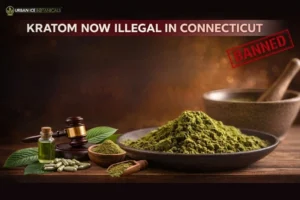
No, Kratom is not legal in Connecticut. On February 24, 2026, the Connecticut Legislative Regulation Review Committee unanimously approved regulations designating Kratom (Mitragyna Speciosa) and its derivatives, including 7-hydroxymitragynine (7-OH), as Schedule I controlled substances. The ban is effective from March 25, 2026, making it illegal to purchase, possess, sell, or distribute Kratom in any form, including powder, pills, beverages, gummies, candy, and natural leaf.
Is Kratom Legal in Maine?
Yes, Kratom is legal in Maine, and you can purchase, possess, and use it without legal issues. It is not classified as a controlled substance by the state, and there are currently no statewide age restrictions on its sale or use. As of now, there are no specific regulations or bans regarding Kratom in Maine, making it widely available for adults.
Is Kratom Legal in Nebraska?
Yes, Kratom is legal in Nebraska, but it is now regulated under the state’s Kratom Consumer Protection Act (KCPA), established by L.B. 230 and effective January 1, 2026. This law prohibits the sale of Kratom products to individuals under 21 and sets labeling requirements for Kratom products. Additionally, the Department of Revenue is required to maintain a public list of all registered Kratom products on its website. These regulations ensure the safe sale and distribution of Kratom in the state.
Is Kratom Legal in Nevada?
Yes, Kratom is legal in Nevada, but its sale and distribution are regulated under the Nevada Kratom Consumer Protection Act. The law requires Kratom products to be sold only to individuals over the age of 18 and mandates clear labeling, including ingredients and directions for safe use. Failure to comply with these regulations can result in civil penalties of up to $1,000 per violation.
Is Kratom Legal in Las Vegas?
Yes, Kratom is legal in Las Vegas. The city follows the state regulations of Nevada, where Kratom is legal for purchase, possession, and use, as long as it complies with the Nevada Kratom Consumer Protection Act. There are no specific local ordinances banning or restricting Kratom in Las Vegas.
Is Kratom Legal in New Mexico?
Yes, Kratom is legal in New Mexico. There are no state laws or local ordinances that ban or regulate its sale, possession, or use, making it freely available to adults. However, the New Mexico Environment Department has determined that Kratom is not an approved food ingredient, meaning any food containing Kratom will be considered adulterated under state food safety regulations.
Is Kratom Legal in Wyoming?
Yes, Kratom is legal in Wyoming. It is legal to purchase, possess, and consume Kratom without any state-level restrictions or regulations. Currently, there are no laws in Wyoming that specifically ban or regulate Kratom.
Is Kratom Legal in South Dakota?
Yes, Kratom is legal in South Dakota, but it is regulated under the Kratom Consumer Protection Act (KCPA), established by House Bill 1056. The bill, which passed 11-0 in the House & Health Human Services Committee, prohibits the sale or distribution of Kratom to individuals under 21 years old. Starting July 1, 2025, the bill will also ban the sale of Kratom products containing more than 2% of 7-hydroxymitragynine, any synthetic Kratom alkaloids, or adulterants that could harm consumers. Violations of these provisions are considered Class 2 misdemeanors.
Is Kratom Legal in New Hampshire?
Yes, Kratom is legal in New Hampshire for possession and use by individuals 18 years and older. However, it is important to note that Kratom has been banned in Franklin City since 2019, meaning local regulations may vary. Outside of Franklin City, Kratom remains legal for adults to possess and use.
Is Kratom Legal in West Virginia?
Yes, Kratom is legal in West Virginia, as confirmed in June 2023 through W. VA. CODE ANN. §§ 19-12F-1, with amendments made in March 2024. The law requires businesses to register and implement an age-verification system for online sales to ensure customers are at least 21. Selling Kratom without a permit is a misdemeanor for a first offense, punishable by a fine up to $1,000 or jail time. Subsequent violations are felonies with fines up to $5,000 and up to five years in prison. Selling contaminated products can result in a felony, with fines up to $10,000 and up to 10 years in prison.
Is Kratom Legal in Montana?
Yes, Kratom is legal in Montana, as there are no statewide laws specifically prohibiting its sale or use. Adults can legally purchase Kratom from local vendors. H.B. 407 (2025), which proposed the Kratom Consumer Protection Act, sought to establish a product registration program, create labeling requirements, and prohibit the sale of Kratom to individuals under 18. However, the bill failed in a 10-7 vote by the Montana House Local Government Committee.
Is Kratom Legal in Delaware?
Yes, Kratom is legal in Delaware and is widely available. The state has not classified Kratom as a controlled substance, allowing for its sale and use. Currently, Delaware does not have a specific statewide age limit for purchasing Kratom, meaning it can be sold to adults without age-related restrictions at the state level.
Is Kratom Legal in North Dakota?
Yes, Kratom is legal in North Dakota, with no statewide restrictions on its possession or sale. There are also currently no age limits for purchasing Kratom. Although House Bill 1101 aimed to classify mitragynine, a primary component of Kratom, as a Schedule I controlled substance, the bill was defeated with a 77-15 vote. As a result, Kratom remains legal and accessible to adults in the state.
Is Kratom Legal Internationally?
Kratom is banned in several countries, including Australia, Malaysia, Thailand, and the United Kingdom, where it is classified as a controlled substance. While Canada and Germany have regulations or require prescriptions for its use, Kratom remains legal and unregulated in many other parts of the world. Its legal status can change, so it’s important to verify local laws before using or purchasing Kratom internationally.
Is Kratom Legal in Canada?
Yes, Kratom is legal for use and possession in Canada and is not listed as a controlled substance under the Controlled Drugs and Substances Act (CDSA). However, it does not have Health Canada approval for human consumption, so it cannot be sold as a dietary supplement. Vendors must comply with Health Canada and the Canadian Food Inspection Agency (CFIA) regulations, and Kratom products can only be sold for external use, such as in cosmetics or soaps.
Is Kratom Legal in Mexico?
Yes, Kratom is legal in all 31 states and Mexico City (CDMX), with no specific restrictions on its sale or use. However, it operates in a legal gray area because the government has not issued formal regulations. The lack of clear legal oversight means that the substance is not regulated like other controlled substances, which could lead to future changes in its legal status.
Is Kratom Legal in Japan?
Kratom is illegal in Japan. The possession, sale, and use of Kratom are prohibited, even with a prescription from another country. Japan enforces strict regulations on substances that alter mental states. Since March 2016, Kratom (Mitragyna speciosa), along with its active compounds, mitragynine and 7-hydroxymitragynine, has been classified as a Designated Substance under the Pharmaceutical and Medical Device Act, subjecting its use to severe regulation.
Is Kratom Legal in Italy?
Kratom is illegal in Italy due to its classification as a narcotic substance. In 2016, the Italian Ministry of Health (Ministero della Salute) officially banned Kratom, along with its active alkaloids, mitragynine and 7-hydroxymitragynine, under the Consolidated Law No. 309 of 1990, which regulates narcotic and psychotropic substances. This ban makes the possession, distribution, sale, and importation of Kratom illegal throughout the entire country. Italy has adopted a zero-tolerance policy, meaning that any import, export, or sale of Kratom is strictly prohibited.
Is Kratom Legal in the UK?
Kratom is illegal in the UK due to concerns about its potential health risks and psychoactive effects. Under the Psychoactive Substances Act of 2016, the sale, import, and export of Kratom are prohibited. The UK government has expressed concern about the safety of Kratom, particularly regarding its impact on mental and physical health, which led to its classification as a banned substance.
Is Kratom Legal in Australia?
Kratom is illegal across all States and Territories in Australia, classified as a Schedule 9 drug under the Poisons Standard. This means it is a prohibited substance with no approved medical use. Possessing Kratom can result in up to 12 months’ imprisonment and/or a $2,200 fine under section 18B(3) of the Drug Misuse and Trafficking Act 1989 (NSW). Manufacturing, producing, or supplying Kratom can lead to up to 2 years of imprisonment and/or a $2,200 fine under section 18B.
Is Kratom Legal in China?
Kratom is illegal in China, with a ban on its import and sale. The Chinese government has expressed concerns over the safety, potential for abuse, and the lack of scientific research regarding the substance. On July 1, 2024, the Chinese Drug and Food Administration announced the “Administrative Measures on Narcotics and Psychotropic Substances without Medical Use,” which placed Kratom alongside 45 other substances on the list of prohibited drugs.
Is Kratom Legal in Ireland?
Kratom is illegal in Ireland due to concerns over its psychoactive effects and potential for abuse. In 2017, it was classified as a prohibited substance under the Psychoactive Substances Act, making its use, purchase, and possession illegal. The main components of Kratom, mitragynine and 7-hydroxymitragynine, are specifically prohibited under Statutory Instrument 173/2017 on the Misuse of Drugs, which places them on the list of Schedule 1 illegal drugs.
Is Kratom Legal in Thailand?
Yes, Kratom is legal in Thailand after being removed from the narcotics list in 2021 and regulated under the Kratom Plant Act B.E. 2565 (2022), which allows its trading, use, import, and export. The Ministry of Public Health permits the use of Kratom in food, drinks, food supplements, and herbal products, but businesses must obtain a product license from the Thai Food and Drug Administration (FDA) to launch Kratom-based items.
On September 4, 2024, the Thai FDA introduced guidelines for powdered Kratom leaves and Kratom leaf extracts as ingredients in food supplements. It is illegal to sell Kratom leaves or products containing Kratom to individuals under 18, as well as pregnant or breastfeeding women, and businesses must display a notice about these restrictions. Violating these rules or failing to display the required notice can result in a fine of up to THB 30,000.
Is Kratom Legal in Vietnam?
Kratom is illegal in Vietnam, as it is classified as a narcotic drug. The cultivation, possession, and distribution of Kratom are criminal offenses and are subject to prosecution under Vietnamese law.
Is Kratom Legal in Germany?
Yes, Kratom is legal in Germany, but it is considered an unapproved medical drug, making it illegal to buy, sell, import, or use for medical purposes. However, it is not classified as a narcotic under the German Narcotics Act (Betäubungsmittelgesetz, BtMG), meaning it is not subject to the same strict regulations as illegal substances.
Is Kratom Legal in Brazil?
Yes, Kratom is legal in Brazil. It was listed as a New Psychoactive Substance (NPS) in 2020 by the Brazilian Health Regulatory Agency (Anvisa), which has placed it under surveillance. However, it remains legal until it is officially included in the list of prohibited substances.
Is Kratom Legal in New Zealand?
Kratom is illegal in New Zealand due to its classification as a prescription medicine. The plant Mitragyna speciosa and its active compounds are regulated under the Medicines Act 1981, which prohibits their use in herbal remedies and as supplements without a prescription.
Is Kratom Legal in Russia?
Kratom is illegal in Russia. It has been banned due to concerns over its psychoactive effects and potential for abuse.
Is Kratom Legal in Singapore?
Kratom is strictly illegal in Singapore due to its classification as a controlled substance. The use, possession, and sale of Kratom are prohibited, and its two primary active compounds, mitragynine and 7-hydroxymitragynine, are classified as Class A controlled drugs under the Misuse of Drugs Act (MDA) (The Law Revision Commission, 2020).
Is Kratom Legal in South Korea?
Kratom is illegal in South Korea due to its classification as a psychotropic drug. Since 2021, the South Korean government has categorized Kratom under the Narcotics Control Act, considering it a controlled substance with potential for abuse. The Ministry of Food and Drug Safety (MFDS) has also enforced an import ban on products containing 7-hydroxymitragynine (7-OH), a primary compound in Kratom, including dietary supplements, jellies, and beverages. The MFDS strongly advises consumers to refrain from purchasing these products through cross-border e-commerce (CBEC).
Is Kratom Legal in Malaysia?
Kratom is strictly illegal in Malaysia, where it is classified as a controlled substance under the Poisons Act 1952. The use, import, export, manufacture, sale, and possession of kratom leaves, locally known as ketum or Biak, are prohibited by law. Offenders can face imprisonment, fines, or both. Some parties have called for kratom to be penalized under the Dangerous Drugs Act, which would impose even harsher penalties. While there are limited legal exports for research purposes, kratom is considered a dangerous substance in the country.
Where Can You Buy Kratom Legally?
Kratom is legal to purchase in certain states in the U.S., including places like Oregon, Utah, and Colorado, where consumers can buy it both online and in physical stores. However, its legality varies by state, with some states, such as Alabama and Arkansas, imposing restrictions or bans on its sale. In states where Kratom is legal, it can typically be purchased from reputable online vendors, specialty herb shops, or health stores that comply with local regulations. It is important to ensure that these vendors are transparent about the quality of their products and offer lab-tested Kratom for consumer safety.While Kratom is legal in many areas, there are consumer protection regulations in place, particularly in states like Florida and Nevada, where the Kratom Consumer Protection Act ensures that the product is safe, accurately labeled, and free from contaminants. Consumers looking to buy Kratom should consider reputable Kratom online vendors who adhere to these standards, ensuring a safe and trustworthy purchase experience.