

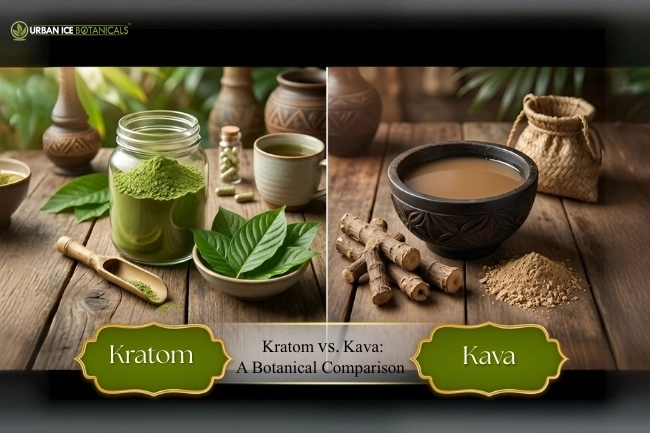
Kratom comes from the leaves of Mitragyna speciosa, a tropical tree native to Southeast Asia, whereas kava is made from the root of Piper methysticum, a shrub native to the South Pacific islands. Their active compounds also differ, as kratom contains alkaloids such as 7-hydroxymitragynin that interact with receptor systems linked to pain, mood, and energy, whereas kava contains kavalactones that influence neurotransmitters associated with relaxation.
Regarding forms and consumption methods, kratom is available as leaf powder, capsules, tea, and extracts, whereas kava is commonly prepared as root powder beverages and sold as capsules and extracts. The differences arise from variations in botanical source, chemical composition, effects profile, legal status, traditional uses, and methods of consumption, which influence overall potency, effect profile, and chemical composition.
What is Kratom?
Kratom, known by the scientific name Mitragyna speciosa, is a tropical evergreen tree from the coffee plant family Rubiaceae. It grows throughout Southeast Asia, with common cultivation and wild growth found in countries such as Thailand, Indonesia, Malaysia, and the island of Borneo. The leaves contain active alkaloids, mainly mitragynine and 7-hydroxymitragynine (7-OH), which bind to opioid receptors. Because of these properties, kratom has gained attention for its potential effects on mood, pain relief, and energy levels.
How Does Kratom Work?
Kratom produces its effects through natural alkaloids found in its leaves, mainly mitragynine and 7-hydroxymitragynine. These compounds interact with receptor systems in the brain and nervous system. Their activity typically targets mu-opioid receptors, with weaker interactions at delta- and kappa-opioid receptors, which influence how the body processes pain and regulates mood. At the same time, these alkaloids affect adrenergic and serotonergic pathways that may contribute to alertness, energy levels, and emotional balance.
Dosage strongly influences how kratom affects the body. Lower amounts, about 1–5 grams, tend to produce stimulating effects such as increased alertness, focus, and energy. Higher amounts, around 5–15 grams or more, are associated with sedative effects like relaxation and pain relief, these effects may vary depending on individual tolerance.
What is Kava?
Kava is a traditional, non-alcoholic beverage and herbal preparation made from the root of Piper methysticum, a shrub in the pepper family native to the South Pacific islands. The main active compounds are kavalactones (or kavapyrones), which occur in the highest concentrations in the plant’s roots and basal stump. Kavalactones interact with the central nervous system and influence neurotransmitter activity. Because of this interaction, kava is widely known for its calming and relaxing effects. It is commonly used to promote relaxation, reduce stress and anxiety, support sleep, and create a mild sense of mental calm without producing strong intoxication.
How Does Kava Work?
Kava works through active compounds called kavalactones, which affect the central nervous system. These compounds influence neurotransmitters such as gamma-aminobutyric acid (GABA), tend to reduce nerve activity, and promote relaxation. As a result, kava is commonly associated with calming, anti-anxiety, and mild sedative effects.
The intensity of these effects depends on factors such as dosage, preparation method, and individual sensitivity. Lower to moderate amounts usually promote relaxation and stress relief, while higher amounts may produce stronger sedative effects such as drowsiness.
What Are the Differences Between Kratom and Kava?
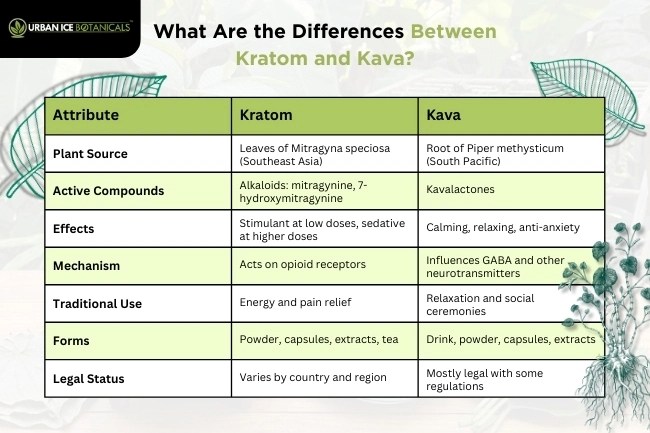
Kratom is associated with dose-dependent effects that range from stimulation to sedation, while kava is primarily linked to calming and relaxing effects. Kratom may promote energy and alertness at lower amounts or relaxation at higher amounts, whereas kava is more consistently used to support stress relief, anxiety reduction, and muscle relaxation. This difference results from their distinct chemical compounds, which determine how each substance interacts with receptors and neurotransmitter systems that influence mood, energy levels, and relaxation.
| Attribute | Kratom | Kava |
| Plant Source | Leaves of Mitragyna speciosa (Southeast Asia) | Root of Piper methysticum (South Pacific) |
| Active Compounds | Alkaloids: mitragynine, 7-hydroxymitragynine | Kavalactones |
| Effects | Stimulant at low doses, sedative at higher doses | Calming, relaxing, anti-anxiety |
| Mechanism | Acts on opioid receptors | Influences GABA and other neurotransmitters |
| Traditional Use | Energy and pain relief | Relaxation and social ceremonies |
| Forms | Powder, capsules, extracts, tea | Drink, powder, capsules, extracts |
| Legal Status | Varies by country and region | Mostly legal with some regulations |
Botanical Origin
Kratom is botanically derived from Mitragyna speciosa, a tropical tree in the coffee family Rubiaceae, whereas kava comes from Piper methysticum, a shrub in the Piperaceae (pepper) family. Kratom grows mainly in Southeast Asia, including Thailand, Indonesia, Malaysia, and Borneo, while kava grows mainly in the South Pacific islands such as Fiji, Vanuatu, Tonga, and Samoa. In terms of growing conditions, Kratom grows in warm, humid tropical rainforest environments with fertile soils and high rainfall, whereas kava thrives in tropical island climates with well-drained, nutrient-rich soils and moderate rainfall.
Active Chemical Compounds
In terms of active chemical compounds, kratom is primarily characterized by alkaloids such as mitragynine and 7-hydroxymitragynine, whereas kava is dominated by kavalactones, including kavain and dihydrokavain. Kratom’s alkaloids interact mainly with mu-opioid receptors and may influence adrenergic pathways, while kava’s kavalactones primarily affect GABA and other neurotransmitter systems that regulate nerve activity. This difference in chemical composition gives kratom dose-dependent effects that may range from stimulation to sedation, whereas kava generally produces calming, relaxation-focused effects on the central nervous system.
Effects Profile
When considering the effects profile, kratom is associated with dose-dependent effects that may range from stimulation to sedation, whereas kava is primarily linked to calming and relaxation-focused effects. At lower amounts, kratom may promote alertness, focus, and physical energy, while higher amounts are more often connected with relaxation and pain relief. In comparison, kava typically produces consistent calming effects, including reduced anxiety, muscle relaxation, and mild sedation, whereas kratom’s effects vary more noticeably with dosage.
Legality and Regulatory Status
For legal and regulatory status, kratom is associated with more varied regulatory approaches across regions, whereas kava is generally treated as a regulated herbal product in many countries. In the United States, kratom remains unscheduled at the federal level, though kratom legality varies by state, with certain states and local jurisdictions imposing restrictions or bans. These regulatory differences mean kratom often faces stricter scrutiny in some jurisdictions, while kava is usually regulated under herbal supplement or botanical product frameworks.
Uses of Kratom and Kava
In terms of uses, kratom is associated with a broader range of applications, whereas kava is more commonly centered on relaxation and stress relief. Kratom’s flexibility allows it to support both productivity-focused routines and relaxation periods, as kratom use often includes support for energy, focus, mood balance, and discomfort management, depending on the amount consumed. Unlike kratom, kava is typically selected for its calming and anxiolytic properties, offering a steadier relaxation-oriented experience that is commonly used for stress reduction, social settings, and sleep support.
Forms and Consumption Methods
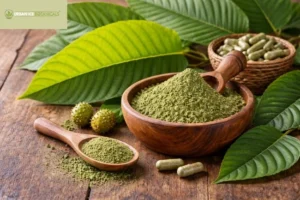
Kratom is commonly available as powder, capsules, extracts, and tea, whereas kava is typically prepared as a traditional beverage or sold as powder, capsules, and extracts. Kratom powder is often mixed with water or brewed into tea, while capsules provide a measured and convenient way to consume it without the strong taste. Extracts offer a more concentrated form but require careful use due to their potency. In contrast, kava root powder is traditionally mixed with water and strained to create a drink used in social or ceremonial settings, while capsules and extracts provide a more convenient option for modern use. Each method varies in preparation time, taste, and concentration of active compounds.
Traditional and Cultural Use
Regarding traditional and cultural use, kratom is historically associated with practical and medicinal applications in Southeast Asia, whereas kava is closely connected with ceremonial and social traditions in the South Pacific. Kratom is traditionally consumed by chewing fresh leaves or brewing them into tea to support endurance and relieve discomfort during daily labor, whereas kava is prepared from ground roots and served as a communal beverage during ceremonies, gatherings, and cultural rituals that promote relaxation and social bonding. These traditions continue today, reflecting the long-standing cultural roles each plant holds in its respective regions.