


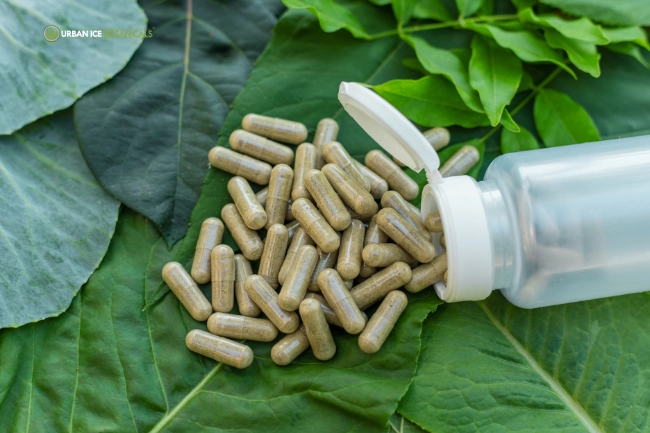
Kratom is a Southeast Asian plant known for its alkaloid-rich leaves and widely discussed for its effects, risks, and legality. More than 50 identified alkaloids, including mitragynine and 7-hydroxymitragynine, contribute to its dose-dependent outcomes, and interest continues across powders, capsules, extracts, teas, and region-specific strains such as Bali, Maeng Da, Malay, and Borneo.
Physiological effects of kratom arise from partial mu-opioid receptor (MORs) interactions that create stimulation at low doses and sedation at higher ones, shaping both perceived value and potential risks. Users often seek information about energy, mood, and discomfort-related effects, along with concerns involving nausea, dependence, hormonal changes, or withdrawal. These questions connect directly to dosage guidance, overdose potential, myths, safety considerations, and drug-test implications.
Legal variation across states and countries adds another layer of complexity, influencing how consumers evaluate Kratom’s role and reliability. The United States maintains federal legality but no FDA approval, while several states and nations impose bans or restrictions. This mix of regulatory scrutiny, product variability, and safety uncertainties underscores the need for informed, cautious, and evidence-based use.
What is Kratom?
Kratom, scientifically known as Mitragyna speciosa, is a tropical evergreen tree belonging to the coffee family (Rubiaceae). It grows naturally in the humid forests of Southeast Asia, especially in Thailand, Indonesia, Malaysia, and Borneo, where it has long been cultivated for its alkaloid-rich leaves. These leaves contain active compounds such as mitragynine and 7-hydroxymitragynine (7-OH), which interact with opioid receptors in the body and influence mood, pain, and energy levels.
Traditionally, local populations chewed fresh Kratom leaves or brewed them into herbal tea to ease fatigue, relieve pain, and increase productivity during long hours of labor. This long-standing practice inspired the basis of its modern adaptation as a natural product and herbal supplement.
Over time, Kratom’s cultural practice evolved into a commercial botanical market, where its active alkaloids are now available in multiple forms, including powders, capsules, and liquid extracts. This shift reflects both scientific curiosity and rising public interest in natural products that influence mood and energy. Nevertheless, the U.S. Food and Drug Administration (FDA) still classifies Kratom as an unapproved dietary ingredient, reflecting ongoing discussions about its safety and potential for dependence.
Where Does Kratom Come From?
Kratom originates from the tropical regions of Southeast Asia, mainly Thailand, Indonesia, Malaysia, and Borneo. It thrives in humid, fertile soils near rivers and forested areas, where its alkaloid-rich leaves develop naturally.
Traditional herbal medicine in these regions has used Kratom since the 19th century. Farmers and laborers in Thailand and Malaysia relied on the plant to reduce fatigue and relieve pain during long workdays. Kratom was historically consumed by chewing, smoking, or brewing the leaves into tea, forming part of local health and social customs.
By the late 20th century, Indonesia became the leading global supplier, exporting dried and powdered Kratom worldwide. This evolution from a regional herbal remedy to a global botanical product reflects its cultural and economic importance.
What Are the Key Compounds in Kratom?
Kratom contains 54 alkaloids and four main psychoactive ingredients: mitragynine, 7-hydroxymitragynine (7-HMG), speciogynine, and paynantheine. These nitrogen-based compounds account for most of the plant’s pain-relieving, mood-altering, and sedative effects. Additional alkaloids such as speciociliatine, corynantheidine, mitraphylline, rhynchophylline, mitralactonal, raubasine, corynoxeine, corynoxine B, speciofoline, and mitragynaline further shape Kratom’s pharmacological activity.
Key Active Compounds in Kratom:
- Mitragynine: The most abundant alkaloid, making up more than half of Kratom’s alkaloid content. It acts as a partial agonist at mu-opioid receptors, influencing pain relief (Analgesia), mood, and energy depending on dose.
- 7-Hydroxymitragynine (7-HMG): A less concentrated but more potent compound that provides most of Kratom’s analgesic and sedative effects.
- Speciogynine: Promotes muscle relaxation and supports Kratom’s calming properties.
- Paynantheine: Aids in smooth muscle relaxation and contributes to mild anti-spasmodic benefits.
How Does Kratom Work in the Body?
Kratom works by interacting with the body’s mu-, delta-, and kappa-opioid receptors, where its alkaloids influence pain, mood, and energy levels. The two main compounds, mitragynine and 7-hydroxymitragynine (7-HMG), act as partial agonists, meaning they stimulate these receptors without fully activating them like traditional opioids. This unique mechanism helps explain Kratom’s dose-dependent effects and relatively lower risk of respiratory depression.
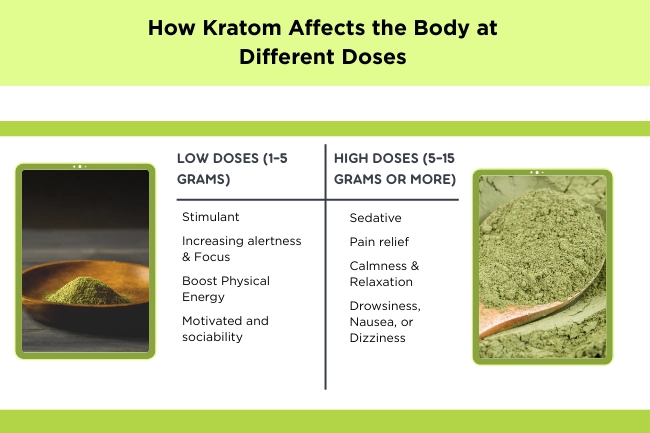
How Kratom Affects the Body at Different Doses:
- Low doses (1–5 grams): Act as a stimulant, increasing alertness, focus, and physical energy. Users may feel more motivated and sociable.
- High doses (5-15 grams or more): Function as a sedative, promoting pain relief and calmness, but may also cause drowsiness, nausea, or dizziness in some users.
This dose-dependent pattern distinguishes Kratom from stronger opioids. While it can reduce pain and improve mood, long-term or excessive use may still lead to tolerance, dependence, or withdrawal symptoms.
How Does Kratom Affect the Brain and Body?
Kratom affects the brain and body by altering neurotransmitter activity and modulating pain and mood pathways through its interaction with opioid and adrenergic receptors. Its alkaloids, particularly mitragynine and 7-hydroxymitragynine (7-OH-HMG), influence the release of serotonin, dopamine, and norepinephrine, which explains Kratom’s dual stimulant and sedative effects depending on dosage.
Primary Effects of Kratom on the Brain and Body:
- Pain Modulation: Kratom’s alkaloids bind to mu-opioid receptors, reducing the transmission of pain signals and providing natural analgesic effects.
- Mood and Motivation: At lower doses, Kratom stimulates the release of dopamine and serotonin, enhancing alertness, motivation, and mental clarity.
- Sedation and Relaxation: At higher doses, Kratom slows down central nervous system activity, promoting relaxation and drowsiness while easing tension and discomfort.
- Energy and Focus: Moderate use activates adrenergic pathways, increasing focus, stamina, and productivity without the jitteriness of caffeine.
- Stress and Anxiety Reduction: Kratom’s influence on serotonin and GABA receptors contributes to a sense of calm and reduced anxiety, though effects vary among users.
Through these mechanisms, Kratom acts as a dose-dependent modulator, capable of both stimulating and sedating the body. Its complex interaction with brain chemistry highlights why its effects differ widely between individuals and usage patterns.
What Is the Role of Mu-Opioid Receptors?
Mu-opioid receptors in Kratom produce physiological effects and serve as the primary binding sites for its alkaloids, particularly mitragynine and 7-hydroxymitragynine (7-HMG). When these nitrogen-based compounds attach to mu-opioid receptors (MORs), they modulate pain perception, influence mood, and alter the body’s stress response. Unlike traditional opioids, Kratom’s alkaloids act as partial agonists, meaning they activate the receptors without producing extreme sedation or respiratory depression.
Functions of Mu-Opioid Receptors in Relation to Kratom:
- Regulate pain signals: These receptors block pain transmission in the brain and spinal cord, creating mild to moderate analgesic effects.
- Enhance mood and motivation: Activation increases dopamine and endorphin release, improving emotional well-being and drive.
- Induce calmness and sedation: At higher doses, receptor binding promotes relaxation and drowsiness, easing physical tension.
- Limit respiratory suppression: Partial receptor activation allows pain relief without significant breathing depression, unlike full opioids.
- Contribute to tolerance and dependence: Frequent receptor stimulation can lead to mild physical dependence with prolonged use.
How Do Dosages Influence Kratom’s Effects?
Kratom’s effects are strongly dose-dependent, meaning its impact on the body changes with the amount consumed. The balance between stimulation and sedation is primarily determined by dosage.
- 1–3 grams: Increases energy and alertness. Low doses stimulate adrenergic and dopaminergic pathways, enhancing focus, motivation, and sociability.
- 3–6 grams: Promotes calmness and mild pain relief. Moderate doses produce a balanced state of relaxation, reduce discomfort, and improve mood stability.
- 7–9 grams: Causes sedation and drowsiness. Higher doses activate opioid-like receptors, delivering stronger pain relief but may lead to fatigue or nausea.
- 10 grams or more: Increases risk of side effects. Very high doses can cause dizziness, vomiting, irritability, and may contribute to dependence with prolonged use.
How Kratom Influences the Body and Mind?
Kratom influences the body and mind by modulating pain, mood, and energy through its interaction with opioid and adrenergic receptors. Its effects depend on dosage, strain, and individual physiology, providing different positive impacts for physical and mental well-being.
Ways Kratom Supports the Body and Mind:
- Pain management (Analgesia): Kratom’s alkaloids, primarily mitragynine and 7-OH-hydroxymitragynine (7-HMG), bind to mu-opioid receptors, offering natural analgesic relief for mild to moderate discomfort.
- Energy and focus: Lower doses stimulate adrenergic activity, enhancing alertness, endurance, and concentration, especially among individuals experiencing fatigue.
- Mood improvement: Kratom boosts serotonin and dopamine levels, promoting positivity, motivation, and emotional balance.
- Relaxation and calmness: Moderate to higher doses activate GABAergic and opioid pathways, supporting stress relief and mental relaxation without heavy sedation.
- Opioid withdrawal support: Kratom’s partial opioid activity eases withdrawal-related pain, irritability, and insomnia, though medical supervision is advised.
Can You Use Kratom For Pain Management?
Yes, you can use kratom for pain relief (Analgesia) by activating opioid receptors in the brain and spinal cord, allowing its alkaloids to modulate pain perception naturally. The plant’s compounds interact with the body in several ways that contribute to pain relief.
How Kratom Supports Pain Management:
- Mu-opioid receptor activation: Alkaloids such as mitragynine and 7-hydroxymitragynine (7-HMG) attach to these receptors, reducing pain signaling and creating mild analgesic effects.
- Anti-inflammatory properties: Certain alkaloids exhibit anti-inflammatory actions, which can reduce swelling and muscle soreness associated with chronic discomfort.
- Muscle relaxation: Compounds like speciogynine and paynantheine promote muscle relaxation, easing tension and spasms that contribute to pain.
- Improved pain tolerance: Kratom’s influence on dopamine and serotonin levels enhances resilience to discomfort by altering mood and perception.
Is Kratom Used for Opioid Withdrawal Relief?
Kratom is sometimes used to alleviate opioid withdrawal symptoms because its alkaloids interact with the same mu-opioid receptors that opioids affect, helping to reduce cravings and discomfort during detoxification.
How Kratom Affects Opioid Withdrawal Relief:
- Reduces withdrawal-related pain: Compounds such as mitragynine and 7-hydroxymitragynine (7-HMG) bind to opioid receptors, providing mild pain relief similar to low-dose opioids.
- Eases psychological distress: Kratom’s influence on serotonin and dopamine pathways can stabilize mood, reducing anxiety, irritability, and depression during withdrawal.
- Improves energy and motivation: At low to moderate doses, Kratom stimulates adrenergic activity, countering the fatigue and apathy common in early recovery stages.
- Supports sleep and relaxation: Kratom’s calming effects can reduce insomnia and promote rest, aiding recovery from opioid dependence.
- Provides a transitional aid: Some users employ Kratom as a temporary substitute to taper off opioids gradually, though medical supervision is strongly recommended.
Does Kratom Boost Energy or Focus?
Kratom can boost energy and improve focus at lower doses by stimulating adrenergic and dopaminergic receptors in the brain, resulting in enhanced alertness, motivation, and productivity.
How Kratom Enhances Energy and Focus:
- Stimulates adrenergic activity: Low doses activate adrenergic receptors, increasing mental alertness, stamina, and physical energy.
- Improves concentration: Kratom heightens dopamine transmission, enhancing focus and cognitive performance for task-oriented activities.
- Reduces fatigue: Mild stimulation of the central nervous system helps combat tiredness and sluggishness, especially in low-energy conditions.
- Enhances motivation: Dopamine release promotes drive and enthusiasm, supporting both mental and physical productivity.
- Supports mood stability: Balanced neurotransmitter activity prevents mental fatigue and maintains steady focus without overstimulation.
These energizing effects are generally associated with smaller doses (1–3 grams) and certain white or green vein strains. Higher doses tend to reverse this outcome, producing relaxation and drowsiness instead.
Can You Use Kratom for Depression and Anxiety?
You can use kratom to stabilize mood and reduce anxiety and depression by influencing the brain’s serotonin, dopamine, and GABA pathways, which regulate emotional balance and stress response.
How Kratom Influences Mood and Anxiety:
- Boosts serotonin activity: Kratom’s alkaloids interact with serotonin receptors, promoting relaxation and emotional stability.
- Enhances dopamine release: Increased dopamine transmission contributes to positivity, motivation, and improved outlook.
- Activates GABAergic signaling: Certain compounds encourage GABA receptor activity, which helps calm the central nervous system and ease anxiety symptoms.
- Reduces stress-related tension: Moderate doses can lower physiological stress markers, creating a sense of calm and mental clarity.
- Balances mood fluctuations: Regular, responsible use may relieve emotional variability, though long-term safety remains under study.
Kratom’s mood-enhancing and anxiolytic effects depend on strain, dosage, and individual neurochemistry, and users should approach it with caution to avoid tolerance or dependence.
What Are the Risks and Side Effects of Kratom?
Kratom can cause nausea, dry mouth, constipation, dizziness, liver toxicity, hormonal disruption, and cognitive impairment. Some users also experience anxiety, irritability, or insomnia during withdrawal. Because Kratom products vary in purity and alkaloid concentration, unregulated or contaminated forms increase the risk of adverse health effects.
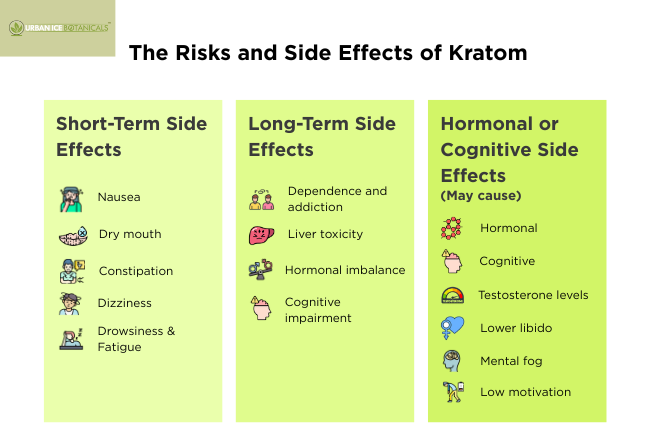
What Are the Short-Term Side Effects of Kratom?
The short-term side effects of Kratom include nausea, vomiting, dry mouth, constipation, dizziness, and drowsiness, often appearing within 30 minutes to two hours after use. These reactions are more likely at moderate or high doses and vary based on strain and user sensitivity.
Most effects of Kratom are temporary and mild, though some users may experience fatigue or lightheadedness as its sedative properties take effect. Symptoms usually fade as the substance clears the system, but frequent use can increase discomfort and dependence risk over time.
What Are the Long-Term Health Risks of Kratom?
The long-term health risks of Kratom include physical dependence and addiction, liver toxicity, hormonal imbalance, and cognitive impairment, especially with frequent or high-dose use. Extended exposure to its alkaloids can alter brain chemistry and affect the body’s natural regulatory systems.
Some long-term Kratom users report fatigue, appetite loss, darkened skin, or weight changes, while chronic use may strain liver function and disrupt testosterone levels. Prolonged consumption can also lead to tolerance and withdrawal symptoms, such as irritability, anxiety, or insomnia, when use is reduced or stopped.
Are There Hormonal or Cognitive Side Effects?
Kratom may cause hormonal and cognitive side effects, including reduced testosterone levels, lower libido, fatigue, difficulty focusing, and short-term memory problems. These effects are more likely with long-term or high-dose intake because its alkaloids interact with endocrine pathways and neurotransmitters like dopamine and serotonin, which influence hormone balance and mental clarity.
Findings from Exploring the Cognitive Effects of Kratom: A Review (2025) reveal that Kratom, particularly its primary alkaloid mitragynine, can impair certain cognitive domains by disrupting synaptic plasticity and altering EEG spectral power. These observed changes suggest functional impacts on learning- and memory-related processes, aligning with reports of reduced focus, mental fatigue, and short-term cognitive disruption among some users.
Some users experience mental fog, low motivation, or mood instability, which often improve after reducing or stopping use. Chronic consumption can also disrupt hormone balance and affect energy, focus, and cognitive clarity, though most effects appear temporary and reversible with moderation or cessation.
How Should Kratom Be Taken and in What Dosage?
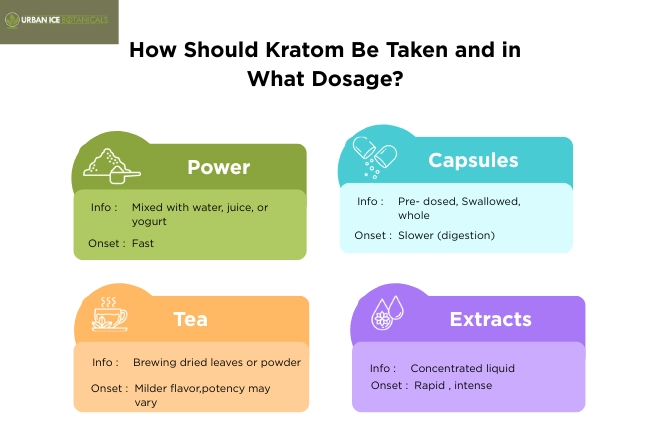
Yes, Kratom can be taken safely when used in moderate, well-measured doses, though its effects depend on form, strain, and individual tolerance. The most common consumption methods include:
- Powder: The most popular form, usually mixed with water, juice, or yogurt. It provides a fast onset but may cause digestive discomfort for new users.
- Capsules: Offer precise dosing and convenience, ideal for avoiding Kratom’s bitter taste. Effects appear slightly slower due to digestion.
- Tea: Brewing dried leaves or powder in hot water produces smoother, longer-lasting effects, though potency may vary.
- Extracts: Highly concentrated forms that deliver strong, rapid effects but require careful dosing to prevent adverse reactions.
What Are the Recommended Kratom Dosage Ranges?
The recommended Kratom dosage ranges include low doses of 1–3 grams, moderate doses of 3–6 grams, high doses of 7–9 grams, and very high doses above 10 grams. In powder form, users commonly take 3–9 grams, while kratom capsules typically contain 500–650 milligrams each, requiring multiple capsules to reach a full dose.
As reported in Kratom (2019) by Mark Sanderson and Adrianna Rowe, Kratom tends to produce stimulant effects at 1–5 g and sedative effects at 5–15 g, and its gastrointestinal and agitation-related side effects are often dose dependent.
Sanderson and Rowe also found that daily users taking three or more doses frequently experience cravings and withdrawal symptoms, and 43% reported adverse effects if they went over 48 hours without Kratom, indicating a meaningful dependence risk with regular high-frequency use.
How Long Does Kratom Take to Work and How Long Do Effects Last?
Kratom generally takes 5–60 minutes to begin working, and its effects typically last between 2 and 6 hours.
The onset time of Kratom varies based on factors such as dosage, form (powder, capsules, tea), stomach contents, and individual metabolism. Powdered Kratom usually produces the fastest onset, while capsules take longer to digest, delaying the beginning of noticeable effects.
Duration of Kratom’s effect also depends on dose size and strain type, with higher doses producing longer and more sedating effects, and lower doses leading to shorter, more stimulating outcomes. Users with faster metabolism or those who take Kratom on a full stomach may experience shorter durations, while those using concentrated kratom extracts may feel effects for a longer period.
Is Kratom Addictive or Habit-Forming?
Yes, Kratom can be addictive or habit-forming, as its alkaloids act on mu-opioid receptors, leading to tolerance, cravings, and withdrawal symptoms when use is reduced or stopped. Dependence risk increases with frequent or high-dose intake, and heavy daily users often report opioid-like withdrawal, including irritability, anxiety, muscle aches, and sleep disruption.
Findings from Controversies in Assessment, Diagnosis, and Treatment of Kratom Use Disorder (2024) show that 12.3% of Kratom users meet criteria for addiction, indicating a meaningful dependence potential. Although withdrawal is typically milder than that of traditional opioids, consistent daily use can still create a significant habit pattern, making moderation and dose spacing important for reducing risk.
Can Kratom Cause Physical or Psychological Dependence?
Yes, Kratom can lead to physical and psychological dependence, particularly with frequent or high-dose use. Repeated exposure to its alkaloids can alter how the brain responds to reward and stress, increasing the likelihood of tolerance and compulsive use. This process occurs as the body adapts to Kratom’s interaction with mu-opioid and adrenergic receptors, making regular users more sensitive to missed doses and more reliant on consistent intake.
Physical dependence can appear as restlessness, muscle aches, insomnia, and gastrointestinal discomfort, while psychological dependence often involves cravings, anxiety, irritability, and difficulty limiting intake. These effects tend to be dose- and frequency-dependent, with multi-dose daily use posing the greatest risk.
What Are the Withdrawal Symptoms of Kratom?
Kratom’s withdrawal symptoms include irritability, anxiety, restlessness, muscle aches, insomnia, gastrointestinal discomfort, and cravings, especially in individuals who stop after using high amounts regularly. According to Kratom Withdrawal (2023), withdrawal was most common among individuals taking more than 3 g of leaf material more than twice daily for extended periods, a pattern likely exceeding 300 mg of mitragynine per day. These symptoms arise as the body adjusts to reduced activation of mu-opioid and adrenergic receptors, and they are more frequent in users who take multiple doses per day or escalate intake over time.
Although generally milder than opioid withdrawal, users may still experience fatigue, mood swings, low motivation, and difficulty concentrating. Symptom duration varies with dose history and frequency, and gradual tapering and dose spacing can mitigate discomfort and overall dependence risk.
Kratom Withdrawal Timeline:
- Early Phase (6-12 hours): Anxiety, irritability, restlessness, increased cravings.
- Acute Phase (24–72 hours): Muscle aches, insomnia, gastrointestinal discomfort, chills, fatigue.
- Subacute Phase (4–7 days): Fluctuating mood, low motivation, sleep disruption, reduced appetite.
- Late Phase (1–2 weeks): Residual cravings, mild anxiety, intermittent sleep disturbances, cognitive sluggishness.
Is Kratom Safer Than Prescription Opioids?
Kratom is generally considered safer than prescription opioids regarding respiratory depression and fatal overdose risk. However, it is not risk-free and can still cause dependence, withdrawal, and adverse effects.
According to David Kroll, PhD, and CU Anschutz professor, Kratom’s alkaloids are less likely to cause severe respiratory depression because they favor G-protein–coupled signaling. By avoiding significant activation of the β-arrestin pathway, they reduce the mechanism most responsible for opioid-induced respiratory failure. In simpler terms, these alkaloids also act as partial mu-opioid agonists, producing weaker central nervous system suppression than full opioid medications.
Even so, Kratom can lead to dose-dependent side effects, tolerance, and withdrawal, and unregulated products may pose additional safety concerns. While its acute risk profile is lower than that of prescription opioids, responsible, moderate use remains essential.
Is Kratom Legal in the U.S. and Globally?
Yes, Kratom is legal in the U.S. and remains mostly legal worldwide. But, it is federally unregulated by the FDA and cannot be lawfully marketed as a dietary ingredient or therapeutic product. Several U.S. states and municipalities ban or restrict it, while others regulate sales through Kratom Consumer Protection Acts.
Internationally, some countries, such as Australia, Denmark, Finland, and Malaysia, prohibit Kratom, whereas many others, such as Ireland and Italy, allow controlled or unrestricted use depending on national drug policies.
What Is Kratom’s Legal Status in the U.S.?
Kratom is legal at the federal level in the United States. However, it is banned in six states and regulated with age-related restrictions in many others, with eleven states prohibiting sales to minors or individuals under 21 and seven states prohibiting Kratom sales to youth under 18. The FDA does not approve or regulate Kratom and does not allow it to be lawfully marketed as a dietary ingredient, leaving individual states to decide whether Kratom is banned, restricted, or regulated under consumer protection rules.
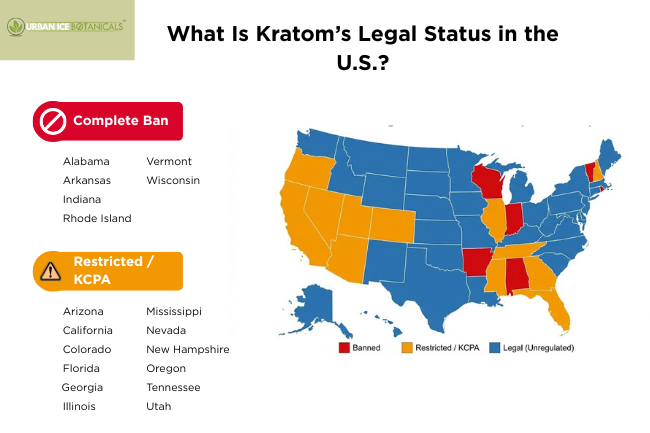
7 U.S. States with a Complete Ban on Kratom
- Alabama
- Arkansas
- Indiana
- Louisiana
- Ohio
- Vermont
- Wisconsin
21 U.S States with Restrictions:
- Arizona: Kratom Consumer Protection Act (KCPA) passed; Legal for 18+
- California: Banned in the city of San Diego
- Colorado: Human consumption illegal in Denver; Legal for 21+
- Florida: Banned in Sarasota County; Legal for 21+
- Georgia: KCPA passed; Legal for 21+
- Illinois: Illegal in the city of Jerseyville; legal for 18+ elsewhere
- Mississippi: Illegal in Union County
- Nevada: KCPA passed; Legal for 18+
- New Hampshire: Legal for 18+
- Oregon: Legal for 21+
- Tennessee: Legal for 21+
- Utah: KCPA passed
- Minnesota: Legal for 18+
- Oklahoma: Legal for 18+
- Texas: Legal for 18+
- Louisiana: Legal for 21+
- Maryland: Legal for 21+
- South Dakota: Legal for 21+
- Virginia: Legal for 21+
- West Virginia: Legal for 21+
- Kentucky: Legal for 21+
What Do the FDA and DEA Say About Kratom?
The FDA warns against Kratom use, stating that it is not approved, not lawfully marketable, and associated with safety concerns, while the DEA classifies Kratom as a Drug and Chemical of Concern but does not currently schedule it.
The FDA has not approved Kratom for any medical use and continues to report concerns related to contamination, variable alkaloid content, and potential risks involving dependence or adverse events like liver toxicity, seizures, and substance use disorder (SUD). The agency also issues import alerts for improperly labeled products.
The DEA acknowledges Kratom’s opioid-like properties and monitors its public health impact but has not moved forward with federal scheduling, citing the need for more research and public input.
Is Kratom Banned or Restricted Internationally?
Yes, Kratom is banned or restricted in multiple countries, including Australia, Denmark, Finland, Italy, Malaysia, and the United Kingdom, with many other nations imposing prescription requirements, sales limitations, or regional prohibitions. These rules vary widely, reflecting different national approaches to safety, addiction concerns, and regulatory control.
Countries That Ban or Restrict Kratom:
- Singapore (fully banned)
- Malaysia (banned)
- South Korea (banned)
- Indonesia (banned)
- Australia (national ban)
- New Zealand (prescription required)
- Thailand (regulated under licensing)
- United Kingdom (banned)
- France (banned)
- Poland (banned)
- Sweden (banned)
- Romania (banned)
- Latvia (banned)
- Lithuania (banned)
- Slovakia (banned as a psychoactive drug)
- Finland (prescription required)
- Denmark (prescription required)
- Italy (banned in some regions)
- Austria (restricted; not allowed for ingestion)
- Germany (restricted; sales limitations)
- Canada: Cannot be sold for human consumption.
- Russia (banned)
- United Arab Emirates (banned)
- Turkey (restricted; possession can lead to penalties)
Is Kratom a Legal Loophole for Opioids?
No, Kratom is not considered a legal loophole for opioids, but it is sometimes used as an accessible alternative. Because it produces milder opioid-like effects while remaining unscheduled at the federal level, some people view it as easier to obtain, yet this accessibility does not place it in the same legal category as regulated opioid medications.
Kratom’s alkaloids interact with mu-opioid receptors as partial agonists, which limits their potency compared with prescription opioids and reduces the likelihood of severe respiratory depression. Although its federal legality makes it easier to obtain than controlled opioids, Kratom is still subject to state bans, age restrictions, sales limitations, and FDA oversight, so it does not function as a bypass or loophole within opioid regulations.
What Types of Kratom Products Are Available?
Kratom is available in powders, capsules, teas, and concentrated extracts. These formats differ in potency, convenience, and onset time, with kratom powders offering flexible dosing, capsules providing measured servings, teas producing smoother effects, and extracts delivering stronger and faster-acting alkaloid concentrations. Most commercial products vary in strength, strain type, and purity, reflecting differences in sourcing and processing methods.
What Forms of Kratom Are Sold (Capsules, Teas, Extracts)?
Kratom is sold primarily as powders, capsules, teas, and concentrated extracts, each offering different strengths, absorption rates, and convenience levels. These product types vary in how quickly they take effect, how easy they are to measure, and how consistently they deliver alkaloid content.
Common Kratom Product Forms:
- Powder: Finely ground leaf material used for mixing with liquids, smoothies, or food. Offers flexible dosing and fast absorption.
- Capsules: Pre-measured servings containing roughly 500 to 650 milligrams of powder per capsule. Ideal for convenience and to avoid the taste.
- Tea: Brewed from loose powder or crushed leaf. Produces smoother, slower-onset effects with lower perceived bitterness.
- Extracts: Concentrated liquid or resin forms with higher alkaloid levels. Fast-acting and potent, requiring careful dosing.
What are the Different Kratom Strains by Region?
Kratom strains differ by region in their alkaloid composition, effect strength, and duration, with major varieties originating from Indonesia, Thailand, Malaysia, and Borneo. These regional differences influence each strain’s balance of stimulation, relaxation, or mood enhancement.
Major Kratom Strains by Region
- Bali: Balanced effects that combine moderate stimulation and relaxation.
- Thai: More stimulating and energizing with higher mitragynine content.
- Indo: Generally smooth and mild with moderate calming properties.
- Malay: Long-lasting effects that support steady energy and focus.
- Borneo: Typically calming with stronger relaxation effects.
- Sumatra: Known for robust, calming, and mood-enhancing qualities.
- Vietnam: Often reported as smooth and aromatic with moderate stimulation.
- Sundanese: Known for steady energy and clear-headed focus.
- Hulu Kapuas: Sought for potent relaxation and rich alkaloid density due to riverbank soil conditions.
What’s the Difference Between Red, Green, and White Kratom?
Red Kratom is more calming, green Kratom is more balanced, and white Kratom is more stimulating, making each vein type distinct in its alkaloid profile and overall effects. These differences reflect variations in leaf maturity, drying methods, and regional growth conditions that influence each strain’s characteristic balance of mitragynine and related alkaloids.
| Strain Type | Primary Effects | Alkaloid Profile | Common Uses |
| Red Vein | Calming, relaxing, deeper body comfort | Higher 7-hydroxymitragynine content | Evening use, unwinding, discomfort relief |
| Green Vein | Balanced energy, mild stimulation, mood support | Moderate mitragynine with balanced secondary alkaloids like Speciociliatine, Corynoxine A & B, Paynantheine | Daytime use, focus, light relief |
| White Vein | Stimulating, alertness, increased focus | Higher mitragynine with lower 7-Hydroxymitragynine | Morning use, productivity, cognitive clarity |
Which Kratom Strain is Best for Pain, Energy, or Relaxation?
Red strains are typically best for pain and relaxation, white strains are best for energy and focus, and green strains provide balanced support suitable for moderate relief and daytime use. These effect patterns reflect each strain’s alkaloid composition and how they influence stimulation, mood, or comfort levels.
Strain Recommendation by Effect
| Effect Category | Recommended Strain Types |
| Pain | Red Maeng Da, Red Bali, Red Borneo, Red Sumatra, Green Maeng Da (mild relief) |
| Energy | White Maeng Da, White Thai, White Vietnam, Green Malay (moderate stimulation) |
| Relaxation | Red Bali, Red Borneo, Red Indo, Sumatra Red, Hulu Kapuas Red |
What Are Common Myths and Misconceptions About Kratom?
Several myths about Kratom persist due to inconsistent information, varying product quality, and its association with opioid-like effects, but many of these claims oversimplify or misrepresent how Kratom actually works. Clarifying these misconceptions helps set realistic expectations about both its benefits and its risks.
Common Myths and the Truth Behind Them
- Myth: Kratom is completely safe because it is natural.
Truth: Natural products can still carry risks. Kratom has dose-dependent side effects and potential for dependence. - Myth: Kratom works the same way as prescription opioids.
Truth: Kratom’s alkaloids are G protein-biased agonists, producing milder effects and lower respiratory depression risk than full opioid medications. - Myth: Kratom cannot cause addiction or withdrawal.
Truth: Frequent or high-dose use can lead to tolerance, cravings, and withdrawal symptoms similar to mild opioid withdrawal. - Myth: All Kratom products are the same.
Truth: Alkaloid content varies by strain, region, and processing, and unregulated products may differ significantly in potency or purity. - Myth: Kratom is illegal everywhere or banned like other controlled substances.
Truth: Kratom is federally legal in the United States and legal or unregulated in many countries, though some states and nations do impose bans or restrictions.
Is Kratom a Safe Herbal Supplement?
Kratom is not considered a safe herbal supplement by the FDA, DEA, or the National Institute on Drug Abuse (NIDA). These agencies cite concerns about contamination, dependence potential, variable potency, and unregulated manufacturing practices that affect both safety and consistency. However, those who ingest kratom as a herbal supplement should realize that its safety heavily depends on dosage, product quality, and user frequency, as there exist risks like side effects, dependence, and adverse events.
Key Safety Realities of Kratom:
- Kratom is not FDA-approved for any medical use.
Safety, purity, and effectiveness have not been verified. - Dose-dependent risks exist.
Higher doses increase the chance of nausea, dizziness, agitation, and sedation. - Long-term or heavy use may cause dependence.
Withdrawal symptoms can occur after frequent use, especially with high intake. - Product contamination is a documented issue.
Some products have tested positive for heavy metals, pathogens, or adulterants. - Individual responses vary widely.
Factors like metabolism, tolerance, and product potency influence safety.
Does Kratom Get You High Like Other Drugs?
Kratom can make some users feel high when abused and may create mild euphoria, relaxation, or stimulation. However, it does not typically produce a strong drug-like high because its alkaloids act as partial mu-opioid agonists rather than full opioid activators. It means that the psychoactive effects are generally weaker and more variable than those produced by traditional opioids or illicit drugs.
What Kratom Actually Feels Like:
- Low doses create light stimulation, such as increased alertness or motivation.
- Moderate doses produce mild euphoria and smoother mood elevation.
- High doses may lead to sedation rather than a strong intoxicating effect.
- Intensity is significantly lower than full opioid agonists.
- Responses vary widely based on strain, purity, and user tolerance.
What Are Safe Kratom Use Tips and Best Practices?
Safe Kratom use requires careful dosing, attention to product quality, and an awareness of how frequency and combinations with other substances influence risk. Because Kratom is unregulated and varies in potency, users should adopt practical harm-reduction habits and monitor how their body responds to different strains and doses.
Safe Kratom Use Tips and Best Practices
- Start with a low dose to assess tolerance and minimize adverse effects.
- Avoid frequent or high-dose use, which increases the risk of dependence and withdrawal.
- Choose reputable, lab-tested products to reduce contamination risk.
- Do not mix Kratom with alcohol, sedatives, or other drugs, which may amplify side effects.
- Stay hydrated, as Kratom may cause dry mouth or digestive discomfort.
- Limit daily use and incorporate rest days to avoid tolerance buildup.
- Monitor individual reactions, especially when switching strains or product types.
- Consult a healthcare professional if using Kratom alongside medications or underlying health conditions.
FAQs About Kratom
How Much Kratom Should I Take?
Most beginners should start with 1-3 grams of Kratom and increase slowly based on how their body responds. Lower doses tend to feel stimulating, while moderate amounts offer balanced effects, and higher doses increase the chance of sedation or side effects. Because potency varies between products, users should raise their dose gradually and avoid frequent redosing.
Can You Overdose on Kratom?
Yes, you can overdose on Kratom, particularly when taking high doses or mixing it with other substances like alcohol and sedatives. Symptoms include severe nausea, agitation, excessive sedation, or loss of coordination, and the risk increases with concentrated extracts or frequent redosing. While overdoses are less common than with opioids, misuse still presents meaningful safety concerns.
Does Kratom Show Up as an Opiate on a Drug Test?
Kratom can cause a false positive only in rare, atypical circumstances, but it does not normally trigger opiate results on standard 5-panel or 10-panel drug tests. These routine screenings do not detect Kratom’s alkaloids, including mitragynine and 7-hydroxymitragynine, although specialized toxicology tests used in clinical or legal settings can identify Kratom if specifically included in the panel.
Does Kratom Lower Testosterone?
Yes, Kratom may lower testosterone in some users, particularly with long-term or high-dose use. Research and case reports suggest that frequent intake can influence hormonal pathways, leading to reductions in testosterone, lowered libido, or changes in mood and energy. Although evidence is still limited and varies across individuals, users who experience symptoms of hormonal imbalance should reduce intake and seek medical evaluation.
What Kratom Strain Is Best for Energy?
White strains are generally considered the most effective Kratom options for energy. White Maeng Da, White Thai, and White Vietnam are the most commonly chosen for alertness and focus. These strains contain higher concentrations of stimulating alkaloids that support mental clarity and sustained activity, while green varieties such as Green Malay or Green Maeng Da can provide a milder, more balanced form of daytime energy for users who prefer less intensity.