

How to Read Kratom Lab Test Results?
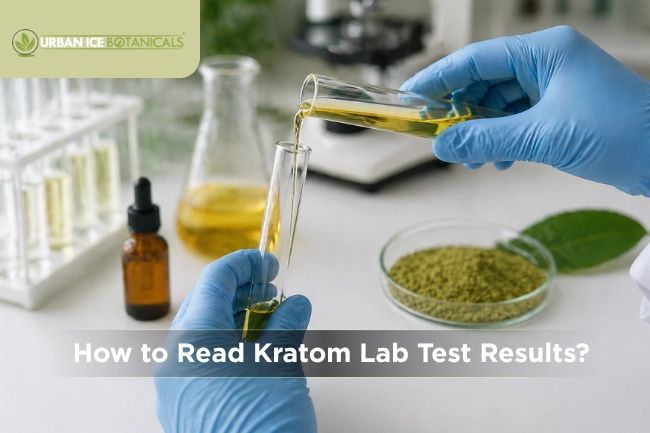
Kratom lab testing is the only reliable way to verify safety, purity, and potency in an unregulated market. A Certificate of Analysis (COA) provides batch-specific test results that confirm whether a product contains harmful contaminants, reflects accurate alkaloid content, and meets acceptable safety limits. Without a valid kratom lab report, a consumer cannot confirm what is actually present in the product.
Interpreting a COA requires breaking down technical categories such as heavy metals, microbial pathogens, alkaloid content, adulterants, and product identity. Key values like ppm, CFU/g, and w/w% establish whether a batch falls within realistic potency ranges for mitragynine and 7-hydroxymitragynine. Evaluating these metrics ensures that the product meets rigorous safety standards and maintains consistency across individual harvests.
Establishing trust depends on verifying lab authenticity, matching batch numbers, and detecting red flags like incomplete panels or inflated alkaloid claims. Relying on transparent, third-party testing data allows for informed decisions based on scientific evidence rather than vendor marketing. Accessing up-to-date, full-panel results is the final step in ensuring the product is both authentic and free from synthetic enhancements.
What is a Kratom Lab Test (COA)?
A Certificate of Analysis (COA) is a formal document from an independent laboratory that verifies a specific batch of kratom has been tested for safety, purity, and potency. You should prioritize results from accredited, third-party facilities over in-house vendor testing to ensure an unbiased assessment of contaminants such as heavy metals and pathogens. Because a COA is strictly batch-specific, always verify that the report matches the exact lot number on your packaging rather than assuming it covers a general product line.
You can find a COA on the vendor’s website, on the product page, through a QR code on the package, or by requesting it from customer support. Treat the absence of an accessible COA as a clear warning regarding the product’s transparency. If a vendor cannot provide verifiable, third-party proof of their safety standards, seek a more transparent source to avoid unnecessary health risks.
Why is Kratom Lab Testing Important?
Kratom lab testing is important because it is the only reliable way to verify product safety, purity, and potency in an unregulated market. Without a valid kratom lab test or COA, a consumer cannot confirm the absence of contaminants, the accuracy of alkaloid content, or the product’s authenticity. Lab-tested kratom replaces assumptions with measurable test results. It shows whether the product meets acceptable safety limits and reflects the true composition of Mitragyna speciosa. Without third-party lab testing, the risk of harmful contaminants, inconsistent potency, and misleading labeling increases.
Protection from contaminants and heavy metals
Kratom naturally absorbs heavy metals like lead, arsenic, and mercury from the soil. Over time, these toxins accumulate in the body, posing long-term health risks. Additionally, improper harvesting or drying can introduce microbial pathogens such as Salmonella, E. coli, and mold. Because these threats are invisible, laboratory testing is the only definitive way to identify them before consumption. A valid Certificate of Analysis (COA) confirms that a batch falls within established safety limits. Verifying these reports ensures the product is free from harmful biological and chemical impurities, protecting you from immediate illness and chronic exposure. Never assume a product is clean based on appearance alone; always prioritize verified lab results to guarantee basic safety standards.
Ensuring potency and consistency across batches
The potency of kratom does not remain uniform because alkaloid levels shift based on growing and processing conditions such as soil quality, leaf age, harvest timing, and drying techniques. Third-party testing measures the exact concentration of mitragynine and 7-hydroxymitragynine to provide an accurate potency profile. This transparency allows you to evaluate if the strength is realistic or indicates unusual spikes that require scrutiny. Because alkaloid profiles change between every harvest, it is vital to test each batch individually. A previous COA cannot represent a new lot. To ensure accuracy, always cross-reference the batch number on your product packaging with the specific lab report to confirm the exact composition of what you are using.
Preventing adulteration and mislabeling
Without third-party lab testing, there is no way to verify if a product contains synthetic additives, undisclosed fillers, or mislabeled strains. Marketing names do not guarantee authenticity, and labels can be misleading. A comprehensive COA verifies the product’s identity as genuine Mitragyna speciosa, ensuring it is free from foreign substances that alter its natural effects. Be wary of inflated alkaloid claims; for instance, unusually high levels of 7-hydroxymitragynine in plain leaf often signal chemical manipulation rather than natural growth. Reliable lab reports empower you to detect these discrepancies, helping you avoid adulterated or “enhanced” products. By demanding purity testing, you ensure that the kratom you purchase remains authentic, unaltered, and safe from dangerous synthetic enhancements.
Industry credibility and regulatory compliance
Since the FDA does not regulate kratom, safety standards fall onto vendors and independent organizations. The American Kratom Association (AKA) has established Good Manufacturing Practice (GMP) standards to fill this gap, requiring rigorous batch testing and independent audits. Vendors who follow these protocols demonstrate accountability by ensuring their products are traceable and meet specific safety limits. As consumer awareness grows, accessible, batch-specific COAs have become the industry benchmark for credibility. Reputable vendors provide transparent data to prove their commitment to quality, while unreliable sources often hide or limit disclosure. Choosing vendors who prioritize third-party verification supports a safer marketplace and ensures you are purchasing from a source that values consumer protection over profit.
What do Labs Test for in Kratom Products?
A comprehensive kratom lab test, a full panel COA, evaluates heavy metals, microbial pathogens, alkaloid content, adulterants and purity, and product identification. Each category targets a specific aspect of product safety, composition, and authenticity. Understanding what each category tests for helps the consumer determine whether a kratom lab report is complete or selectively presented with missing data.
The following sections explain what each category includes and how to interpret the corresponding test results.
Heavy Metals (lead, arsenic, cadmium, mercury)
Kratom plants absorb heavy metals from the soil and water in which they grow, so heavy metal screening is a critical part of any kratom COA. Environmental exposure allows metals such as lead, arsenic, cadmium, and mercury to enter the kratom leaf and remain in the final product if not properly tested. A kratom lab test measures these metals and reports the results in units such as micrograms per gram (µg/g) or parts per million (ppm). These values indicate the concentration of each metal in the sample, allowing the consumer to compare them with defined safety limits. Labs use ICP-MS (Inductively Coupled Plasma Mass Spectrometry) to detect trace levels of heavy metals with high accuracy. This method is the accepted standard for heavy metal testing. A reliable kratom lab report should clearly indicate a PASS status for each metal, confirming that the levels fall within acceptable safety limits based on recognized benchmarks such as USP guidelines.
Microbial Pathogens (Salmonella, E. coli, yeast and mold)
Microbial contamination can enter kratom at multiple stages, including harvesting, drying, storage, and packaging. These conditions allow bacteria and fungi to grow if proper handling controls are not in place, which creates a direct health risk for the consumer. A comprehensive lab test screens for Salmonella, E. coli, yeast, mold, and coliforms. Results are measured in CFU/g, indicating the level of microbial presence. For safety, Salmonella must be “Not Detected,” while E. coli should remain below 100 CFU/g. Per AKA GMP standards, yeast and mold counts must stay under 100,000 CFU/g. A valid COA marks each category with a “PASS” status to confirm the product is sanitary and safe for use. Always verify these results to ensure you are not at risk for immediate illness caused by pathogens or improper handling.
Alkaloid Content (mitragynine and 7-hydroxymitragynine)
The alkaloid section of a kratom COA measures the active compounds that define the product’s potency and overall profile. Mitragynine is the primary alkaloid, while 7-hydroxymitragynine is a secondary compound found in much smaller amounts. Labs report alkaloid content as a weight-by-weight percentage (w/w%), which shows how much of each compound exists relative to the total sample. For plain-leaf kratom powder, mitragynine typically falls between 0.5% and 1.5%. Values within this range indicate a realistic and naturally occurring alkaloid concentration, while extreme values may signal irregularities. Standard methods like HPLC provide precise quantification of these levels. While kratom contains over 20 alkaloids, advanced reports may offer a broader profile. Remember that extracts undergo concentration processes and will show significantly higher percentages, so evaluate them based on their specific formulation rather than comparing them directly to raw powder.
Adulterants and Purity
Some kratom products contain adulterants such as synthetic compounds, fillers, or other plant material that vendors add to increase perceived potency or reduce production costs. These additions alter the natural composition of kratom and can introduce substances that are not disclosed on the label. Adulterant screening detects hidden substances like synthetic opioids, phenibut, and pesticide residues that do not appear on the label. A purity test confirms that the sample consists only of Mitragyna speciosa with no foreign substances present. A COA that does not include adulterant screening leaves a gap in safety verification. This absence becomes more concerning in extracts or enhanced products that claim unusually high potency. You should treat such products with caution if the kratom lab report does not provide clear evidence of purity and contaminant screening.
Product Identification and Strain Verification
The identity section of a kratom COA confirms the material is authentic Mitragyna speciosa, not a counterfeit or substitute plant. Labs use visual, microscopic, or spectral analysis to verify botanical identity with high accuracy. This step is fundamental; without confirmed identity, all other results like potency and safety are meaningless. While a COA confirms the species, remember that names like “Red Borneo” or “Green Malay” are marketing terms and lack standardized scientific validation through lab testing. The report should, at minimum, prove the product is genuine kratom. Confirming the species ensures that the safety data provided actually applies to the plant you intend to use, protecting you from mislabeled or unrelated botanical substances.
How to Read Kratom COA Step By Step?
Read a kratom COA by verifying the lab credentials, matching the batch information, checking the potency levels, screening for contaminants, and identifying potential red flags. While reading a COA may seem technical at first, the process becomes straightforward once broken into clear steps.
The following five steps guide you from authentication to final evaluation.
Verify authentication details
Check heavy metal test results and acceptable limits
Interpret microbiology results
Evaluate alkaloid potency and realistic ranges
Look for red flags and signs of a fake or outdated COA
- Step 1: Verify Authentication Details
Start by confirming that the kratom COA comes from from a legitimate, ISO/IEC 17025 accredited laboratory rather than the vendor’s internal team. A valid report must display the lab’s contact info and accreditation credentials. Next, match the batch or lot number on the COA exactly to the number on your product packaging. Discrepancies mean the results are irrelevant to your specific purchase. Finally, check the test date. Reports should be recent, issued within the last 6 to 12 months. An undated or expired COA fails to reflect the current batch’s safety and should be considered unreliable for consumer verification.
- Step 2: Check heavy metal test results and acceptable limits
Locate the heavy metals section and review levels for lead, arsenic, cadmium, and mercury. Results are usually measured in ppm or µg/g. Ensure each metal has a “PASS” status based on established safety thresholds like USP guidelines. Do not panic at trace detections; instead, verify that the levels stay within the lab’s listed reference limits. Confirm the lab used ICP-MS testing, the industry standard for precision. Be cautious of any report that omits acceptable limit references or lists a “FAIL” status, as these indicate significant safety risks and a lack of transparent quality control.
- Step 3: Interpret microbiology results
Review the microbiology section for pathogens like Salmonella, E. coli, yeast, and mold. Salmonella must always read “Negative” or “Not Detected.” For E. coli, levels must stay below 100 CFU/g, while yeast and mold should not exceed 100,000 CFU/g. “ND” (Not Detected) or “below LOQ” (Limit of Quantitation) are both acceptable marks for safety. Ensure the panel is comprehensive; a report testing only one or two microbes is insufficient. A full safety picture requires a complete analysis of aerobic plate counts and coliforms to guarantee the product was handled under sanitary, controlled conditions.
- Step 4: Evaluate alkaloid potency and identify realistic ranges
Find the mitragynine percentage to assess natural potency. For plain-leaf powder, a realistic range is 0.5% to 1.5%. Verify that the lab used HPLC or UHPLC-DAD methods for these measurements. Examine the 7-hydroxymitragynine levels carefully. Because this compound occurs naturally in very low amounts, high concentrations often suggest synthetic enhancement. While slight batch variation is normal due to harvest conditions, mitragynine levels exceeding 5% in standard powder are unrealistic and suspicious. Extracts will naturally show higher numbers, so evaluate them based on their specific concentration ratio rather than comparing them to raw leaf.
- Step 5: Look for red flags and signs of a fake or outdated COA
Stay alert for signs of fraudulent or outdated reports. A major red flag is a COA lacking a lab name, contact details, or an ISO accreditation number. If the batch number does not match your packaging or the report is over a year old, the data is useless. Be skeptical of generic graphics that lack detailed data tables or reports that only test for a few contaminants. Unrealistic potency claims and a vendor’s refusal to provide documentation further signal fraud. Always look for a QR code or verifiable link to authenticate the results directly on the testing laboratory’s official website.
What do the Technical Terms on a Kratom Lab Report Mean?
The technical terms on a kratom lab report use scientific abbreviations and terminology that can feel overwhelming at first glance. However, understanding a handful of key terms is all that is needed to confidently read any COA.
These definitions translate complex lab jargon into clear information so you can verify the quality of your product.
- ND (Not Detected) The lab found nothing in the sample. This is the best result for contaminants like mold or lead.
- Below LOQ The substance is there but in such a small amount that it is hard to measure. This is safe and not a concern.
- CFU/g This counts colony forming units per gram. It is the way labs measure how much bacteria or mold is present.
- PPM or µg/g These stand for parts per million or micrograms per gram. Labs use these to report heavy metal levels.
- w/w% This weight by weight percentage shows how much of the total sample is made of alkaloids.
- ICP-MS This is the gold standard testing method for finding even tiny traces of heavy metals.
- HPLC or UHPLC-DAD This is the gold standard method used to measure the strength and purity of alkaloids.
- LOQ The Limit of Quantitation is the lowest amount of a substance that the lab equipment can reliably find.
- APC The Aerobic Plate Count measures the total amount of bacteria to check overall cleanliness.
What makes a Kratom Vendor’s Lab Testing Trustworthy?
A kratom vendor’s lab testing is trustworthy when it relies on ISO/IEC 17025 accredited third-party labs, provides batch-specific results, and makes complete COAs publicly accessible. These factors ensure that the test results reflect unbiased analysis, accurate product data, and full transparency for the consumer. When a vendor consistently verifies each batch and shares clear, up-to-date kratom lab reports, it signals accountability and allows the buyer to evaluate product safety and quality with confidence.
ISO/IEC 17025-Accredited Independent Lab
Reliable kratom lab results depend on the credibility of the laboratory that performs the testing. ISO/IEC 17025 accreditation confirms that a lab meets international standards for testing accuracy, method validation, and quality control. An accredited lab follows strict procedures to produce consistent and scientifically valid results. Independence from the vendor plays a critical role in maintaining trust. A third-party lab operates without influence from the seller, so it reports findings based on data rather than business interest. In contrast, in-house testing does not provide the same level of transparency or external verification. You can verify a lab’s credentials through official databases like A2LA or PJLA. If a COA comes from a non-accredited or in-house facility, the results cannot be independently validated. Relying on uncertified testing significantly increases the risk of receiving incomplete safety data or inaccurate information about your product.
AKA GMP Certification
The AKA GMP Standards Program serves as the industry’s most rigorous safety framework in the absence of FDA regulation. Unlike self-declared claims, this certification requires vendors to pass annual third-party audits and strictly follow controlled manufacturing protocols. A key requirement is batch-level testing on every single lot, ensuring that safety is not a one-time event but a continuous process. Vendors under this program must document every stage of production, from sourcing to final packaging. By choosing an AKA GMP-certified vendor, you are supporting a business that submits to independent oversight to verify that their products meet defined safety and purity standards.
Batch-Level Testing vs. Product-Level Testing
Understanding the difference between batch-level and product-level testing is critical for your safety. Batch-level testing involves analyzing every individual lot produced, whereas product-level testing uses a single COA to represent all future harvests. Because kratom is an agricultural product, alkaloid concentrations and contaminant levels fluctuate between every harvest. A report from six months ago cannot accurately reflect the batch you hold today. Always match the lot number on your packaging to the specific lab report. Flag any COA that lacks a batch number, uses generic product names, or is older than 12 months, as these indicate unreliable product-level testing.
Publicly Accessible and Up-to-Date Lab Results
True transparency means making safety data easily accessible before you make a purchase. Genuine vendors provide COAs directly on product pages, utilize QR codes for instant batch lookups, or offer searchable lot-number tools. A vendor linking directly to a third-party lab’s portal is a much stronger trust signal than a self-uploaded PDF, which could be easily edited. Results should never be older than 6 to 12 months to be considered “up to date.” Be wary of vendors who hide their lab results behind request forms or provide vague, outdated documents, as these hurdles often obscure a lack of consistent testing.
Full Panel COA Coverage
A Certificate of Analysis is only effective if it covers the entire spectrum of potential risks. Some vendors “cherry-pick” results, showing a “Pass” for one microbe while ignoring heavy metals or pesticides. A comprehensive full-panel COA must include all four major heavy metals, a complete microbial screen (including Salmonella and E. coli), alkaloid quantification, and adulterant testing. Incomplete panels leave dangerous gaps. For example, a report testing only for Salmonella tells you nothing about lead or mold levels. Demand full-panel coverage as your minimum standard to ensure the product is free from both biological and chemical contaminants.
Before trusting any kratom product, confirm that its COA is recent, batch-specific, and issued by an independent laboratory. A reliable report should show testing for heavy metals, microbial contaminants, alkaloid content, adulterants, and product identity. Without complete kratom lab testing, the label alone cannot confirm what is actually present in the product.

Kelly Dunn is the founder of Urban Ice Botanicals and a kratom advocate with more than 20 years of experience. After encountering Mitragyna speciosa in Indonesia in 2004, he committed his work to responsible access, consumer education, and botanical transparency. He produced A Leaf of Faith, supported early University of Florida kratom research, and helped bring national attention to kratom science and safety. Through Urban Ice Botanicals, he continues to promote lab-tested kratom, quality standards, and informed adult use.